A Solitary Trek Across the Abyssal Floor
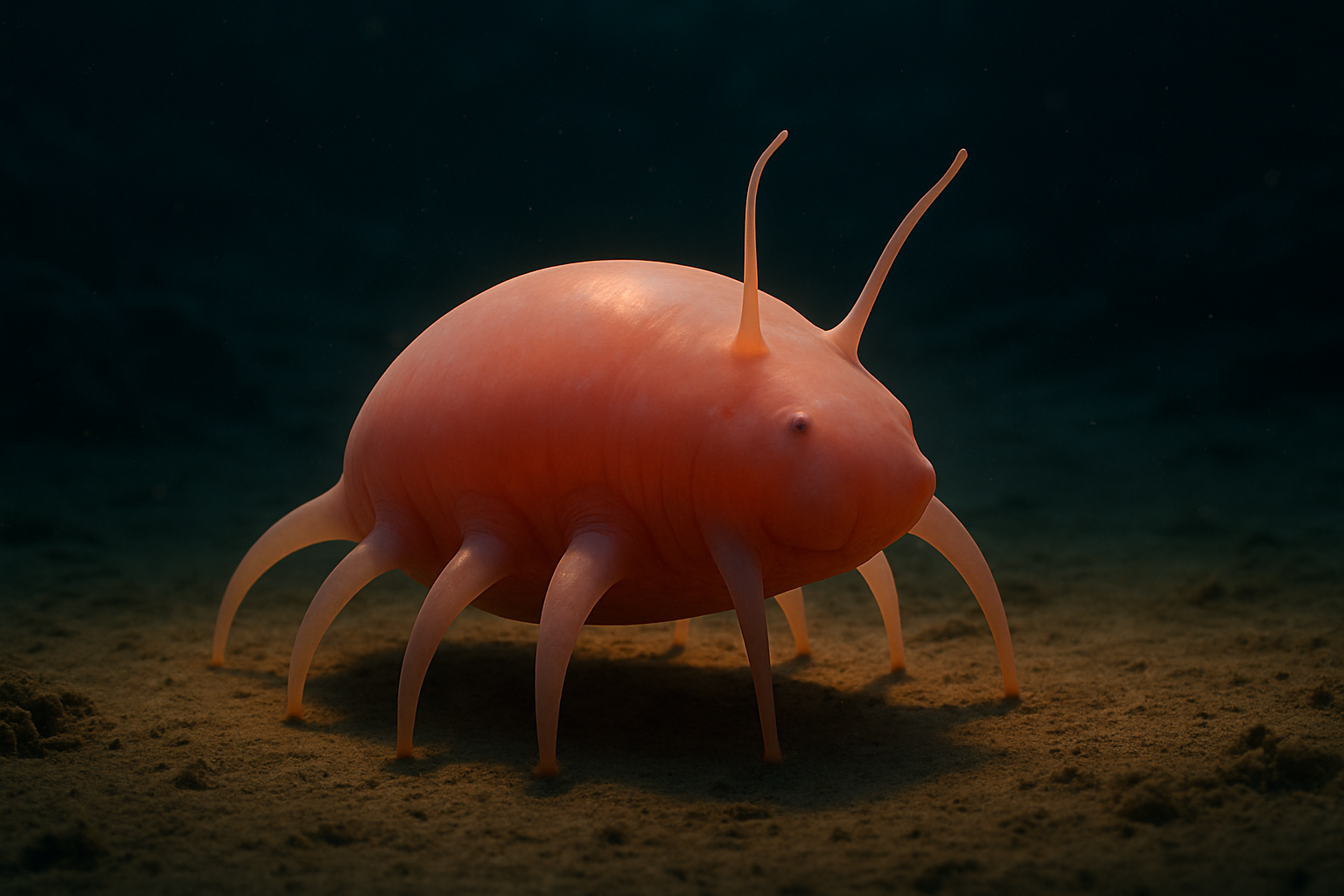
Down in the sunless bathyal and abyssal plains of the global oceans, thousands of meters beneath the surface, the water temperature rests at a chilling 2°C to 4°C [1][2]. Across this vast expanse of fine mud sediment, a plump, translucent pinkish creature moves steadily through the pitch-black environment [1][2]. At first glance, its soft shape might look like a stray object tumbling helplessly across the dark seabed, but it is actually navigating the seafloor with deliberate purpose [2][3].
This peculiar animal is Scotoplanes globosa, commonly known as the sea pig [1]. Sitting in total darkness under immense hydrostatic pressure, it faces a constant survival challenge: finding enough organic nutrients on a vast ocean floor [1][5]. What is this strange pink organism, how does it survive where almost nothing else can, and what would happen if it vanished from the abyssal ecosystem [1][3]?
Neither Swine nor Tumbling Sphere
Despite its familiar common name, Scotoplanes globosa has no genetic relationship to land-dwelling pigs [1][4]. It belongs to the phylum Echinodermata and the class Holothuroidea, making it a highly specialized deep-sea sea cucumber [1]. Belonging to the family Elpidiidae within the order Elasipodida, it earned its popular nickname solely from its plump, pinkish skin and its habit of plowing through seafloor mud [1][4].
Popular myths often suggest that these creatures actively tumble across the seafloor like underwater tumbleweeds [2][3]. While strong deep-sea currents can occasionally knock them over and passively roll their fluid-filled bodies, active tumbling is not their way of moving [2][3]. Instead, they cross the soft seabed using controlled, deliberate physical movements [2][3].
Hydraulic Feet and Chemical Antennae
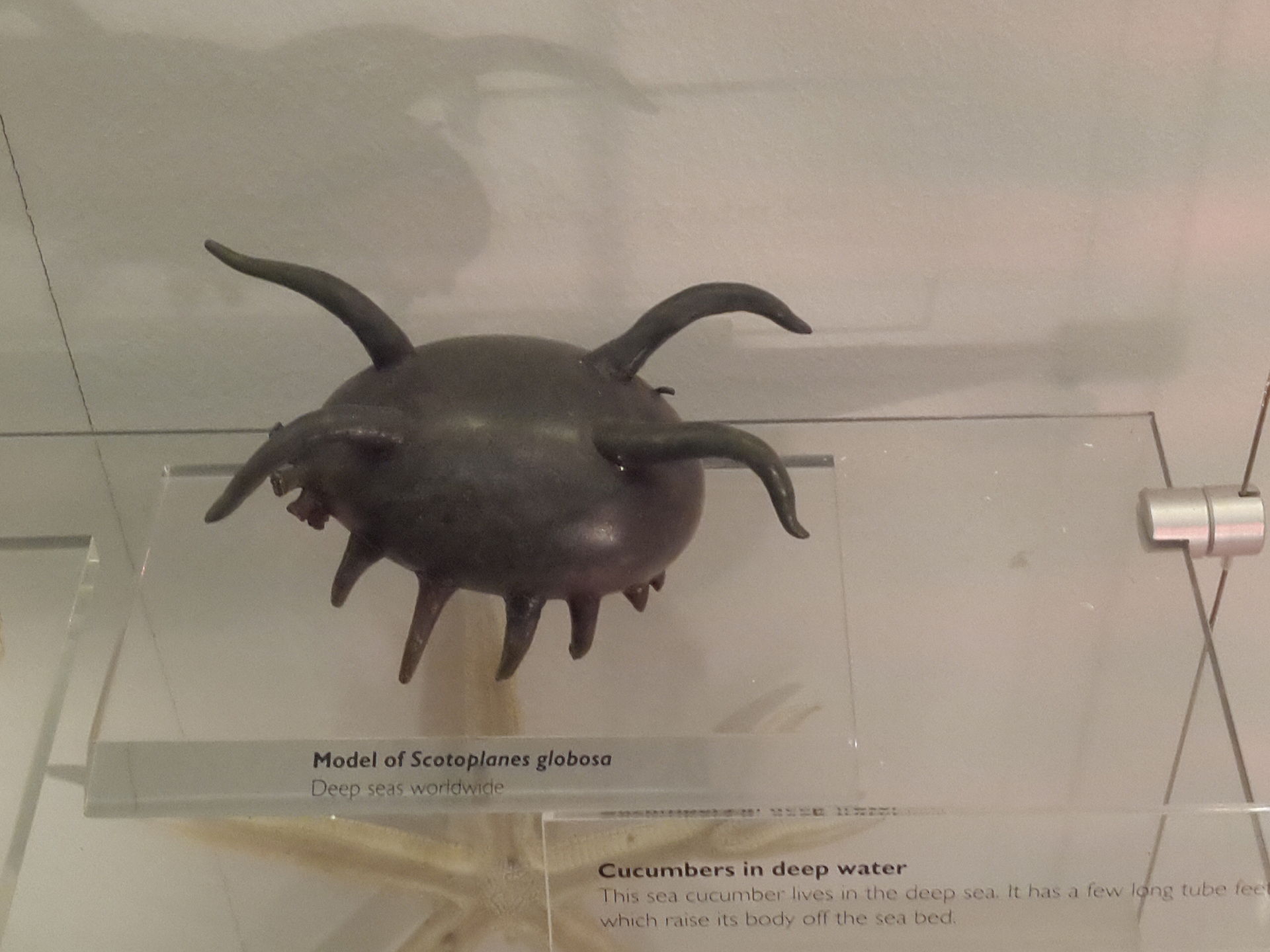
To walk across soft, watery mud without sinking, Scotoplanes globosa relies on a unique structural system [2][3]. The creature features 5 to 7 pairs of enlarged walking structures known as tube feet [2, 3, 4]. By pumping body fluids into these flexible limbs, it inflates them with hydraulic fluid pressure, allowing the animal to stride smoothly across fine sediment [2, 3, 4].
Navigating a pitch-black world requires specialized sensory organs rather than visual eyes [2][4]. Rising from the upper surface of its body are 2 pairs of long projections called dorsal papillae [2][4]. These upper projections act as sensitive detection tools that feel ocean currents and process chemical signals, steering the animal directly toward nutrient-dense feeding spots [2][4].
Abyssal Vacuum Cleaners and the Sediment Cycle
Survival on the deep ocean floor depends entirely on catching drifting organic debris descending from the sunlit waters far above [1][5]. This falling matter, often called marine snow, consists of decaying plankton, biological waste, micro-organisms, and stray animal remains [1, 3, 5]. Surrounding the mouth of Scotoplanes globosa are 10 curved feeding tentacles designed to scrape up this sparse nourishment from the sediment surface [1, 3, 5].
As the sea pig sweeps the seafloor, it ingests fine mud particles along with the organic material clinging to them [1, 3, 5]. This process drives a critical ecological mechanism called sediment mixing, or bioturbation [3][6]. By eating and turning over the top layer of sediment, the creature churns fresh oxygen deeper into the mud, dramatically improving the habitat for local microbes and tiny invertebrates [3][6].
Deep-Sea Sanctuaries and Massive Gatherings
The featureless ocean plain offers virtually no rocks or physical structures for smaller creatures seeking protection from predators [3][6]. In this open landscape, Scotoplanes globosa unintentionally becomes a mobile sanctuary [3][6]. Observers have documented young juvenile king crabs, specifically Neolithodes diomedeae, clinging to the underside of sea pigs to hide safely from potential threats [3][6].
While these sea cucumbers often trek across the mud alone, they can gather in astounding numbers when food suddenly becomes abundant [3][5]. When a massive organic deposit reaches the seafloor—such as a sunken whale carcass or an intense pulse of marine snow—hundreds of individuals converge on the site [3][5]. Guided by their chemical-sensing dorsal papillae, tens to hundreds of sea pigs form dense aggregations to feast on the rare bounty [2, 3, 5].
Pressure-Bound Bodies and Unanswered Questions
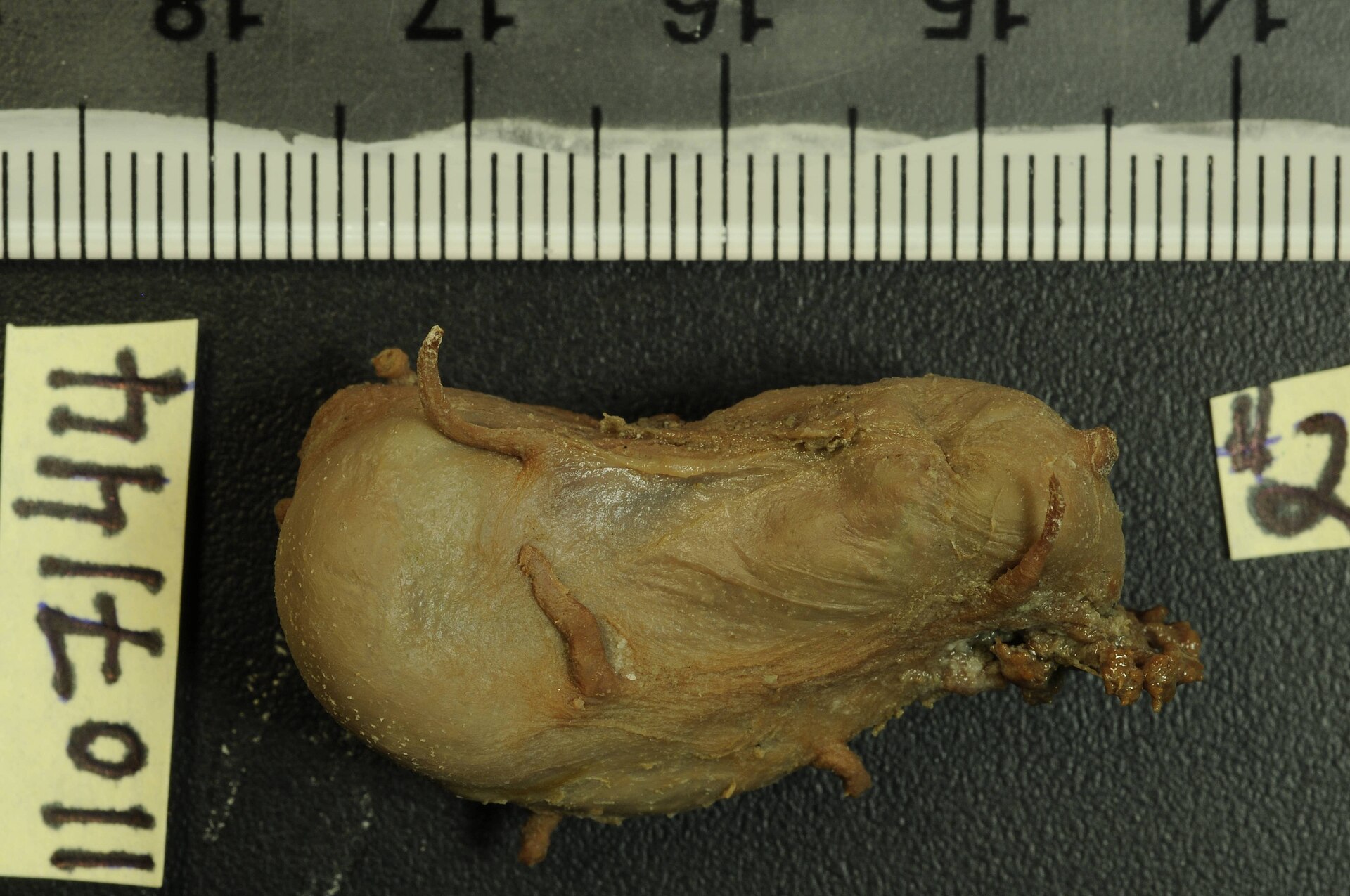
The extreme physical adaptations that allow Scotoplanes globosa to thrive under high ocean pressure make it exceptionally fragile outside its natural habitat [2][3]. Its body tissue is intensely gelatinous and kept firm by surrounding water pressure [2][3]. If retrieved and brought up to the low pressure of the surface, the delicate tissue structure cannot maintain its shape and rapidly collapses [2][3].
Because accessing abyssal plains between 1,000 and over 6,000 meters deep is technically difficult, major gaps remain in our understanding of this species [1][3]. While researchers have confirmed that populations aggregate around sudden food arrivals, long-term tracking of their exact lifespan and wild development rates remains elusive [3][5]. Furthermore, the species is classified as Not Evaluated on the IUCN Red List, and scientists lack long-term quantitative data regarding how deep-sea mining or climate shifts might affect their population density [1, 3, 6].
The Essential Gardener of the Deep
Far beneath the waves, where temperatures stay near freezing and sunlight never reaches, Scotoplanes globosa continues its quiet trek across the seafloor [1][2]. Far from being a mere biological curiosity or a helpless rolling sphere, this translucent pink echinoderm serves as an essential recycler of the global seabed [1, 3, 6]. Without its relentless walking, mud-churning, and sediment oxygenation, the delicate deep-sea ecosystem would lose one of its most vital ecological pillars [3][6].
Featured image credit
Created by TaxonGuru · AI-generated featured explanatory reconstruction · not a documentary photograph · generated 2026-07-28
Sources and editorial policy
This feature is based on publicly available scientific and institutional sources listed below. Read our AI and editorial policy. Report a correction: kjhtime@gmail.com
References
- wikipedia.org — vertexaisearch.cloud.google.com, accessed 2026-07-28
- museumsvictoria.com.au — vertexaisearch.cloud.google.com, accessed 2026-07-28
- mbari.org — vertexaisearch.cloud.google.com, accessed 2026-07-28
- animalia.bio — vertexaisearch.cloud.google.com, accessed 2026-07-28
- encyclopedia.com — vertexaisearch.cloud.google.com, accessed 2026-07-28
- mdpi.com — vertexaisearch.cloud.google.com, accessed 2026-07-28