날아다니는 작은 요정, 벌새! 세계 최경량 챔피언의 비밀!
분류 트리: Animalia > Aves > Trochilidae
Hook: “벌”만큼 작아도 존재감은 태산!
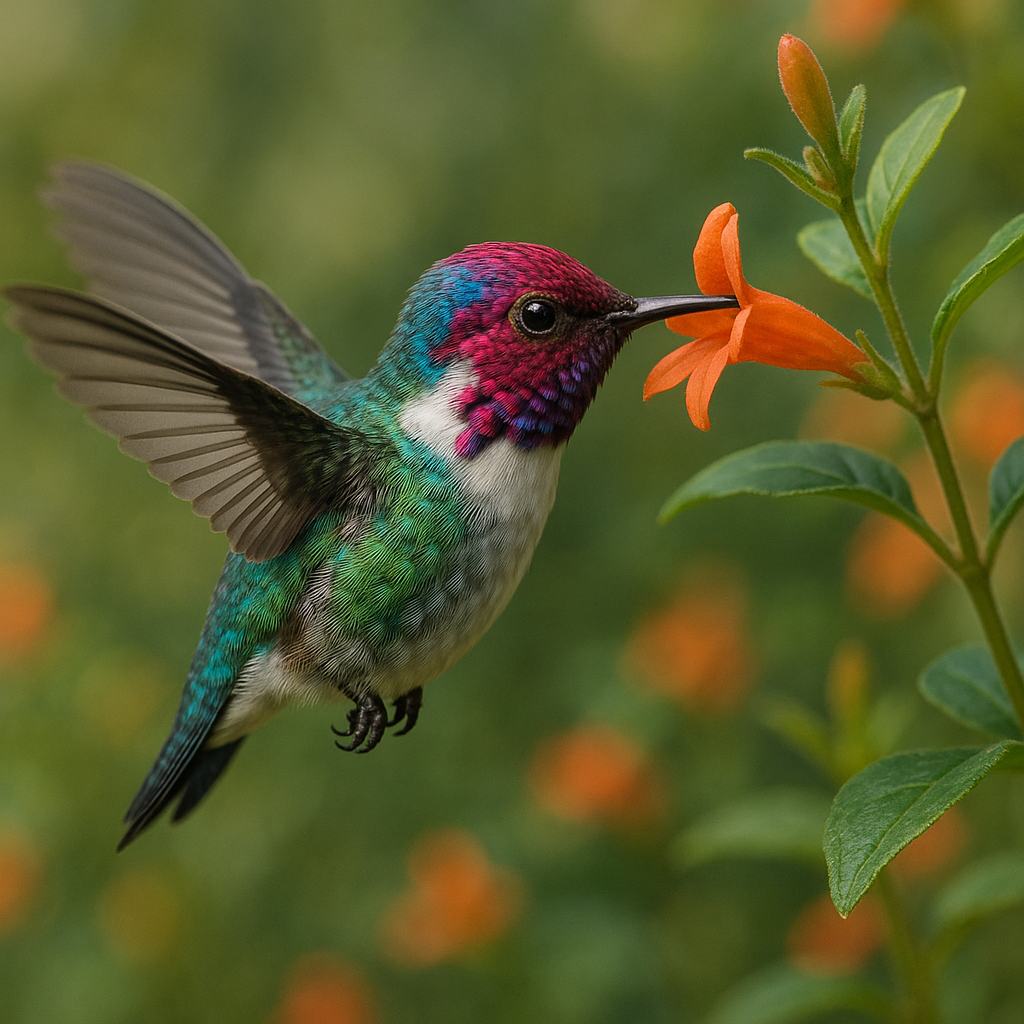
세상에… 웬만한 엄지손가락 한 마디보다도 작은 새가 존재한다고 하면 믿으시겠어요? 아니, 심지어 그 새의 이름이 ‘벌새’라고 불릴 정도로 벌만큼 작은 새가 있다니, 이건 그냥 자연의 ‘드립’ 아닌가요? 에디터 택슨구루가 오늘 소개할 친구는 바로 그 전설의 새, 벌새(Bee Hummingbird, 학명: Mellisuga helenae)입니다. 마치 날아다니는 작은 요정처럼, 눈 깜짝할 새 사라지는 스피드로 우리의 눈을 현혹시키죠! 지구상에서 가장 작은 새로, 그야말로 ‘세계 최경량 챔피언’의 타이틀을 거머쥐고 있는 이 경이로운 생명체를 만나러 가보실까요?

Scientific Backbone: 깃털 달린 미니멀리즘의 정점
벌새는 동물계(Animalia), 조강(Aves)에 속하며, 그중에서도 오직 꿀을 먹는 데 특화된 벌새과(Trochilidae)의 일원입니다. 이 작은 녀석의 학명은 Mellisuga helenae로, ‘꿀을 빨아먹는 헬레나’라는 뜻인데요, 이름부터가 이 친구의 주식과 매력을 딱! 담아내고 있죠. 몸길이 약 5~6cm, 무게는 고작 1.8~2.5g! 정말 오백원짜리 동전보다 가볍다니, 존재 자체가 미니멀리즘의 극치를 보여줍니다. 깃털은 무지갯빛을 띠어 햇빛을 받으면 영롱하게 빛나는데, 마치 온몸이 작은 보석으로 장식된 듯합니다.
Deep Anatomy: 작지만 강한, 슈퍼 엔진 장착!
몸집은 작지만, 벌새의 심장은 그 어떤 생물보다 뜨겁게 뜁니다. 휴식 시에도 분당 500회 이상, 격렬하게 날아다닐 때는 분당 1,200회까지 박동하는 슈퍼 심장을 가졌죠! 날개짓은 초당 80회 이상으로, 너무 빨라 우리 눈에는 그저 흐릿한 잔상으로 보일 뿐입니다. 이런 고속 활동을 유지하기 위해 엄청난 양의 에너지가 필요한데, 이 때문에 벌새는 깨어있는 동안 거의 쉬지 않고 꿀을 찾아 헤매야 합니다. 만약 우리가 벌새처럼 살아야 한다면, 아마 하루 종일 밥만 먹고 있을걸요? 그들의 혀는 빨대처럼 길고 유연하여 꽃 속에 깊숙이 넣어 꿀을 빨아들이는 데 완벽하게 진화했습니다. 이 작은 몸에 이런 효율적인 ‘엔진’과 ‘연료 공급 시스템’이 완벽하게 갖춰져 있다니, 자연의 설계에 감탄할 수밖에 없습니다.

Evolutionary Context: 소형화의 진정한 승자
벌새의 극단적인 소형화는 단순한 ‘귀여움’을 넘어선 생존 전략의 결과입니다. 작은 몸집 덕분에 다른 대형 조류들이 접근하기 어려운 좁은 꽃들 사이를 자유롭게 넘나들며 꿀을 섭취할 수 있게 되었죠. 이는 특정 식물 종과 상호 이익적인 관계, 즉 공진화(Co-evolution)의 결과입니다. 벌새는 꿀을 얻는 대신 꽃가루를 옮겨주며 식물의 번식에 기여합니다. 하지만 작은 몸집은 열 손실이 크다는 단점도 가져오기에, 벌새는 밤이 되면 신진대사를 극도로 낮추는 ‘수면 동면(torpor)’ 상태에 들어가 에너지를 절약합니다. 말 그대로 ‘생존왕’의 지혜가 담겨 있는 것이죠.
Verdict & Trivia: 자연이 빚은 최고의 걸작
벌새는 단순한 새가 아닙니다. 그것은 생물학적 경이로움의 정점이며, 작지만 얼마나 강력한 생명력을 가질 수 있는지를 보여주는 살아있는 증거입니다. 이 작은 요정은 쿠바의 숲에서 주로 발견되며, 밝은 무지갯빛 깃털과 빠른 움직임으로 숲 속의 보석처럼 빛납니다. 자, 마지막으로 몇 가지 벌새에 대한 ‘TMI’를 알려드릴게요!
- 가장 작은 알: 벌새의 알은 커피콩보다 작답니다.
- 최고의 신진대사: 척추동물 중 가장 빠른 신진대사율을 자랑합니다. 거의 ‘살아있는 연소기관’이라고 불러도 무방할 정도죠.
- 영토 방어의 달인: 작은 몸으로도 자신의 영역에 침범한 다른 벌새들을 무서운 기세로 쫓아냅니다. 덩치 큰 새들도 벌새의 기세에 눌려 도망가는 경우가 허다하죠!
지구상에서 가장 작은 이 ‘날아다니는 요정’은 우리에게 크기가 전부는 아니라는 멋진 메시지를 던져줍니다. 작고 빠른 벌새의 삶은 그 자체로 자연의 위대한 역작이자 끝없는 경이로움을 담고 있습니다. 다음 번엔 또 어떤 생물의 흥미진진한 이야기를 들고 올지 기대해주세요!
The Flying Little Fairy, the Bee Hummingbird! Secrets of the World’s Lightest Champion!
Classification Tree: Animalia > Aves > Trochilidae
Hook: As Small as a Bee, Yet a Giant in Presence!
Would you believe me if I told you there’s a bird smaller than the tip of your thumb? And what if that bird is literally called a ‘Bee Hummingbird’ because it’s as tiny as a bee? Editor TaxonGuru is here today to introduce you to that legendary creature: the Bee Hummingbird (scientific name: Mellisuga helenae). Like a flying little fairy, it mesmerizes us with its blink-and-you-miss-it speed. As the smallest bird on Earth, it proudly holds the title of ‘World’s Lightest Champion’. Ready to meet this astonishing marvel of nature?
Scientific Backbone: The Apex of Feathered Minimalism
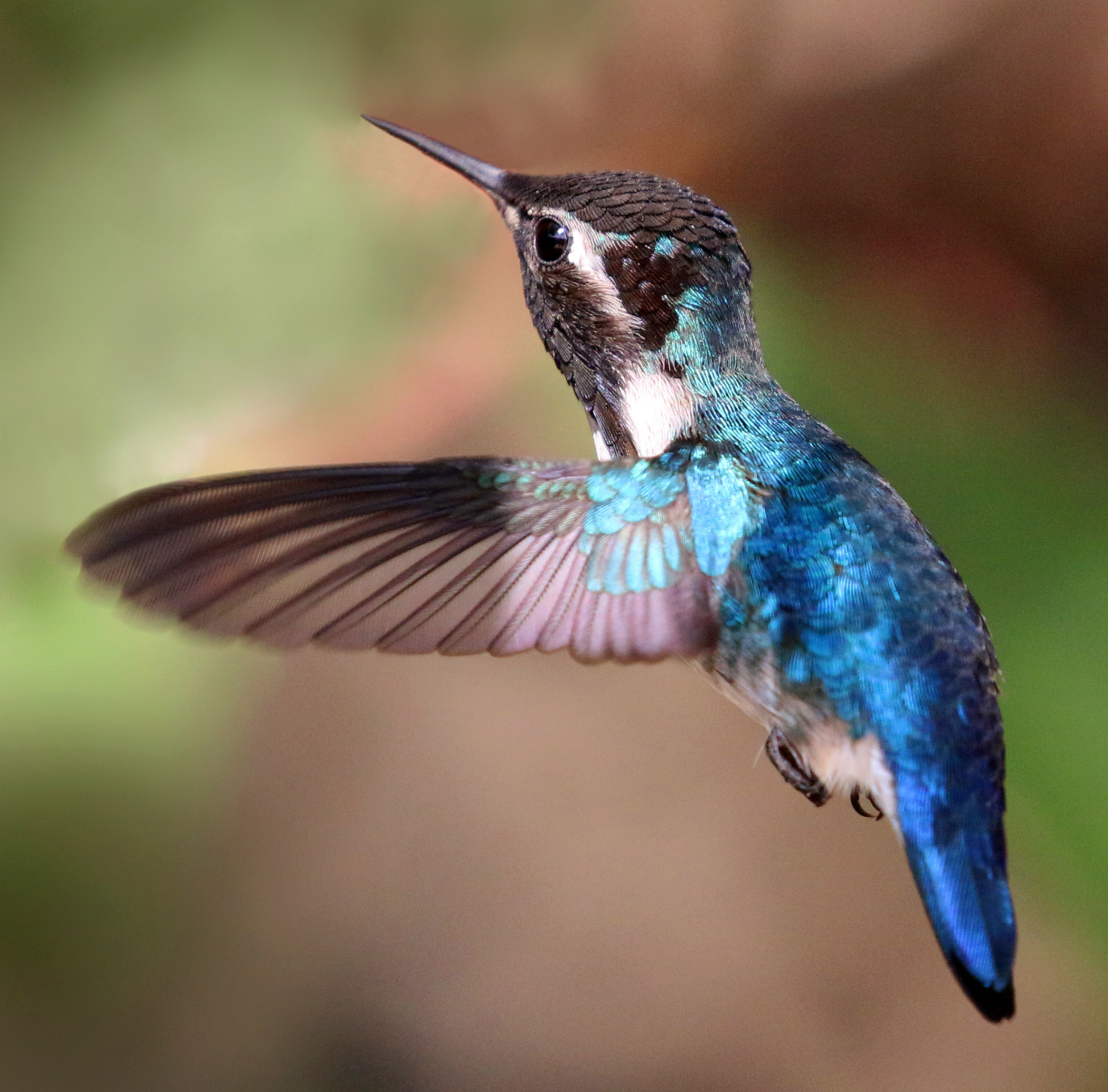
The Bee Hummingbird belongs to the Animalia kingdom, the Aves class, and specifically, the Trochilidae family – a group of birds specialized in feeding on nectar. This tiny creature’s scientific name, Mellisuga helenae, means ‘honey-sucking Helena’, perfectly capturing its diet and charm. With a body length of about 5-6 cm (2 inches) and a weight of merely 1.8-2.5 grams (0.06-0.09 ounces), it’s lighter than a penny, truly embodying the essence of minimalism. Its iridescent feathers shimmer with all the colors of the rainbow under the sun, as if its entire body is adorned with tiny jewels.
Deep Anatomy: Small But Mighty, Equipped with a Super Engine!
Despite its diminutive size, the Bee Hummingbird’s heart beats more fiercely than almost any other creature. It boasts a super heart that pumps over 500 times per minute at rest and can accelerate to an astonishing 1,200 beats per minute during intense flight! Its wings beat more than 80 times per second, moving so fast that our eyes perceive them merely as a blur. This high-octane activity demands an immense amount of energy, forcing the Bee Hummingbird to relentlessly forage for nectar almost non-stop during its waking hours. If we had to live like a Bee Hummingbird, we’d probably be eating all day! Their tongue is long and flexible, like a tiny straw, perfectly evolved to reach deep into flowers and draw out nectar. It’s truly amazing how such an efficient ‘engine’ and ‘fuel delivery system’ are perfectly integrated into this tiny body.
Evolutionary Context: The True Winner of Miniaturization
The extreme miniaturization of the Bee Hummingbird is not just about ‘cuteness’; it’s a result of a sophisticated survival strategy. Its small size allows it to navigate freely among narrow flowers that larger birds cannot access, efficiently consuming nectar. This exemplifies co-evolution, a mutually beneficial relationship with specific plant species. The hummingbird gets nectar, and in return, it helps pollinate the plants. However, a small body also means significant heat loss. To counteract this, Bee Hummingbirds enter a state of ‘torpor’ at night, drastically lowering their metabolism to conserve energy. It’s truly a testament to a ‘survivalist’s’ wisdom.
Verdict & Trivia: Nature’s Finest Masterpiece
The Bee Hummingbird is more than just a bird; it’s a pinnacle of biological wonder, living proof of how potent and resilient life can be, regardless of size. This tiny fairy is predominantly found in the forests of Cuba, shining like a forest gem with its bright iridescent plumage and rapid movements. Now, for some final ‘TMI’ about the Bee Hummingbird!
- Smallest Egg: The Bee Hummingbird’s egg is smaller than a coffee bean.
- Highest Metabolism: It boasts the fastest metabolic rate among all vertebrates. You could almost call it a ‘living combustion engine’.
- Master of Territorial Defense: Despite its small size, it fiercely chases away other hummingbirds that invade its territory. Even larger birds often retreat under the Bee Hummingbird’s assertive display!
This ‘flying little fairy’, the smallest on Earth, delivers a powerful message that size isn’t everything. The life of the small and swift Bee Hummingbird is itself a grand work of nature, embodying endless marvel. Stay tuned for more fascinating stories about other incredible creatures!