
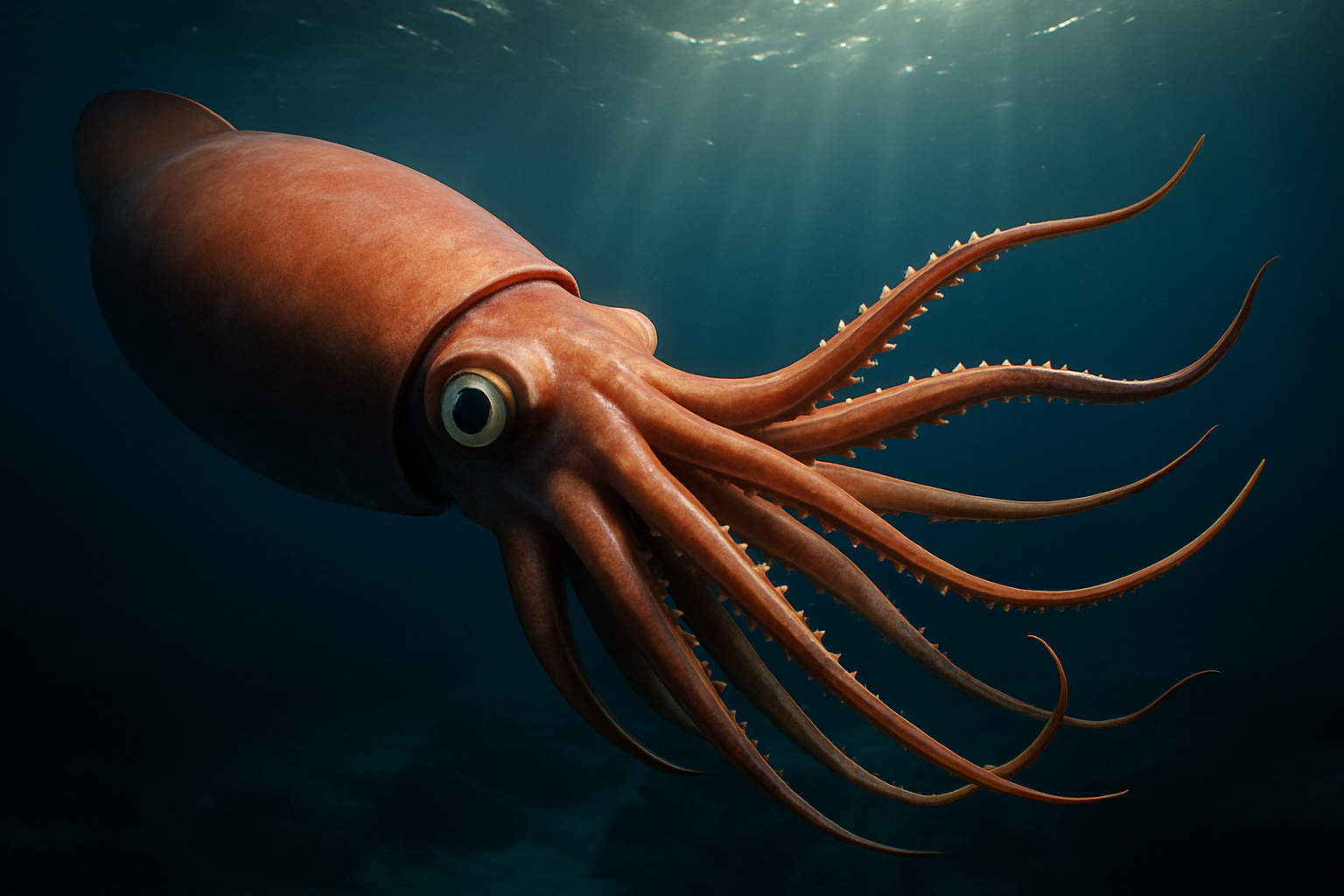
Imagine dissecting a sperm whale captured off the freezing Antarctic coast in 1925 and finding the bizarre, sharp beak fragments of an unknown sea creature resting inside its stomach [1, 4, 7]. That unexpected discovery provided humanity with its very first glimpse of Mesonychoteuthis hamiltoni, the species now known as the colossal squid [1]. While popular culture frequently shines the spotlight on the giant squid, it is the colossal squid that holds the ultimate heavyweight crown among all living backboneless animals, or invertebrates, on Earth [1][2].
Putting the Heavyweight Champion on the Scale
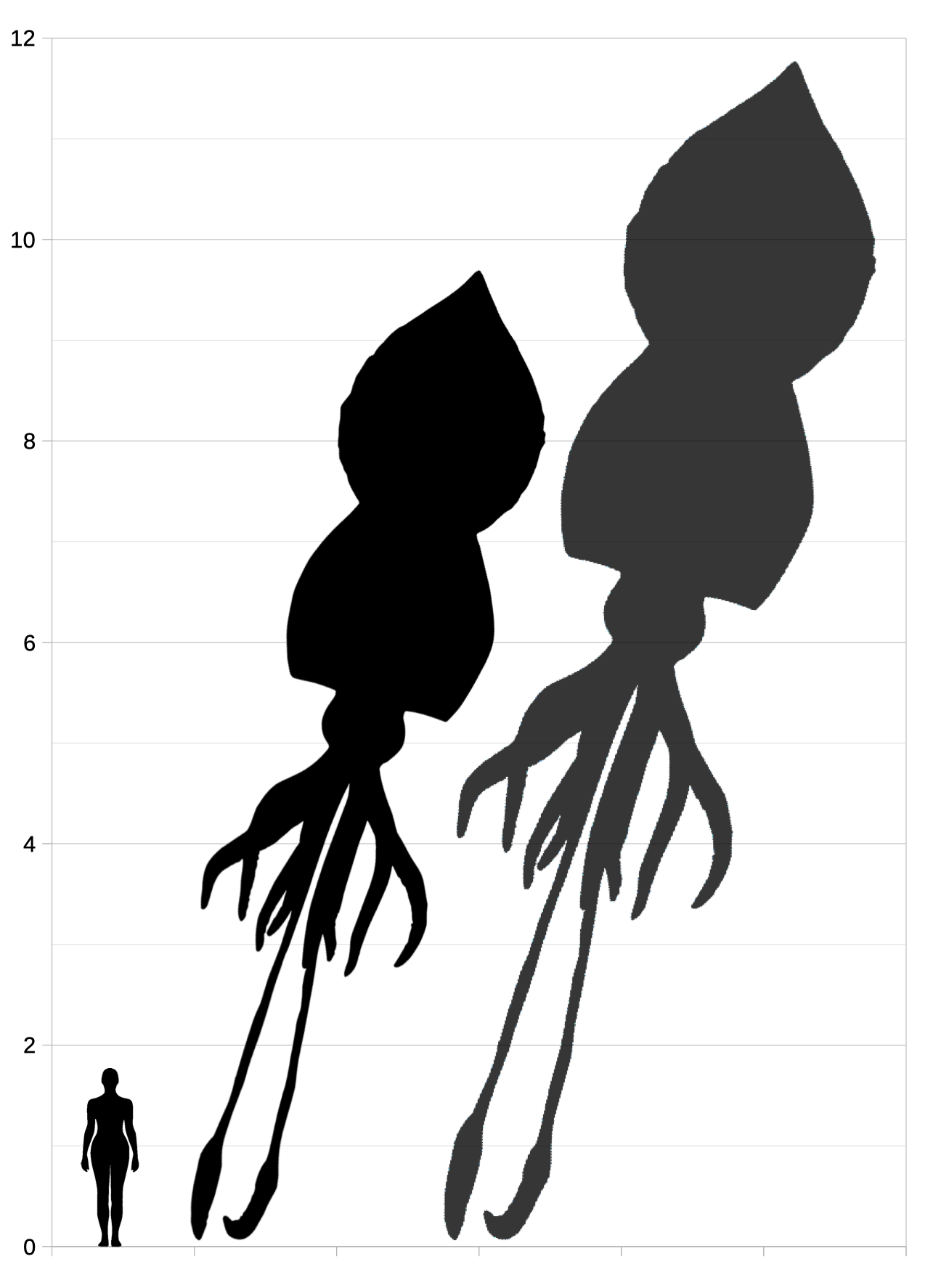
When comparing marine giants, weight tells a far more impressive story than length alone [1, 3, 5]. In the public imagination, the giant squid (Architeuthis dux) often reigns as the ultimate monster of the deep [3]. However, when placed on a scale, Mesonychoteuthis hamiltoni completely outclasses its famous relative in total body mass and thickness [1, 3, 5]. An adult giant squid typically weighs between 150 and 275 kilograms [1, 3, 5]. By contrast, a colossal squid specimen pulled from the Ross Sea in 2007 registered a verified weight of 495 kilograms [1, 2, 5].
That 495-kilogram measurement firmly establishes the colossal squid as the heaviest invertebrate ever recorded by science [1, 2, 5]. Beyond its sheer mass, the animal possesses another record-breaking feature: the largest eyes in the entire animal kingdom [1, 4, 5]. In preserved scientific specimens, the diameter of these massive optical organs measures approximately 27 centimeters across [1, 4, 5]. Scientists estimate that in a living individual swimming through the dark abyss, the eyes expand to between 30 and 40 centimeters in diameter—making them roughly the size of an official basketball [1, 4, 5].
These basketball-sized eyes are perfectly calibrated to gather the faintest traces of light in the oceanic twilight zone [1, 4, 5]. By capturing bioluminescent glows and subtle shadows in the dark, the colossal squid can detect distant movements long before other ocean creatures realize it is hovering nearby [1, 4, 5].
Basketball Eyes and Swiveling Hooks
Taxonomically, the colossal squid belongs to the glass squid family, known formally as Cranchiidae [1]. It represents the sole species within its entire genus, Mesonychoteuthis [1]. The species spends its entire life cycle in the cold polar oceans located south of the Antarctic Convergence, with dense populations concentrated in deep polar waters like the Ross Sea and Weddell Sea [1][4].
The creature’s vertical distribution changes significantly as it grows [1]. Younger juveniles inhabit the mid-water ocean layer, known technically as the mesopelagic zone, at depths ranging from 20 to 1,000 meters [1]. As they mature into fully grown adults, they migrate deeper down into the dark deep-water ocean layer, or bathypelagic zone, where they reside between 500 and more than 2,000 meters below the surface [1].
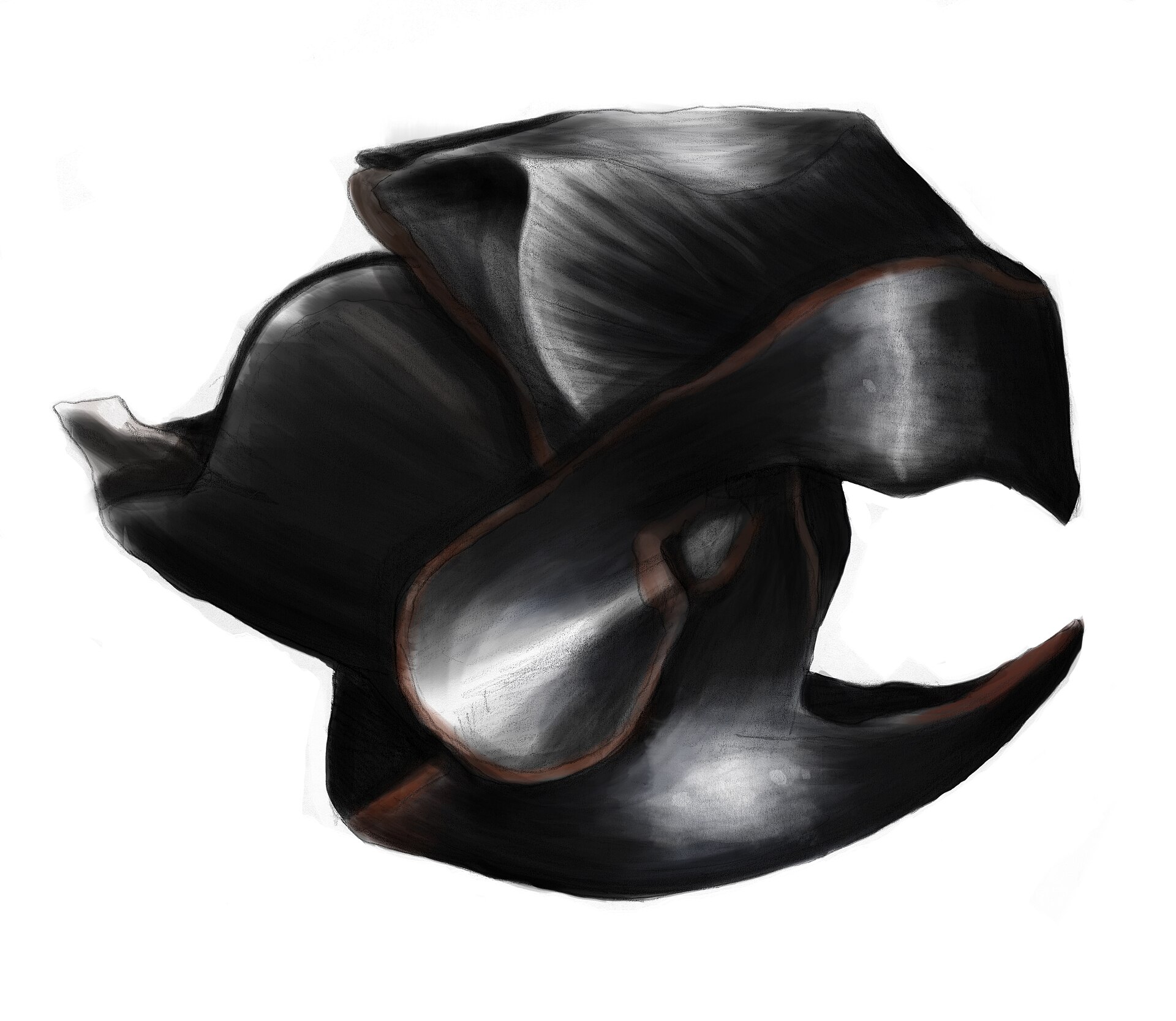
To capture prey in this icy realm, Mesonychoteuthis hamiltoni possesses specialized tools at the ends of its feeding arms [2][4]. On these arm tips, formally referred to as tentacle clubs, the colossal squid carries two distinct rows of sharp hooks [2][4]. Unlike static claws, these hooks are capable of rotating a full 360 degrees [2][4]. When the squid strikes, these swiveling blades hook deeply into soft tissue, ensuring that slippery prey cannot break free [2][4].
The Floating Ambush Predator of the Antarctic
Despite its formidable size and terrifying tentacles, popular myths regarding its hunting style are far from accurate [2][6]. Stories often depict the colossal squid as an aggressive, high-speed sprinter that pursues prey across long ocean distances [2][6]. However, living in the extreme cold of polar ocean depths requires strict energy conservation, making high-speed pursuit biologically impractical [2][6].
Instead of active swimming, the colossal squid relies on an ingenious physiological adaptation for floating effortlessly [2][6]. Its body stores a specialized ammonium chloride solution within internal fluid cavities, making its overall density equal to the surrounding seawater [2][6]. This natural mechanism gives the animal neutral buoyancy, allowing it to suspend itself motionless in the water column without expending energy [2][6].
Operating as a slow-moving ambush hunter with a remarkably low metabolic rate, the colossal squid simply drifts and waits for prey to pass close by [2, 4, 6]. Its primary food source in the deep Antarctic waters is the Antarctic toothfish [7]. The relationship between these two species has been repeatedly verified through stomach content analysis and through line-stealing behavior, known as depredation [7]. Commercial fishing vessels targeting Antarctic toothfish frequently report colossal squids attacking and taking fish directly off deep-sea longlines before the gear can be hauled to the surface [7].
Titans of the Deep: Battles with Sperm Whales
While the colossal squid is an effective predator, it is also targeted by the ocean’s premier deep-diving mammal: the sperm whale [4][7]. The ecological interaction between these two massive marine animals represents one of the most intense predator-prey relationships in polar waters [4][7]. Direct observations of their battles deep beneath the Antarctic ice remain impossible, but physical evidence tells a clear story [4][7].
When scientists inspect the stomachs of sperm whales caught in southern waters, they frequently uncover thousands of hard, parrot-like beak structures [4][7]. Because these chitinous beaks resist digestion, they serve as permanent records proving that adult colossal squids form a massive portion of the sperm whale’s diet [4][7].
The battles between these ocean giants leave marks on both combatants [2, 4, 7]. Sperm whales captured by ocean vessels frequently show circular scars and deep cuts across their skin [4][7]. These skin scars match the exact shape and arrangement of the colossal squid’s 360-degree rotating tentacle hooks, demonstrating that squids lash out forcefully during survival struggles thousands of meters below the surface [2, 4, 7].
Separating Fact from Deep-Sea Fiction
The combination of extreme depth and remote Antarctic geography has allowed sensational rumors about the colossal squid’s size to circulate for decades [1, 5, 6]. Misleading reports often claim that Mesonychoteuthis hamiltoni can reach total lengths of 20 to 30 meters [1, 5, 6]. Scientific investigations have shown that these exaggerated figures stem from dead specimens whose elastic tentacles stretched out unnaturally during capture or decay [1, 5, 6].
In life, the total length of an adult colossal squid is estimated to be roughly 9 to 10 meters, with maximum scientific estimates extending to around 14 meters [1, 5, 6]. While a giant squid may possess longer, thinner tentacles, the colossal squid remains far heavier and more robustly built, securing its status as the supreme heavyweight [1, 3, 5].
Uncertainties also exist regarding the absolute maximum weight the species can achieve [1, 5, 6]. Some marine biologists hypothesize that giant individuals could weigh 600 to 700 kilograms, or even up to 1 metric ton, based on mathematical scaling of massive chitinous beaks found in sperm whale stomachs [1, 5, 6]. However, science strictly distinguishes indirect estimates from physical evidence [1, 5, 6]. Because the largest intact specimen ever weighed physically stopped the scales at 495 kilograms, claims of 1-ton squids remain unverified hypotheses [1, 5, 6].
Many other fundamental aspects of the colossal squid’s life history remain wrapped in deep-sea darkness [1]. Researchers have never directly observed living adult squids engaged in mating or egg-laying behavior, leaving their reproductive cycles entirely unconfirmed [1]. Furthermore, models regarding their exact lifespan and age growth lines are based on indirect calculations rather than direct measurement [1]. Even so, the International Union for Conservation of Nature (IUCN) currently classifies Mesonychoteuthis hamiltoni as Least Concern, reflecting its wide distribution across remote polar deep waters beyond major human threats [1].
The Legacy of the Polar Abyss
From the enigmatic beak fragments recovered inside a sperm whale’s stomach in 1925 to the frozen 495-kilogram specimen examined in 2007, Mesonychoteuthis hamiltoni has continually redefined how we measure life in the extreme ocean [1, 2, 5, 7]. It remains an incredible study in evolutionary adaptation: a massive half-ton invertebrate suspended silently in dark, freezing waters, monitoring its world with basketball-sized eyes designed to catch the faintest flicker of light [1, 2, 4, 5]. As deep-sea exploration continues, this Antarctic giant stands as the true undisputed heavyweight king of the ocean depths [1, 2, 3, 5].
Featured image credit
Created by TaxonGuru · AI-generated featured explanatory reconstruction · not a documentary photograph · generated 2026-08-10
Sources and editorial policy
This feature is based on publicly available scientific and institutional sources listed below. Read our AI and editorial policy. Report a correction: kjhtime@gmail.com
References
- tepapa.govt.nz — vertexaisearch.cloud.google.com, accessed 2026-08-10
- tepapa.govt.nz — vertexaisearch.cloud.google.com, accessed 2026-08-10
- wikipedia.org — vertexaisearch.cloud.google.com, accessed 2026-08-10
- marinebio.org — vertexaisearch.cloud.google.com, accessed 2026-08-10
- britannica.com — vertexaisearch.cloud.google.com, accessed 2026-08-10
- deepseanews.com — vertexaisearch.cloud.google.com, accessed 2026-08-10
- researchgate.net — vertexaisearch.cloud.google.com, accessed 2026-08-10