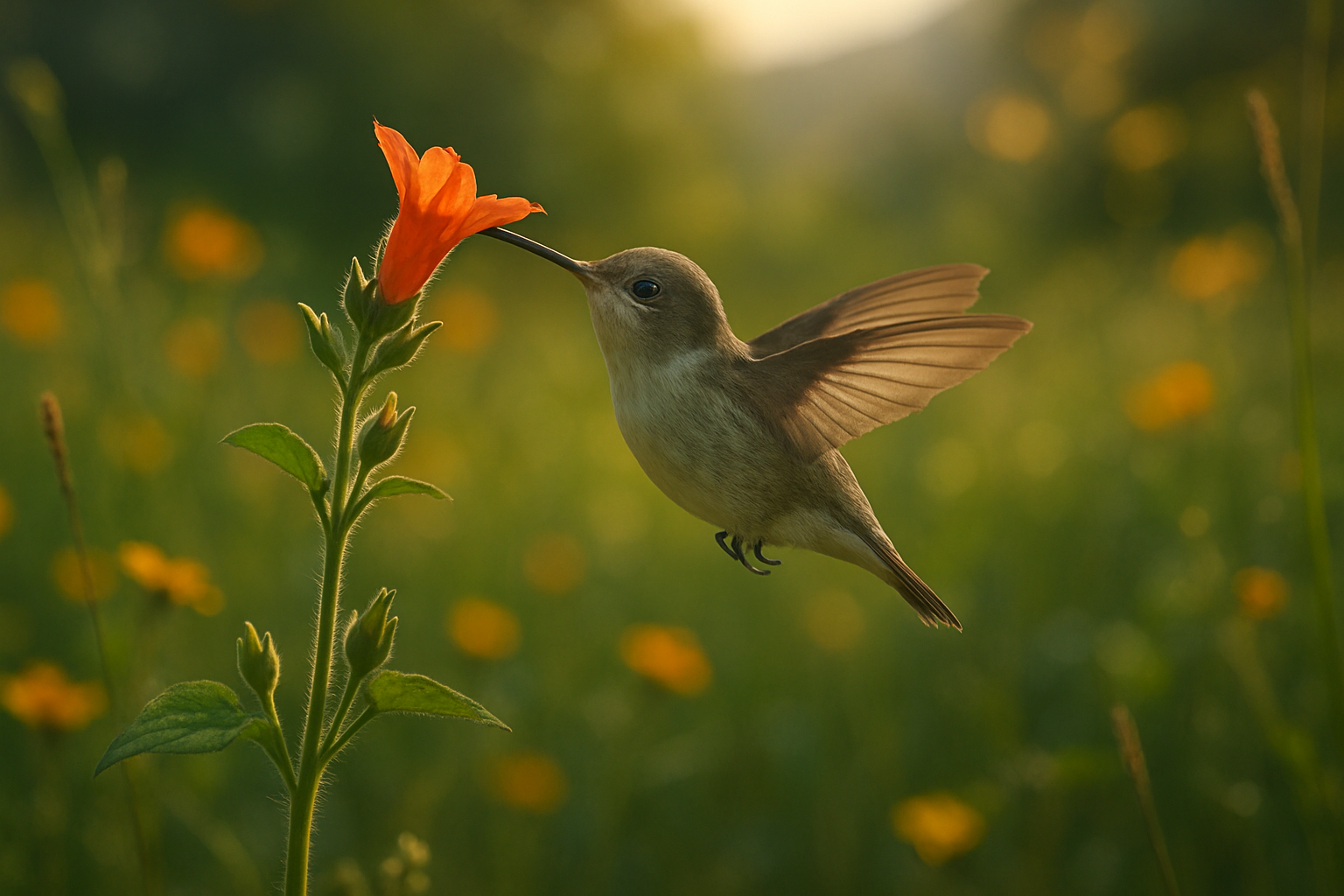
If you placed two standard paperclips or a single U.S. dime in the palm of your hand, you would feel an almost imperceptible weight of roughly two grams. Now, imagine that negligible mass covered in tiny feathers, equipped with a delicate beak, and beating a minuscule heart inside a living vertebrate body. Is it really possible for a warm-blooded, egg-laying bird to weigh less than a coin? The answer belongs to the Bee Hummingbird (Mellisuga helenae), an extraordinary species that holds the undisputed title of the world’s smallest living bird [1], [4].
Because of its micro-sized frame and the faint buzzing sound produced by its rapid movements, observers frequently mistake this tiny creature for a bumblebee or a large flying insect [1], [5]. Yet, beneath those microscopic feathers lies a fully developed avian skeleton and system belonging to the family Trochilidae and the order Apodiformes. How does such a minuscule bird navigate its environment, raise its young, and sustain one of the most intense energy requirements in the animal kingdom?
The Size Lab: Measuring the World’s Lightest Bird
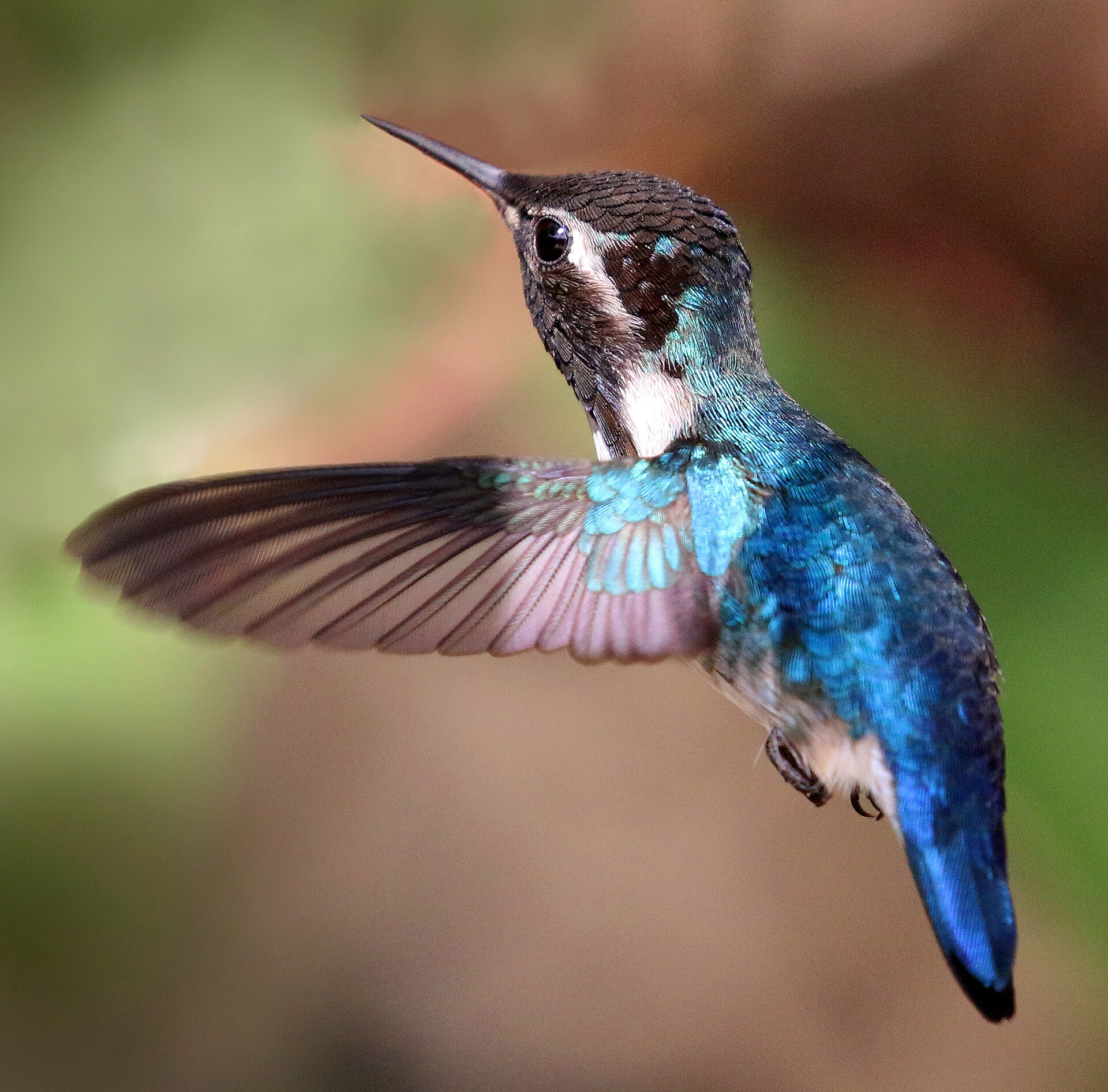
When biological researchers measure bird species, they evaluate total length and body mass. The average adult male Bee Hummingbird reaches a total body length of approximately 5.5 centimeters and weighs a mere 1.95 grams on average [1], [4]. To visualize this scale, picture a feathered creature that is barely longer than an average adult human thumb from joint to tip.
Interestingly, this species exhibits a pattern where females grow slightly larger than males [2], [5]. In scientific terms, when females of a species exceed males in physical dimensions, researchers describe this phenomenon as reverse sexual dimorphism—a formal term for female-skewed size differences. A female Bee Hummingbird typically grows to about 6.1 centimeters in total length and can weigh up to 2.6 grams [2], [5]. Even at maximum female weight, the bird weighs less than half of a standard sheet of printer paper.
Home Territory and Common Misconceptions
Where does one find the world’s lightest avian species? The Bee Hummingbird is an endemic resident, meaning it lives exclusively within a restricted geographic area, confined entirely to the Cuban archipelago [1], [4]. Its native habitat spans mainland Cuba and Isla de la Juventud [1], [4]. Within these island territories, the species occupies lowland dense forests, forest edges, coastal shrublands, swamps, and quiet gardens rich in native flowering plants [4].
Because of its specialized geographic origin and common name, observers often confuse the Bee Hummingbird with other taxons. A widespread misconception is that the Bee Hummingbird is identical to the Bumblebee Hummingbird [1], [4]. While their common names sound nearly identical, the Bumblebee Hummingbird (Selasphorus heloisa) is an entirely different species native to Mexico [1], [4]. Furthermore, despite its insect-like size and audible hum, Mellisuga helenae is unequivocally a vertebrate bird within the class Aves, completely distinct from any invertebrate insect [1], [5].
High-Octane Engines and 80 Beats per Second
Sustaining powered flight in a body weighing under two grams requires remarkable physical specialization. During standard horizontal flight and stationary hovering, a Bee Hummingbird flaps its wings approximately 80 times every single second [3], [6]. This rapid movement causes the surrounding air to vibrate, producing the characteristic buzzing sound that leads observers to mistake the bird for a bee [3], [6].
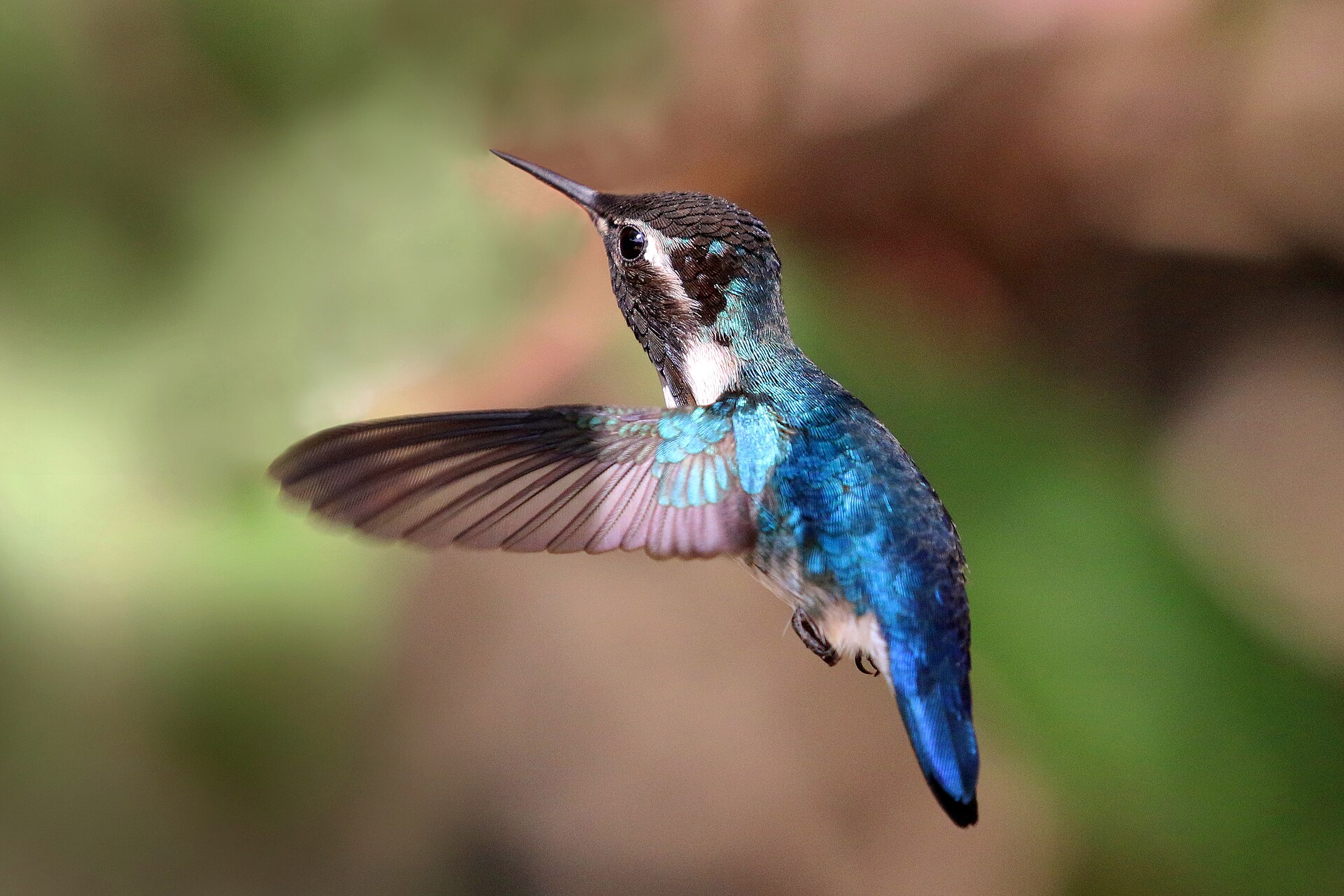
To power such extraordinary mechanical motion, the bird operates on an extremely elevated metabolic rate—the biological speed at which an organism converts food into physical energy [4], [6]. To meet these massive daily energy demands, a single Bee Hummingbird must visit between 1,000 and 1,500 flowers every day to gather floral nectar [4], [6]. While nectar supplies high-speed sugar fuel, it lacks structural protein. Therefore, to round out its diet, the bird also hunts and consumes tiny insects [4], [6].
Nightly Hibernation: Explaining Daily Torpor
What happens when the sun sets and flower nectar is no longer available? If a Bee Hummingbird maintained its high daytime metabolic pace through a cool night without feeding, its minute energy reserves would exhaust in a matter of hours [3], [5].
To solve this night-time energy challenge, the bird enters a state known to biologists as daily torpor [3], [5]. Plainly explained, daily torpor is a temporary, controlled nightly dormancy where an animal intentionally slows down its bodily functions to conserve energy [3], [5]. During this state of torpor, the bird lowers its internal body temperature and drops its heart rate dramatically down to roughly 50 beats per minute [3], [5]. This internal slowdown minimizes overnight energy consumption, allowing the bird to survive until dawn and resume its intense foraging schedule [3], [5].
Spiderwebs, Moss, and Coffee-Bean Eggs
The micro scale of the Bee Hummingbird extends naturally to its reproductive behavior. When a female prepares to lay her clutch, she constructs a nest built out of soft plant moss bound tightly together with sticky spiderwebs [2], [4]. The elastic property of spider silk allows the tiny cup-shaped nest to stretch slightly as the chicks grow inside [2], [4].
Inside this delicate nest, the female lays a strict clutch size of exactly two eggs [2], [4]. Each individual egg measures between 8 and 11 millimeters in length—making an egg roughly the same physical size as a single roasted coffee bean [2], [4]. Incubating two eggs the size of coffee beans inside a nest held together by spider threads represents one of nature’s most delicate nesting strategies.
Scientific Investigations: High-Speed Dives and Changing Feathers
While many aspects of Mellisuga helenae biology are firmly documented, researchers continue to clarify details regarding flight mechanics and adult male feather patterns. For example, some field reports indicate that during dynamic courtship display dives, the bird’s wingbeat frequency can surge up to 200 beats per second [6], [7]. However, scientific analysis notes that this 200-beat frequency is not a regular flight speed; rather, it represents a momentary maximum burst achieved exclusively during short courtship maneuvers [6], [7].
Another topic of recent research involves adult male appearance throughout the year. Historically, field guides described adult males as retaining bright red head feathers continuously across all seasons [7], [8]. However, recent ornithological studies show that adult males undergo a non-breeding molt—a scientific term known as a prealternate molt—following the breeding season [7], [8]. During this period, adult males temporarily shed their bright feathers and acquire a non-breeding plumage that closely resembles the quieter coloration of females [7], [8].
Conserving Cuba’s Micro Champion
Currently, the International Union for Conservation of Nature (IUCN) lists the Bee Hummingbird as Near Threatened on its Red List [1], [4]. Because its range is restricted to specific island habitats within the Cuban archipelago, it remains sensitive to local habitat clearing and environmental shifts [1], [4]. Scientists also point out current research limitations, noting a lack of recent, precise population survey data across wild Cuban populations.
When you reflect back on holding a two-gram coin or a pair of paperclips in your palm, it becomes truly remarkable to picture the Bee Hummingbird [1], [4]. Weighing less than a coin, laying eggs no larger than coffee beans, and beating its wings 80 times a second in the Cuban air, this tiny avian marvel proves that nature’s most complex engineering can fit into the smallest packages [1], [2], [3], [4].
Featured image credit
Created by TaxonGuru · AI-generated featured explanatory reconstruction · not a documentary photograph · generated 2026-08-10
Sources and editorial policy
This feature is based on publicly available scientific and institutional sources listed below. Read our AI and editorial policy. Report a correction: kjhtime@gmail.com
References
- wikipedia.org — vertexaisearch.cloud.google.com, accessed 2026-08-10
- faunatheapp.com — vertexaisearch.cloud.google.com, accessed 2026-08-10
- usf.edu — vertexaisearch.cloud.google.com, accessed 2026-08-10
- animalia.bio — vertexaisearch.cloud.google.com, accessed 2026-08-10
- animalspot.net — vertexaisearch.cloud.google.com, accessed 2026-08-10
- birda.org — vertexaisearch.cloud.google.com, accessed 2026-08-10
- researchgate.net — vertexaisearch.cloud.google.com, accessed 2026-08-10
- researchgate.net — vertexaisearch.cloud.google.com, accessed 2026-08-10