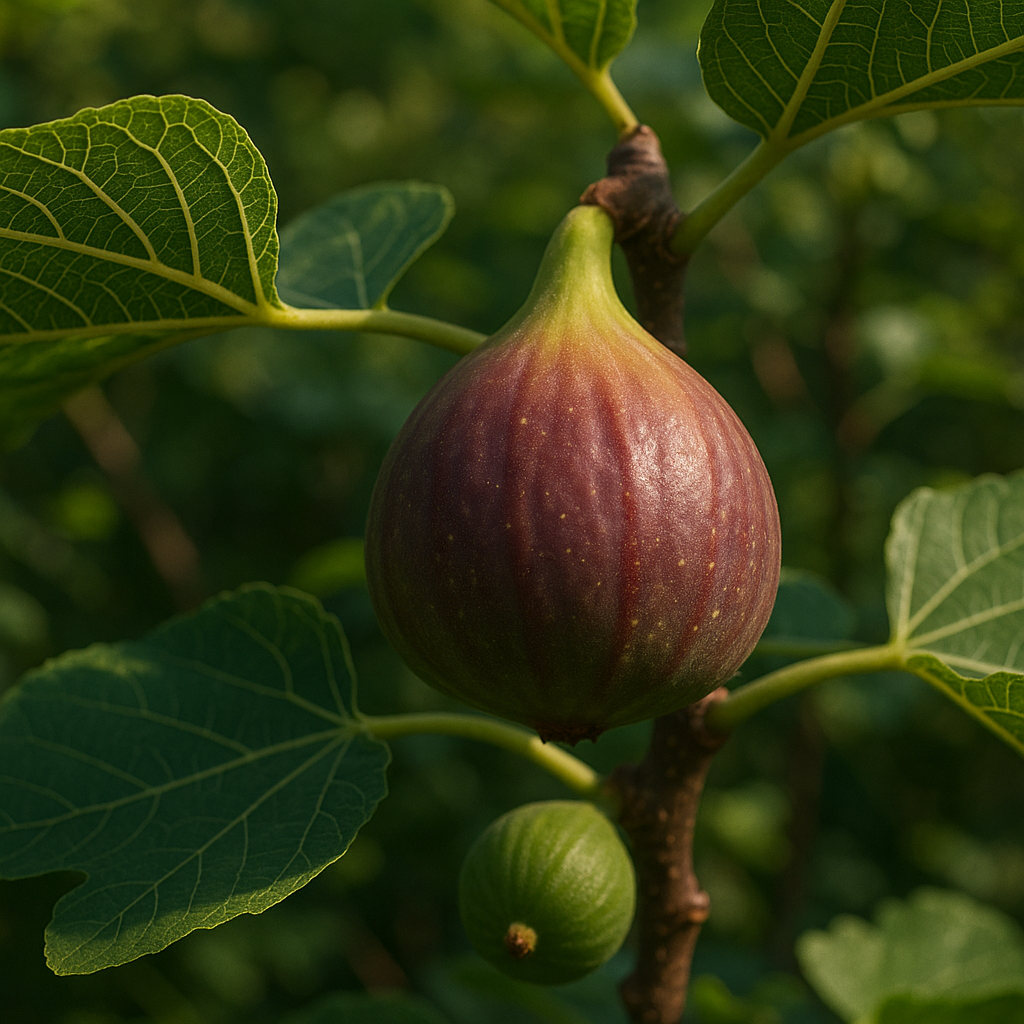
무화과: ‘벌’거벗은 꽃들의 은밀한 파티, 그 야릇한 진실을 파헤치다!
분류 트리: Plantae > Angiospermae > Rosales > Moraceae
[1부: 한국어 버전]
Hook: 꽃이 없다고? 사실은 열매 안에 수많은 꽃들이 갇혀 벌과 은밀한 춤을 추는 야릇한 관계!
안녕하세요, 자연의 은밀한 이야기들을 파헤치는 에디터 택슨구루입니다! 오늘은 여러분이 너무나도 사랑하는, 달콤하고 부드러운 그 열매에 대한 이야기입니다. 이름하여 ‘무화과(無花果)’, 즉 ‘꽃이 없는 과일’이라 불리죠. 하지만 정말 꽃이 없을까요? 만약 무화과가 당신의 상상을 초월하는 은밀하고도 야릇한 비밀을 품고 있다면 어떠시겠습니까? 사실, 무화과는 꽃이 없는 것이 아니라, 수백 개의 작은 꽃들이 닫힌 방 안에서 벌들과 끈적한 춤을 추는, 마치 비밀 클럽 같은 열매라는 사실! 자, 이제 이 기묘한 식물의 깊숙한 속내를 함께 들여다보시죠.
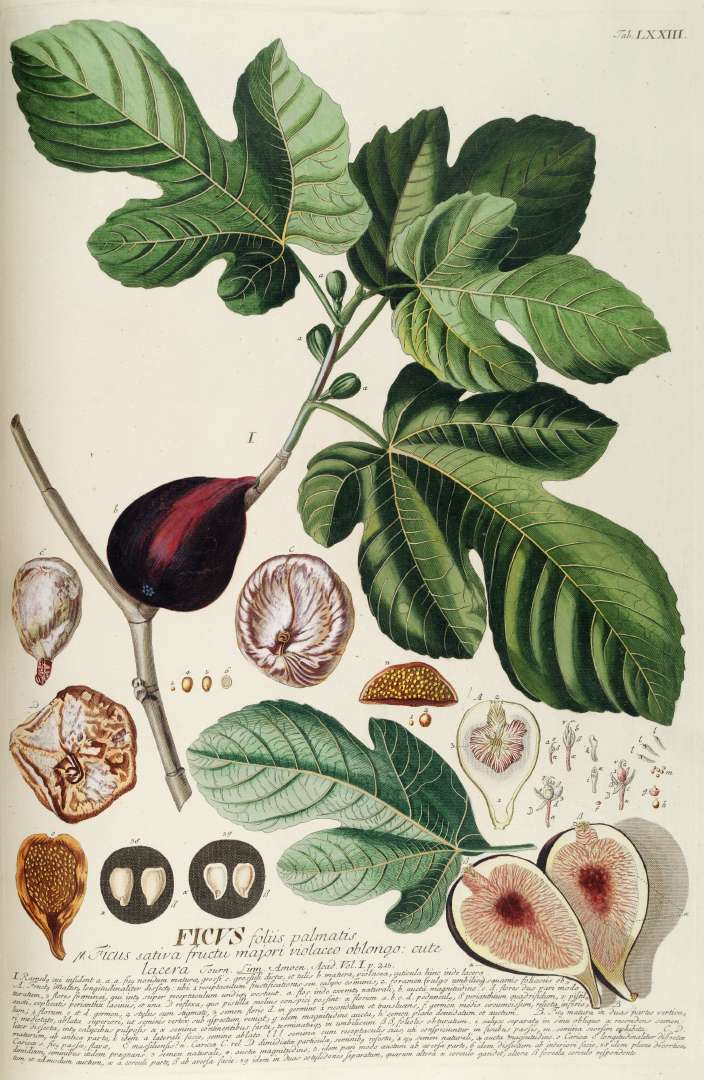
Scientific Backbone: 학명 Ficus carica, 평범함 속에 감춰진 혁신적인 번식 전략
Ficus carica, 이 우아한 학명의 주인공은 바로 우리가 ‘무화과’라고 부르는 종입니다. 장미목 뽕나무과에 속하는 이 식물은 전 세계적으로 널리 재배되며, 그 달콤한 맛으로 고대부터 사랑받아 왔습니다. 겉보기엔 그저 평범한 열매처럼 보이지만, 생물학자의 눈으로 보면 그 어떤 식물보다도 파격적이고 혁신적인 번식 전략을 가지고 있습니다. 일반적인 식물들이 활짝 꽃잎을 열고 꿀벌을 유혹하는 것과는 정반대로, 무화과는 자신만의 폐쇄적인 공간에서 은밀한 번식 드라마를 연출합니다.
Deep Anatomy: 열매 속에 갇힌 꽃들과 무화과 말벌의 치명적인 만남
무화과 열매, 사실은 열매가 아니라 ‘은화과(隱花果, syconium)’라고 불리는 특수한 꽃차례(inflorescence)입니다. 이 속에는 수컷 꽃과 암컷 꽃 수백 개가 마치 스탠딩 파티를 즐기듯 빽빽하게 모여 있습니다. 이 파티의 문은 ‘소공(ostiole)’이라 불리는 작은 구멍 하나뿐이죠. 그리고 이 은밀한 파티의 유일한 초대 손님은 바로 ‘무화과 말벌(fig wasp)’입니다. 암컷 말벌은 이 좁은 구멍을 뚫고 들어와 안에서 알을 낳고 수정을 돕습니다. 어떤 암꽃들은 알을 낳기에 너무 짧아 씨앗을 생산하고, 어떤 암꽃들은 알을 낳기에 충분히 길어 말벌 애벌레의 보금자리가 됩니다. 말벌은 이곳에서 태어나 자라고, 짝짓기를 한 뒤, 수컷은 이 은밀한 방에서 생을 마감합니다. 오직 암컷 말벌만이 꽃가루를 잔뜩 묻힌 채 다음 무화과 파티를 찾아 떠나는 거죠. 이 얼마나 야릇하고 치밀한 공생 관계입니까!

Evolutionary Context: 운명처럼 얽힌 공진화의 드라마
이 무화과와 무화과 말벌의 관계는 생물학계에서 공진화(co-evolution)의 가장 극적인 예시 중 하나로 손꼽힙니다. 수백만 년에 걸쳐 서로에게 완벽하게 최적화된 이 관계는, 한쪽이 없으면 다른 한쪽도 존재할 수 없는 절대적인 상호 의존성을 보여줍니다. 무화과는 말벌에게 안전한 번식처와 먹이를 제공하고, 말벌은 무화과에게 유일한 수분 매개자 역할을 합니다. 마치 운명적으로 엮인 연인처럼, 이들은 서로의 생존을 위해 필수적인 ‘기브 앤 테이크’를 완성했습니다. 이러한 전략은 포식자로부터 꽃을 보호하고, 특정 수분 매개자에게만 의존함으로써 유전자 교환의 효율성을 극대화하는 이점을 제공합니다.
Verdict & Trivia: 무화과를 맛보는 당신에게 전하는 마지막 이야기
그러니 다음번에 무화과를 드실 때, 그 달콤함 뒤에 숨겨진 ‘벌’거벗은 꽃들의 은밀한 파티, 그리고 그 파티를 가능하게 한 무화과 말벌의 헌신적인 노고를 한번쯤 떠올려 보세요. 혹자는 “무화과를 먹으면 말벌 시체를 먹는 것”이라고 말하기도 하지만, 걱정 마세요! 대부분의 품종은 암컷 말벌이 꽃가루만 전달하고 나간 뒤 과육이 숙성되는 과정에서 말벌 시체가 효소에 의해 분해됩니다. 물론, 어떤 야생 무화과에는 잔해가 남아있을 수도 있지만, 상업적으로 재배되는 무화과는 대부분 안전합니다. 무화과는 단순한 과일이 아닙니다. 그것은 자연이 빚어낸 가장 기묘하고 아름다운 생존 드라마이며, 생명과 생명 사이의 놀라운 연결고리를 보여주는 살아있는 증거입니다. 에디터 택슨구루는 다음에도 더욱 흥미로운 자연의 비밀을 들고 찾아오겠습니다!
Common Fig: Unveiling the Intimate Party of ‘Naked’ Flowers and Wasps!
Classification Tree: Plantae > Angiospermae > Rosales > Moraceae
[2부: Global Readers English Version]
Hook: No Flowers? Actually, countless flowers are trapped inside the fruit, dancing an intimate dance with wasps!
Hello, global readers! Editor TaxonGuru here, ready to peel back the layers of nature’s most enigmatic stories! Today, we’re diving into the sweet, soft fruit you all adore: the Common Fig (Ficus carica). It’s famously known as “the fruit without flowers.” But is that truly the case? What if the fig harbors a secret so intimate and bizarre, it defies your wildest imagination? The truth is, the fig isn’t flowerless; it’s a secret club, a hidden chamber where hundreds of tiny flowers dance a sticky tango with wasps! Join me as we explore the deep anatomy of this peculiar plant.
Scientific Backbone: Ficus carica – An Evolutionary Masterpiece Hidden in Plain Sight
Ficus carica, the elegant scientific name for what we commonly call the Common Fig, is a member of the Rosales order and Moraceae family. This plant has been cultivated and cherished for its delightful sweetness since ancient times. While it appears to be an ordinary fruit, to a biologist’s eye, it possesses one of the most radical and innovative reproductive strategies in the plant kingdom. Unlike most plants that unfurl their petals to entice pollinators with nectar, the fig stages its intimate reproductive drama within its own sealed sanctuary.
Deep Anatomy: The Fruit that’s Not a Fruit and Its Waspish Love Affair
What we commonly perceive as a fig “fruit” is, in biological terms, not a true fruit but a specialized inflorescence called a ‘syconium’. Inside this syconium, hundreds of male and female flowers are densely packed, much like guests at a standing-room-only party. The only entrance to this exclusive bash is a tiny opening called the ‘ostiole’. And the sole invited guest to this intimate gathering? The fig wasp. A female fig wasp, laden with pollen, squeezes through the ostiole to enter, lay her eggs, and facilitate pollination. Some female flowers are too short for the wasp to lay eggs in and instead produce seeds, while others are long enough to become nurseries for the wasp larvae. The wasps hatch, mature, and mate inside this chamber. The male wasps, having fulfilled their purpose, die within this secret room. Only the fertilized female wasps, now covered in pollen, escape through the ostiole to seek out the next fig party. What an intimate and meticulously coordinated symbiosis!

Evolutionary Context: A Fated Dance of Co-evolution
The relationship between the fig and the fig wasp is hailed by biologists as one of the most dramatic examples of co-evolution. For millions of years, this duo has optimized their lives around each other, demonstrating an absolute interdependence where one cannot exist without the other. The fig provides the wasp with a safe haven for reproduction and nourishment, while the wasp serves as the fig’s sole pollinator. Like a pair of fated lovers, they have perfected a crucial give-and-take essential for their survival. This strategy offers benefits like protecting the delicate flowers from predators and maximizing genetic exchange efficiency by relying on a specific pollinator.
Verdict & Trivia: The Unseen Wonders in Every Bite of Fig
So, the next time you savor a fig, remember the intimate party of ‘naked’ flowers hidden within its sweetness, and the dedicated efforts of the fig wasp that made it all possible. Some might grimace, thinking they’re “eating dead wasps” when enjoying a fig, but fear not! In most cultivated varieties, once the female wasp delivers pollen and exits (or perishes), enzymes within the ripening fig break down her body. While some wild figs might contain remnants, commercially grown figs are generally safe to consume. The fig is not just a fruit; it’s one of nature’s most bizarre and beautiful survival dramas, a living testament to the astonishing interconnectedness of life. Editor TaxonGuru will be back soon with more fascinating secrets from the natural world!