[1부: 한국어 버전]
분류 트리: Plantae > Angiospermae > Malvales > Malvaceae
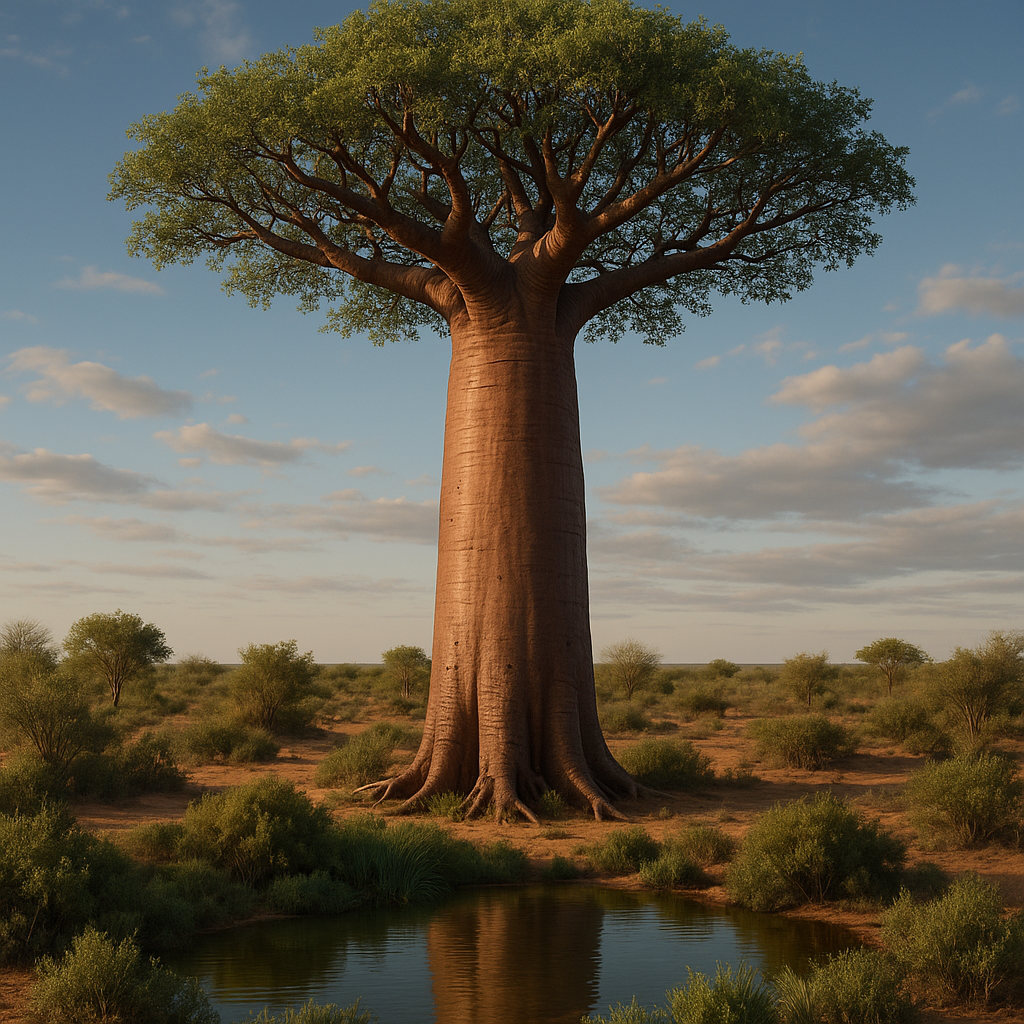
안녕하세요, 에디터 택슨구루입니다! 혹시 동화 ‘어린 왕자’에서 코끼리만 한 몸집으로 별을 가득 채우려던 바오밥나무를 기억하시나요? 오늘은 그 상상 속 나무가 현실에서 가장 드라마틱한 비주얼로 우리 앞에 나타난다면 어떨지에 대한 이야기를 해보려 합니다. 마치 뿌리가 하늘로 솟아오른 듯한 기묘한 실루엣, ‘거꾸로 박힌 나무’라는 별명이 너무도 찰떡같이 어울리는 이 식물은 바로 마다가스카르의 상징, 그랑디디에 바오밥(Grandidier’s Baobab)입니다.
시작부터 시선을 강탈하는 이 나무, 과연 어떤 비밀을 품고 있을까요?

학명: Adansonia grandidieri – 비주얼 쇼크 뒤에 숨겨진 이름
오늘의 주인공, Adansonia grandidieri, 즉 ‘그랑디디에 바오밥’은 프랑스의 박물학자이자 탐험가 알프레드 그랑디디에(Alfred Grandidier)의 이름을 따 명명되었습니다. 그 이름만큼이나 웅장하고 독특한 이 나무는 마다가스카르 남서부의 건조한 숲과 관목림에서만 자생하는 고유종입니다. 그 거대한 몸통은 마치 사막 한가운데 떡하니 버티고 선 거대한 물탱크 같죠? 바오밥은 단순한 나무가 아니라, 극한의 환경에서 살아남기 위한 자연의 완벽한 설계도를 보여주는 살아있는 증거라고 할 수 있습니다.
Deep Anatomy: 사막의 오아시스, 수분 탱크의 비밀
그랑디디에 바오밥의 가장 큰 특징은 바로 그 압도적인 크기의 몸통입니다. 이 두꺼운 줄기는 스펀지처럼 물을 흡수하고 저장하는 역할을 합니다. 건기에는 저장해 둔 물로 버티고, 우기에는 단기간에 폭풍 흡입하듯 수분을 빨아들여 몸통을 불리죠. 마치 사막의 거대한 보조배터리 같달까요? 게다가 이 친구들은 증산 작용을 최소화하기 위해 건기에는 잎을 떨어뜨리고, 작고 연두색의 잎들은 수분 손실을 줄이는 데 최적화되어 있습니다. 또, 뿌리는 땅속 깊이 뻗어 지하수를 찾아내고, 동시에 넓게 퍼져 비가 왔을 때 최대한 많은 표면수를 흡수합니다. 이쯤 되면 ‘나무’라기보다는 ‘움직이지 않는 거대한 수분 관리 시스템’에 가깝다고 해야 할 것 같습니다.

Evolutionary Context: 고립된 섬, 생존의 마스터피스
마다가스카르는 오랜 시간 동안 대륙으로부터 고립되어 독자적인 생태계를 발전시켜 왔습니다. 그랑디디에 바오밥 또한 이러한 환경 속에서 진화의 걸작으로 탄생했죠. 수천 년을 살아내는 이 나무들은 가혹한 건기와 변덕스러운 기후 속에서 살아남기 위해 독특한 생존 전략을 개발했습니다. 거대한 몸통에 수분을 저장하는 능력은 물론, 꽃은 밤에 피어 밤에 활동하는 박쥐나 나방을 유인해 수분을 돕게 합니다. 이들은 단순히 살아남는 것을 넘어, 마다가스카르 생태계의 핵심 축으로서 수많은 생명체에게 서식지와 먹이를 제공하며 공생 관계를 유지하고 있습니다.
Verdict & Trivia: 거인의 비명, 우리가 지켜야 할 사막의 꿈
그랑디디에 바오밥은 마다가스카르의 아이콘이자 생물 다양성의 상징입니다. 하지만 안타깝게도 이 거대한 수분 탱크는 멸종 위기종으로 분류되어 있습니다. 무분별한 벌채, 농경지 확대를 위한 서식지 파괴, 그리고 기후 변화는 이 거인들을 위협하고 있습니다. ‘거꾸로 박힌 나무’의 기묘한 아름다움 뒤에는 생존을 위한 처절한 몸부림과 우리에게 보내는 절박한 메시지가 숨어 있습니다. 언젠가 마다가스카르를 방문하게 된다면, 앙상한 가지를 뻗은 채 고고하게 서 있는 그랑디디에 바오밥을 경외심 가득한 눈으로 바라보며 그 위대함을 느껴보시길 바랍니다. 우리는 이 사막의 오아시스가 계속해서 푸른 꿈을 꿀 수 있도록 관심을 가져야 합니다.
다음 시간에도 신비로운 생명체 이야기로 찾아올 에디터 택슨구루였습니다!
[2부: Global Readers English Version]
Taxonomy Tree: Plantae > Angiospermae > Malvales > Malvaceae
Greetings, Editor TaxonGuru here! Do you remember the baobab trees from ‘The Little Prince,’ those colossal giants threatening to engulf an entire planet? Today, we’re diving into a real-world tree that sports an equally dramatic, mind-bending visual. With its branches reaching skyward like tangled roots, earning it the nickname ‘the upside-down tree,’ this botanical marvel is none other than Madagascar’s iconic Grandidier’s Baobab.
This tree is a visual shocker from the get-go, but what secrets does it truly hold?
Scientific Backbone: Adansonia grandidieri – The Name Behind the Visual
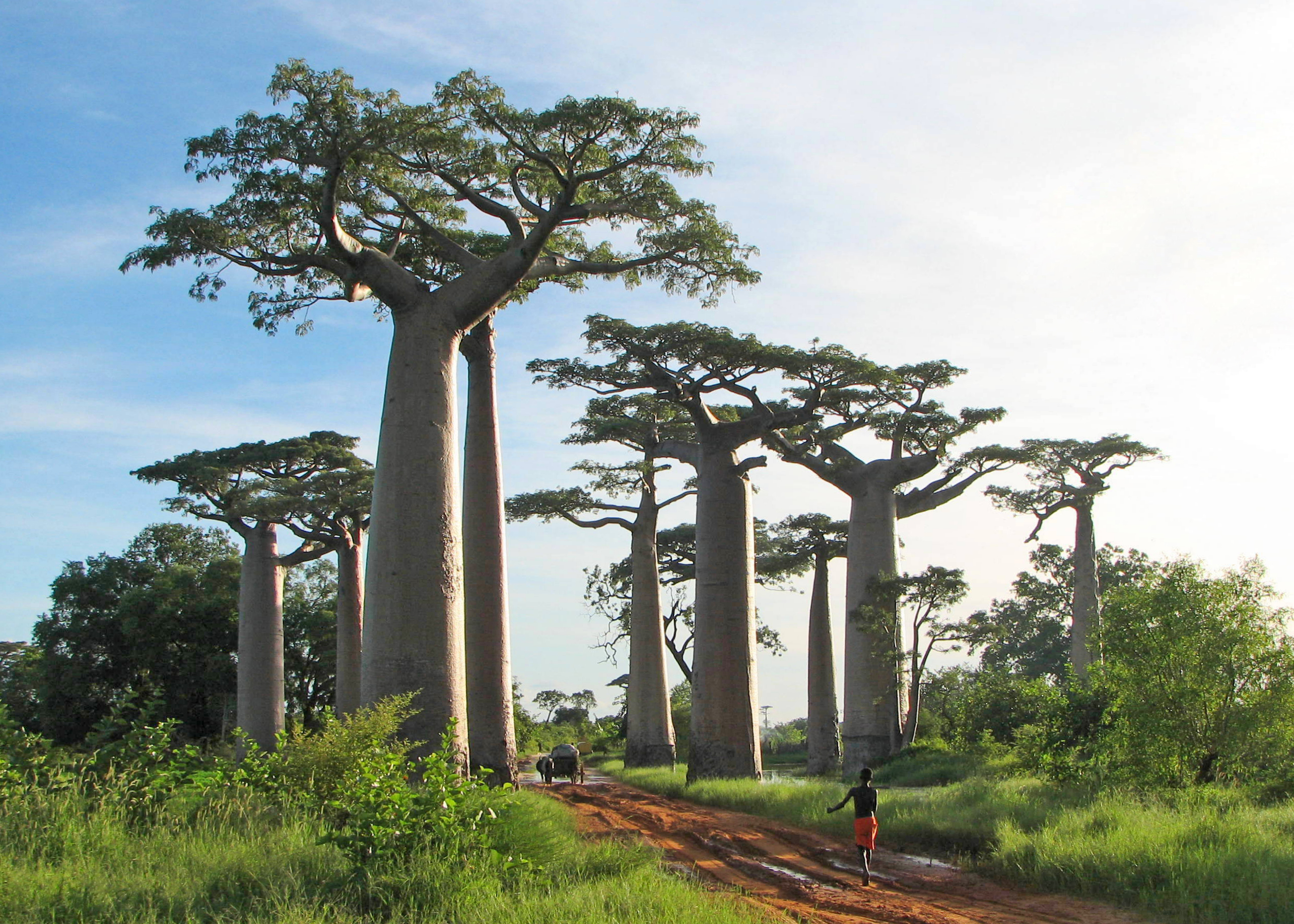
Our star today, Adansonia grandidieri, or ‘Grandidier’s Baobab,’ is named after Alfred Grandidier, a French naturalist and explorer. As grand as its name suggests, this unique tree is an endemic species found exclusively in the dry forests and spiny thickets of southwestern Madagascar. Its enormous trunk looks like a massive water tank standing defiantly in the middle of a desert, doesn’t it? The baobab isn’t just a tree; it’s a living testament to nature’s perfect design for survival in extreme environments.
Deep Anatomy: Desert Oasis, The Secret of the Water Tank
The most striking feature of the Grandidier’s Baobab is its overwhelmingly massive trunk. This thick trunk acts like a sponge, absorbing and storing water. During the dry season, it sustains itself on this stored water, and during the wet season, it swells up, rapidly absorbing moisture. It’s like the desert’s giant power bank! Furthermore, to minimize transpiration, these trees shed their leaves during the dry season, and their small, greenish leaves are optimized to reduce water loss. Their roots also delve deep into the earth to find groundwater while spreading wide to absorb as much surface water as possible when it rains. At this point, it’s less of a ‘tree’ and more of a ‘stationary, colossal water management system.’
Evolutionary Context: Isolated Island, Masterpiece of Survival
Madagascar has long been isolated from continents, allowing it to develop a unique ecosystem. Grandidier’s Baobab is a masterpiece of evolution born from this very environment. Living for thousands of years, these trees have developed distinct survival strategies to endure harsh dry seasons and unpredictable climates. Beyond their ability to store water in their massive trunks, their flowers bloom at night, attracting nocturnal bats and moths for pollination. They don’t just survive; they thrive, serving as a pivotal axis in Madagascar’s ecosystem, providing habitat and food for countless species, maintaining a symbiotic relationship.
Verdict & Trivia: The Giant’s Cry, A Desert Dream We Must Protect
Grandidier’s Baobab is an icon of Madagascar and a symbol of its biodiversity. Sadly, this colossal water tank is classified as an endangered species. Indiscriminate logging, habitat destruction for agricultural expansion, and climate change threaten these giants. Behind the peculiar beauty of ‘the upside-down tree’ lies a desperate struggle for survival and an urgent message for us. If you ever visit Madagascar, I urge you to behold the Grandidier’s Baobab, standing tall and noble with its sparse branches, and feel its magnificence with awe. We must care for this desert oasis so it can continue to dream green.
Until next time, this has been Editor TaxonGuru, bringing you more tales of mysterious life!