반짝이는 이슬의 유혹, 파리지옥의 사촌 ‘끈끈이주걱’ – The Sparkling Deadly Drosera
Plantae > Caryophyllales > Droseraceae > Drosera
[1부: 한국어 버전]
영롱한 이슬방울에 홀려 다가간 순간! 끈적한 촉수로 덥석 잡아먹는 식물계의 ‘사이코패스’? 예쁘다고 만지다간 큰 코 다쳐요!
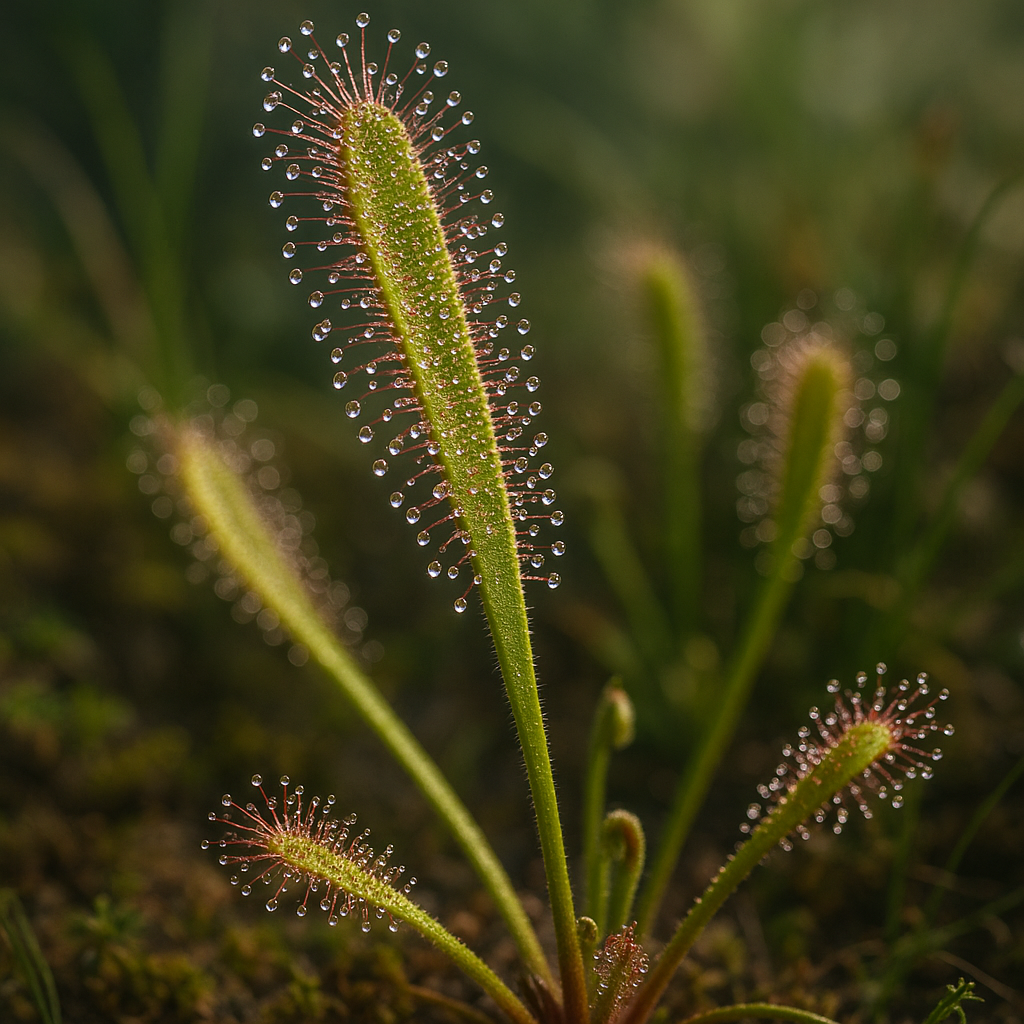
안녕하세요, 식물계의 은밀한 사냥꾼들을 찾아 나서는 에디터 택슨구루입니다. 오늘 여러분께 소개할 친구는 이름부터 영롱한 매력을 뿜어내는 ‘끈끈이주걱’, 그중에서도 특히나 관상 가치가 높아 사랑받는 Drosera capensis, 즉 케이프 끈끈이주걱입니다. 아침 햇살을 받아 반짝이는 이슬방울처럼 영롱한 모습에 혹해 가까이 다가갔다간, 그 즉시 식물계의 베테랑 사냥꾼에게 덜미를 잡힐 수 있다는 사실! 눈부신 아름다움 뒤에 숨겨진 섬뜩한 진실, 지금부터 에디터 택슨구루와 함께 파헤쳐 봅시다!
과학적 등뼈: 반전 매력의 카니보어
끈끈이주걱은 식충식물 대명사 ‘파리지옥’과 같은 식충식물과인 Droseraceae(끈끈이주걱과)에 속하는 친척입니다. 파리지옥이 덫으로 곤충을 가두는 ‘능동적’이라면, 끈끈이주걱은 끈끈한 액체를 분비하는 촉수로 곤충을 유혹해 잡는 ‘수동적’이지만 치명적인 사냥꾼이죠. 그들의 학명 Drosera capensis에서 ‘Drosera’는 그리스어 ‘drosos’에서 유래했는데, 이는 ‘이슬’을 뜻합니다. 잎에 맺힌 끈끈한 액체가 마치 이슬방울처럼 보이기 때문이죠. 이 매혹적인 이슬이야말로 곤충들에게는 달콤한 유혹이자 죽음의 덫이 됩니다. 주로 영양분이 부족한 습지나 척박한 땅에서 생존하기 위해 진화한, 그야말로 자연의 지혜가 담긴 결과물입니다.
심층 해부: 끈적임 뒤에 숨겨진 정교한 메커니즘
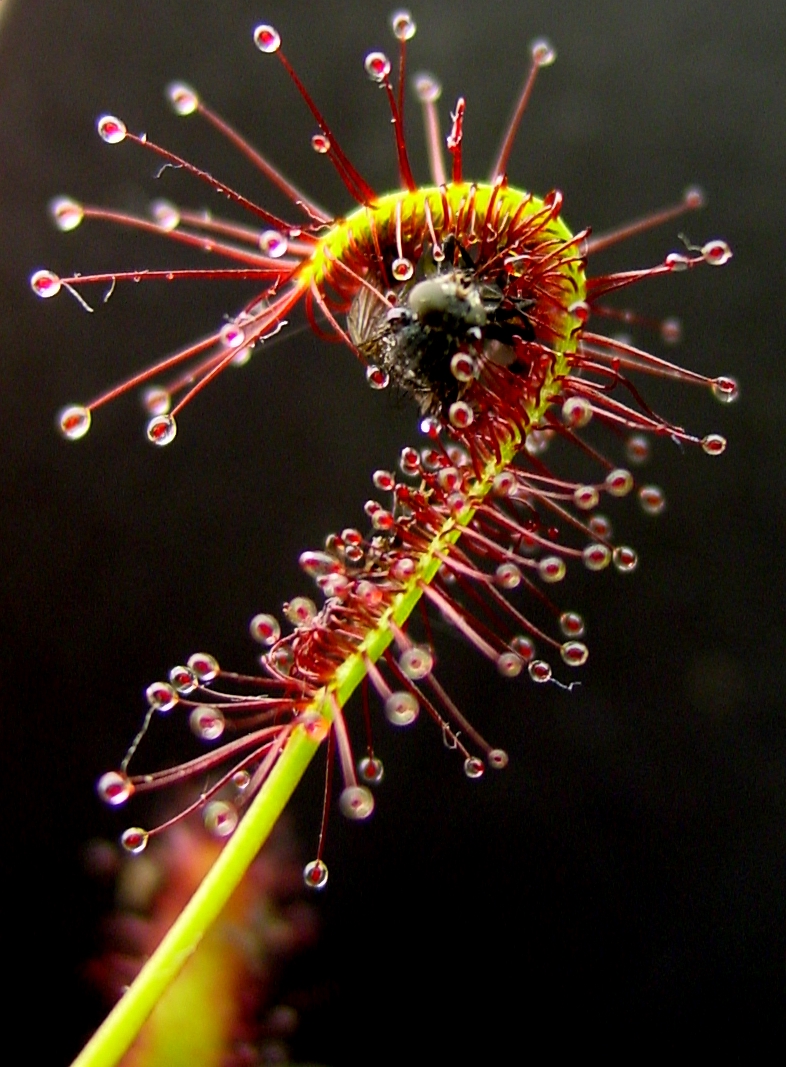
끈끈이주걱 잎에 돋아난 수많은 촉수는 마치 작은 바늘 끝에 보석이 달린 듯 아름답습니다. 이 촉수 끝에는 ‘뮤실리지(mucilage)’라는 끈적한 점액이 분비되는데, 이 점액은 햇빛을 받으면 영롱하게 빛나 곤충들의 시선을 사로잡습니다. 곤충이 이 ‘이슬’을 꿀인 줄 알고 다가와 닿는 순간, 끈적한 점액에 발이 묶이고 맙니다. 이때가 바로 반전의 시작! 끈끈이주걱은 곤충의 움직임을 감지하면, 주변의 촉수들을 마치 팔처럼 움직여 먹잇감을 서서히 감싸 쥐기 시작합니다. 이 과정은 마치 섬뜩한 포옹과도 같죠. 먹잇감이 완전히 포획되면, 촉수들은 소화 효소를 분비하여 곤충의 몸을 녹여 필요한 영양분을 흡수합니다. 그야말로 ‘예쁜데 무서운’ 끝판왕이라고 할 수 있습니다.

진화적 맥락: 궁핍이 낳은 아름다운 살인마
끈끈이주걱은 앞서 언급했듯, 질소와 인산 같은 필수 영양소가 부족한 척박한 토양에서 살아남기 위해 이러한 식충 메커니즘을 진화시켰습니다. 토양에서 얻지 못하는 영양분을 곤충 사냥을 통해 보충하는 기가 막힌 전략이죠. 지구상에는 200여 종이 넘는 다양한 끈끈이주걱들이 존재하며, 각자 서식 환경에 맞춰 독특한 덫을 발전시켜 왔습니다. 이들은 극한의 환경에서 살아남기 위해 아름다움을 가장한 치명적인 무기를 발전시킨, 진화의 승리자들입니다. 마치 사막의 선인장이 가시로 자신을 보호하듯, 끈끈이주걱은 유혹적인 이슬로 생존의 해답을 찾은 것이죠. 이들의 진화는 ‘궁핍이 창의성을 낳는다’는 격언을 떠오르게 합니다.
심판과 잡담: 키울 땐 괜찮지만, 만지지는 마세요!
끈끈이주걱은 그 독특한 매력 덕분에 많은 식물 애호가들에게 사랑받는 반려 식물이기도 합니다. 실내에서 키우기도 비교적 쉬운 편이라 초보자도 도전해볼 만하죠. 하지만 에디터 택슨구루가 경고하건대, 그 영롱한 이슬에 홀려 섣불리 만지려 들지 마세요! 물론 사람에게 해를 끼치지는 않지만, 끈적한 점액은 생각보다 강력해서 손가락이 끈적해지는 건 둘째치고, 섬세한 촉수가 손상될 수 있습니다. 귀엽다고 꼬리를 만지면 고양이에게 할큄을 당하듯, 예쁜 끈끈이주걱도 ‘눈으로만 즐겨주세요’라고 말하고 있는 듯합니다. 식물계의 치명적인 매력, 끈끈이주걱! 다음 시간에도 에디터 택슨구루가 흥미로운 생명체 이야기로 돌아오겠습니다!
[2부: Global Readers English Version]
The Sparkling Deadly Drosera: Don’t Be Fooled by the Glamour of the Cape Sundew!
Greetings, fellow explorers of the plant kingdom’s covert hunters! This is Editor TaxonGuru, and today we’re diving into the enchanting yet dangerous world of the Cape Sundew, Drosera capensis. Its name alone suggests a shimmering allure, and indeed, its dewy leaves sparkle like diamonds in the morning sun. But be warned: approach too closely, lured by its innocent beauty, and you might just become the next meal for this botanical veteran hunter! Behind its dazzling appearance lies a chilling truth, and Editor TaxonGuru is here to uncover it with you!
Scientific Backbone: A Carnivore with a Deceptive Charm
The Sundew is a relative of the famous Venus Flytrap, both belonging to the carnivorous plant family Droseraceae. While the Venus Flytrap actively traps insects with its snapping leaves, the Sundew is a more ‘passive’ yet equally deadly hunter, luring prey with sticky, dewy tentacles. The genus name ‘Drosera’ comes from the Greek word ‘drosos,’ meaning ‘dew,’ referring to the glistening mucilage on its leaves that resembles dewdrops. This captivating ‘dew’ is a sweet temptation and a fatal trap for unsuspecting insects. Evolved primarily to survive in nutrient-poor wetlands and barren soils, it’s a testament to nature’s ingenious wisdom.
Deep Anatomy: The Intricate Mechanism Behind the Stickiness
The numerous tentacles adorning the Sundew’s leaves are stunning, like tiny needles tipped with jewels. Each tentacle secretes a sticky substance called ‘mucilage,’ which glistens mesmerically in the sunlight, captivating insects. The moment an insect, mistaking this ‘dew’ for nectar, touches a tentacle, its feet become hopelessly entangled in the viscous goo. This is where the plot twist begins! Upon sensing the insect’s struggle, the Sundew’s surrounding tentacles begin to slowly bend inwards, embracing the prey as if with sinister arms. This process resembles a chilling hug. Once the prey is fully ensnared, the tentacles secrete digestive enzymes, dissolving the insect’s body and absorbing the necessary nutrients. It’s truly the ultimate ‘beautiful yet terrifying’ plant.

Evolutionary Context: The Beautiful Assassin Forged by Scarcity
As mentioned, Sundews evolved their carnivorous mechanism to survive in harsh soils lacking essential nutrients like nitrogen and phosphorus. It’s an astonishing strategy to compensate for nutrients unavailable in the soil by preying on insects. There are over 200 species of Sundews worldwide, each having developed unique traps adapted to their specific habitats. They are true victors of evolution, having developed deadly weapons disguised as beauty to thrive in extreme environments. Much like a desert cactus protects itself with spines, the Sundew found its answer to survival in alluring dew. Their evolution reminds us of the adage, ‘necessity is the mother of invention.’
Verdict & Trivia: Okay to Grow, but Please Don’t Touch!
Thanks to its unique charm, the Sundew is a beloved companion plant for many enthusiasts. It’s also relatively easy to grow indoors, making it a good choice for beginners. However, Editor TaxonGuru warns you: do not be tempted by its sparkling dew and try to touch it! While it poses no harm to humans, the sticky mucilage is surprisingly potent, and besides making your fingers gooey, it can damage the delicate tentacles. Just as a cat might scratch you if you pull its tail, the beautiful Sundew seems to say, ‘please enjoy with your eyes only.’ The deadly charm of the Sundew! Until next time, Editor TaxonGuru will return with more fascinating tales of life!