Imagine stepping into the quiet depths of Oregon’s Malheur National Forest. Looking around at the dense stands of evergreen trees, you might assume you are standing among thousands of separate individual organisms. Yet right beneath your boots lies something far more surprising: a single living creature spreading across square miles of forest floor [1][2]. Is it really possible that the largest single living organism on Earth is not a blue whale or a massive redwood tree, but a forest mushroom [1][7]?
Putting the Humongous Fungus in Perspective
Let us look at the actual measurements behind this subterranean giant. In the Malheur National Forest, a single individual genetic clone—known formally to plant biologists as a genet—occupies approximately 9.65 square kilometers, or roughly 2,385 acres [1, 2, 7].
To grasp what 9.65 square kilometers looks like, picture lining up roughly 1,350 standard soccer fields into a continuous grid. That same area is nearly three times the total size of Central Park in New York City. If you compared this dark honey fungus (Armillaria ostoyae) to animal heavyweights, its territory covers a land footprint that could easily fit thousands of adult blue whales laid end to end.
Wild exaggerated stories on the internet sometimes claim that this single mushroom network covers half the area of the entire Korean Peninsula. Comparing the verified numbers easily clears up this myth. The Korean Peninsula encompasses roughly 220,000 square kilometers. The 9.65-square-kilometer Oregon fungus actually covers about 0.0044 percent of that land area [1][2]. While nowhere near the size of half a peninsula, it remains the largest single organism confirmed on Earth by surface area [1, 2, 7].
Modest Tops and Underground Cords
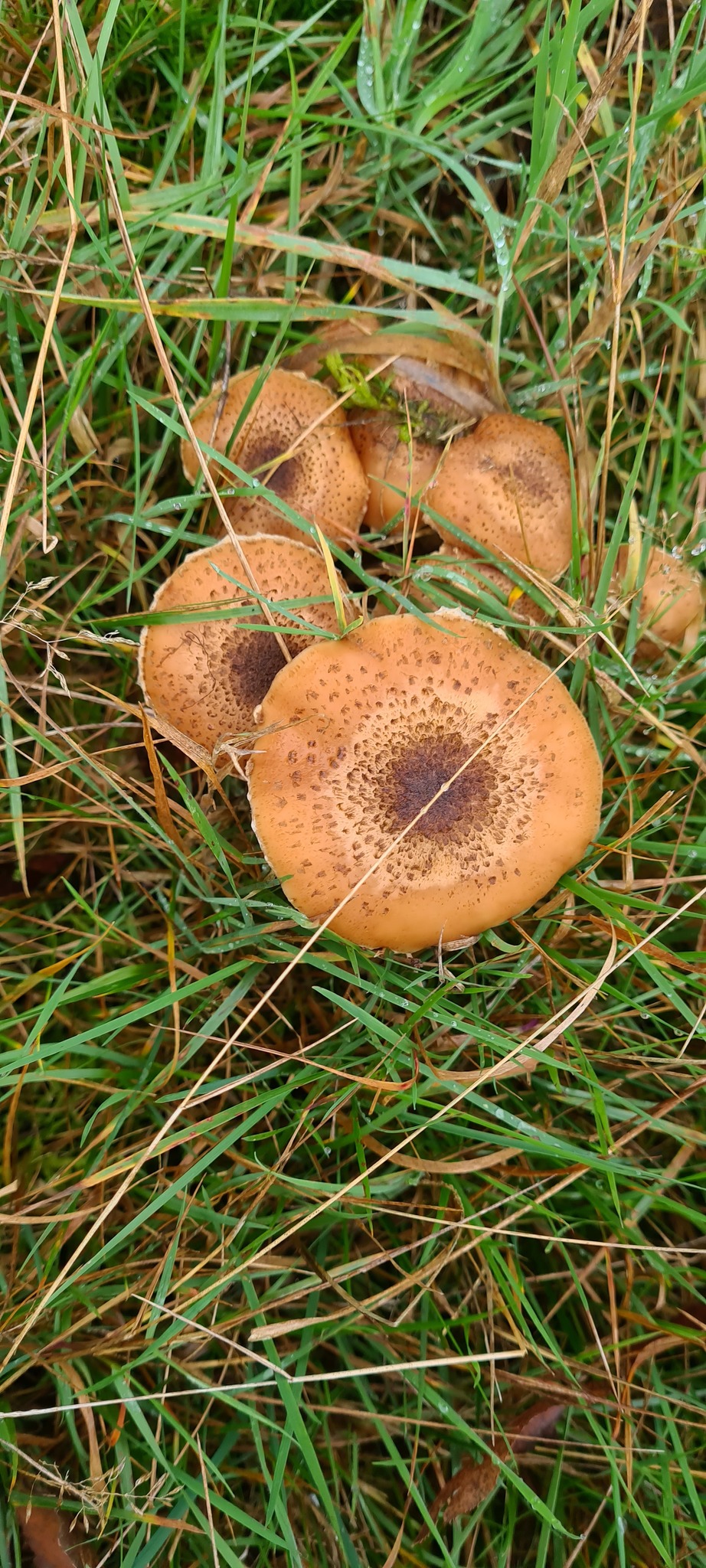
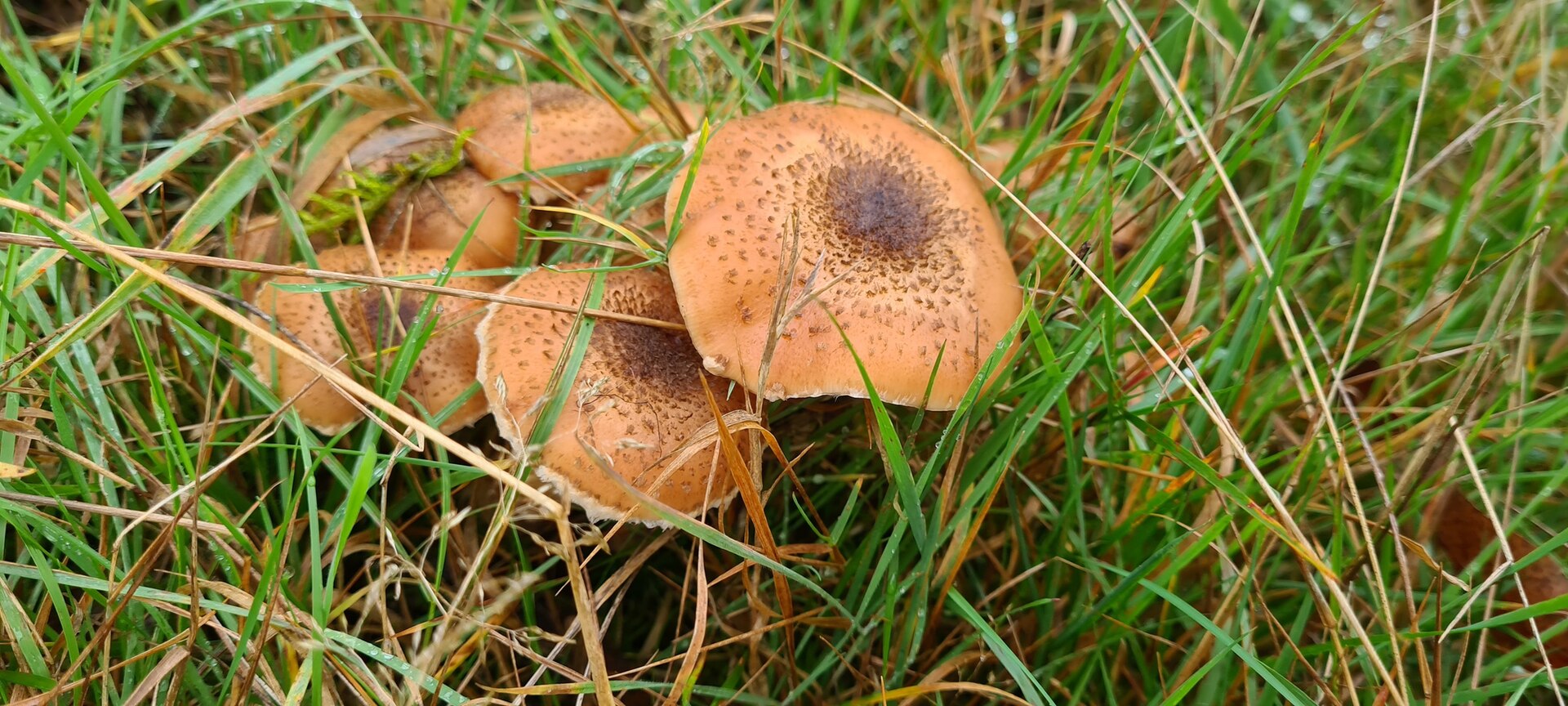
When people hear about the world’s largest living creature, they often picture a giant cap towering high into the forest canopy. In reality, the above-ground fruiting bodies—the actual mushrooms that pop up through the soil—are surprisingly ordinary in size. A typical mushroom cap measures just 5 to 15 centimeters across [5][10].
The true size of Armillaria ostoyae stays buried out of sight. The fungus spreads beneath the forest floor by extending a massive underground thread network, or mycelium, alongside tough structures called rhizomorphs [5][9]. These rhizomorphs are hard, black, cord-like strands that look very much like dark shoestrings [5][9]. By creeping through soil and traveling directly between root systems, these black cords allow a single genetic individual to spread across miles without breaking connection [5][9].
The Forest Engine: Pathogen and Recycler Combined
What makes Armillaria ostoyae so significant to forest ecology? The answer lies in its double life as both an aggressive plant parasite and a forest recycler [5, 9, 10].
When underground rhizomorphs touch a living coniferous tree, they penetrate the outer bark and invade the cambium layer beneath [5][9]. By colonizing this vital layer, the fungus blocks the tree’s internal water and nutrient transportation, causing root rot and eventually killing the tree [5][9]. Once the tree dies, the fungus changes its routine: it operates as a saprotroph, releasing enzymes that drive white rot by breaking down tough cellulose and lignin in dead timber [5, 9, 10].
Connecting these two behaviors answers why this fungus plays such an essential role in northern forests. By acting simultaneously as a tree killer and a primary wood decomposer across 2,385 acres, Armillaria ostoyae regularly clears older trees to open up sunlight gaps in the canopy [1, 2, 5, 9, 10]. This dual action cycles essential carbon and nutrients back into the soil, shaping forest structure and renewal over huge expanses of land.
Faint Midnight Glow and Kitchen Cautions
Beyond its giant size, Armillaria ostoyae displays a natural optical phenomenon called bioluminescence, often referred to as foxfire [3, 4, 7]. At night, the dark fungal threads in the soil and the infected wood inside tree stumps emit a faint, soft blue light [3, 4, 7].
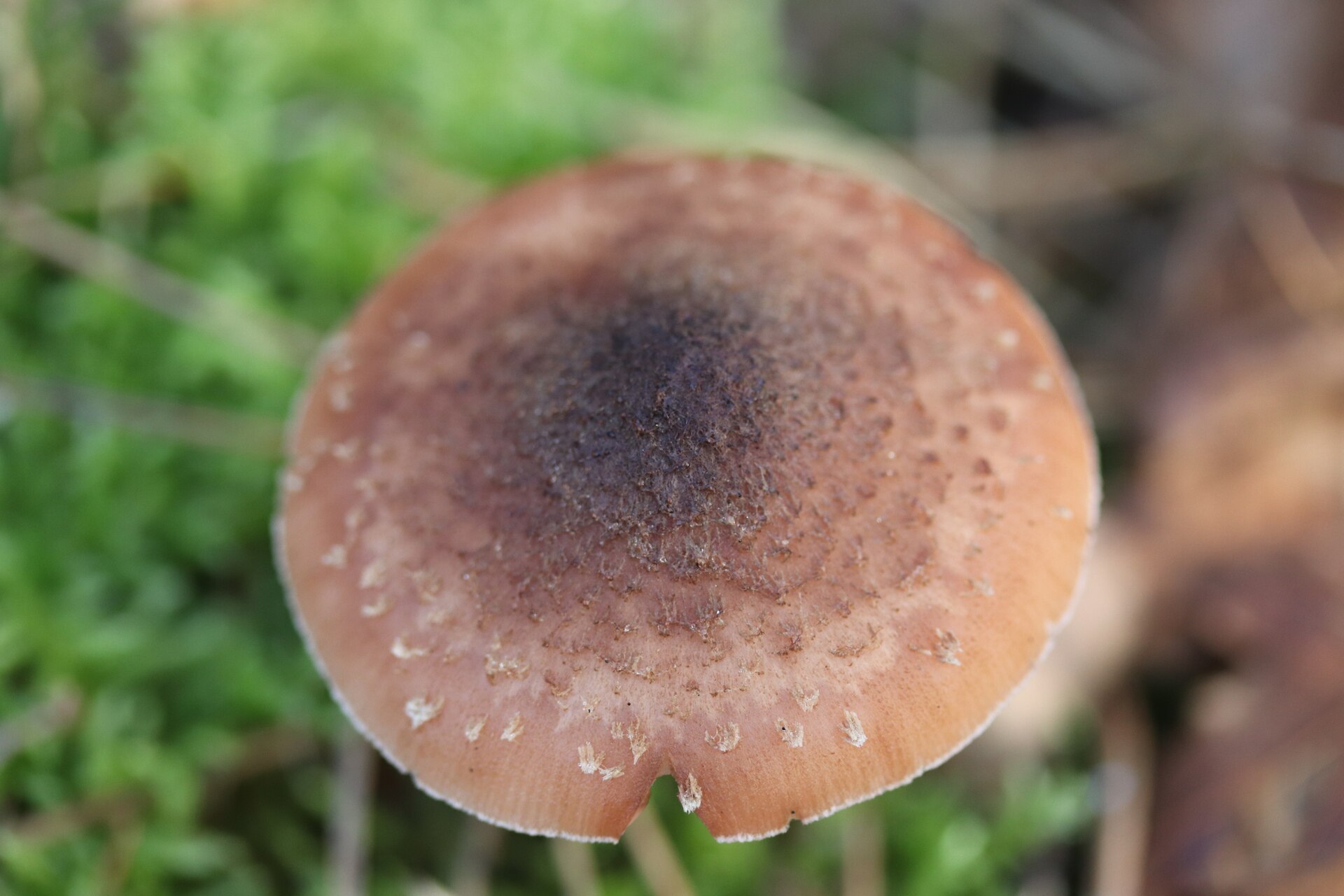
Popular folklore sometimes claims that forest floors light up brightly with glowing mushroom caps after dark. Scientific observations correct this misconception: the visible mushroom caps and gills rising above the soil do not glow at all [3, 4, 7]. The faint blue light comes exclusively from the hidden subterranean thread network and infected wood beneath the surface [3, 4, 7].
For mushroom gatherers who spot the above-ground caps, food safety requires strict preparation. While the fruiting bodies are edible, they contain heat-labile toxins that trigger severe stomach distress if eaten raw or undercooked [8, 10, 11]. Thorough heating and complete cooking are required to break down those delicate toxins before eating [8, 10, 11]. Foragers must also take care during wild identification, as deadly toxic mushrooms often grow in similar woodland habitats [10][11].
Estimating Age and Classification Debates
How long has this single subterranean network been creeping through Oregon soil? Because scientists cannot dig up and weigh an entire underground fungal network without destroying the forest, metrics like age and total mass remain mathematical estimates [1, 2, 3, 7].
By measuring the fungus’s annual radial growth rate—which ranges from 0.2 to 1 meter per year—and confirming genetic identity across samples, researchers estimate the Oregon individual is between 2,400 and 8,650 years old [1, 2, 3, 7]. Its total biological weight is estimated in the thousands of tons [1, 2, 3, 7]. However, because past climate fluctuations and terrain obstacles changed growth speeds over centuries, scientists emphasize that these numbers are estimates derived from growth models rather than direct measurements [1, 2, 3, 7].
Taxonomists have also debated the formal scientific name of the dark honey fungus [5][6]. Some botanical literature points to Armillaria solidipes, assigned by Peck in 1900, as holding historical naming priority [6]. Nevertheless, major global databases like GBIF and current forestry research maintain Armillaria ostoyae as the accepted scientific name [5][6]. Across temperate coniferous and mixed forests in North America, Europe, and Asia, the species maintains stable wild populations, leading conservation authorities like NatureServe to rate it as secure (GNR/N5) while foresters manage it as an agricultural pest [5][9].
The Silent Giant Beneath Our Feet
When walking through a quiet grove of pines, it is easy to pay attention only to the lofty trees stretching into the sky. Yet under the soil of Oregon’s Malheur National Forest, a single genetic organism covering 9.65 square kilometers quietly ties together an entire ecosystem through black root-like cords and faint blue subterranean light [1, 2, 5, 7]. The dark honey fungus reminds us that Earth’s most impressive natural wonders do not always stand tall above the grass—sometimes, the grandest creature on the planet is living quietly right beneath our feet.
Featured image credit
Image: Michael Bakker Paiva · Wikimedia Commons · CC BY 4.0 · original file
Sources and editorial policy
This feature is based on publicly available scientific and institutional sources listed below. Read our editorial and fact-checking policy and AI use policy. Report a correction: kjhtime@gmail.com
References
- allthatsinteresting.com — allthatsinteresting.com, accessed 2026-10-06
- oregonencyclopedia.org — www.oregonencyclopedia.org, accessed 2026-10-06
- earthdate.org — www.earthdate.org, accessed 2026-10-06
- zombiemyco.com — zombiemyco.com, accessed 2026-10-06
- wikipedia.org — en.wikipedia.org, accessed 2026-10-06
- wsu.edu — rex.libraries.wsu.edu, accessed 2026-10-06
- discoverwildlife.com — www.discoverwildlife.com, accessed 2026-10-06
- draxe.com — draxe.com, accessed 2026-10-06
- nrcan.gc.ca — tidcf.nrcan.gc.ca, accessed 2026-10-06
- first-nature.com — www.first-nature.com, accessed 2026-10-06
- gallowaywildfoods.com — gallowaywildfoods.com, accessed 2026-10-06