Deep beneath the sunlit surface of the open ocean, at depths where sunlight vanishes entirely, drifts a creature whose dark appearance and scientific name—Vampyroteuthis infernalis, meaning “vampire squid from hell”—evoke tales of deep-sea monsters. Popular culture and early scientific speculation painted this shadowy cephalopod as an aggressive, blood-sucking hunter stalking the abyss. But does this mysterious inhabitant of the ocean depths truly live up to its terror-inducing name, or is it one of the most misunderstood living paradoxes in evolutionary history?
Myth Versus Reality: A Peaceful Scavenger of Marine Snow
Despite its dark exterior and intimidating name, Vampyroteuthis infernalis is not a bloodthirsty predator [3][5]. In fact, it does not hunt live prey or pierce the flesh of other ocean dwellers [3][6]. Instead, it fills a far more peaceful ecological role as a detritivore—a specialized scavenger that feeds on dead organic matter drifting down from upper ocean layers [3, 5, 6].
This falling material, commonly known as marine snow, consists of dead plankton, discarded mucous sheaths, and fecal pellets [3, 5, 6]. To harvest this floating nourishment, the animal extends thin, thread-like sensory filaments into the water [3][5]. As organic particles adhere to these filaments, the creature draws them in, using its arm suckers and small fleshy projections called papillae to compact the detritus into manageable pieces before eating [3, 5, 7].
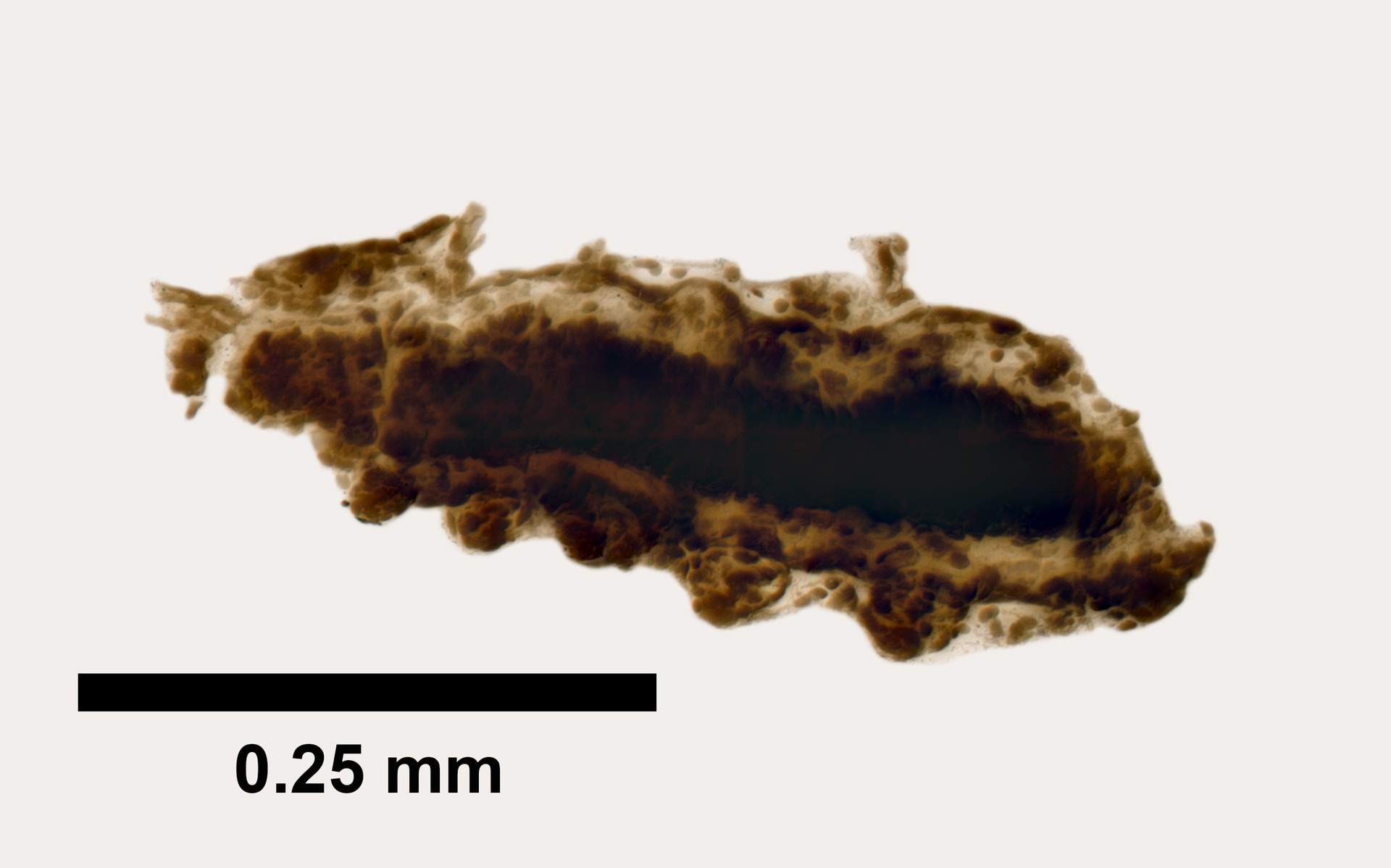
Neither True Squid Nor Octopus: An Evolutionary Bridge
The taxonomic classification of Vampyroteuthis infernalis has fascinated marine biologists for generations. Belonging to the phylum Mollusca and class Cephalopoda, it is classified within its own order, Vampyromorpha, under the family Vampyroteuthidae and genus Vampyroteuthis [1][2]. From an evolutionary perspective, it forms a living phylogenetic bridge between octopuses and squids [1, 2, 11].
Like an octopus, it possesses eight primary arms connected by a continuous web of tissue [1][2]. However, unlike typical squids, it completely lacks long, specialized feeding tentacles [1][2]. In their place, positioned between the first and second arm pairs, are unique retractable pockets that house its delicate, extensible filaments [1, 2, 11]. Modern taxonomic records confirm that Vampyroteuthis infernalis is the sole surviving species of the entire order Vampyromorpha [1, 2, 11].
Thriving Where Oxygen Vanishes
The natural habitat of Vampyroteuthis infernalis is among the most inhospitable environments on the planet. It inhabits tropical and temperate ocean waters worldwide, primarily living at depths between 600 and 1,000 meters, though specimens have been recorded as deep as 3,000 meters [1][9]. At these depths, water temperatures drop below 6°C, and dissolved oxygen levels fall to between 3% and 5% of surface concentrations—a hostile layer known as the oxygen minimum zone, or OMZ [1][9].
To survive in an environment that would suffocate most active marine life, this cephalopod relies on specialized physiological adaptations. It possesses hemocyanin—a copper-based blood protein—with an extraordinarily high affinity for binding oxygen [1][9]. Supported by an expansive gill surface area and the lowest recorded metabolic rate among cephalopods, this internal chemistry allows the animal to maintain continuous aerobic respiration—extracting energy using oxygen—even under severe hypoxia [1][9].
Radiant Disruption: Defending Without Ink
When threatened by deep-sea predators, Vampyroteuthis infernalis employs defensive tactics that differ sharply from surface-dwelling cephalopods. Standard squids and octopuses squirt a dark cloud of ink to blind attackers. However, in an aphotic environment—an ocean realm completely devoid of sunlight—black ink is invisible and ineffective [1, 4, 9]. Consequently, its ink sac has regressed over evolutionary time [1][9].
Instead of ink, the vampire squid secretes a bioluminescent mucus cloud containing blue glowing particles discharged from light-emitting organs located at the tips of its legs [1, 4, 8, 9]. This sudden burst of light visually confuses predators in the complete darkness [1, 4, 8]. If danger persists, the animal alters its shape into the “pineapple” or “pumpkin” posture [4, 8, 9]. By flipping its arms and webbing inside out over its head and mantle, it protects its vital body parts and exposes small fleshy projections called cirri, creating an intimidating appearance that makes it seem significantly larger [4, 8, 9].
Bending the Rules of Cephalopod Reproduction
The reproductive strategy of Vampyroteuthis infernalis presents another striking departure from cephalopod norms. Most coleoid cephalopods practice semelparity, a strategy where individuals grow rapidly, reproduce a single time in a massive spawning effort, and die shortly afterward [5][7].
In contrast, Vampyroteuthis infernalis practices iteroparity, meaning it undergoes multiple reproductive and resting cycles throughout its adult lifespan [5][7]. It releases small batches of eggs, after which its reproductive organs return to a resting state [5][7]. This pause allows the animal to feed, rebuild energy reserves, and spawn again at a later time [5][7]. This measured pace of reproduction fits seamlessly with its low metabolic rate and the limited food availability of the deep sea [5][7].
One Species or Two? Resolving a Deep-Sea Cold Case
For decades, scientific consensus held that Vampyroteuthis infernalis was the only living member of its order. However, that view was challenged when a 2024 study analyzing specimens gathered from the South China Sea proposed a second species, named Vampyroteuthis pseudoinfernalis, based on subtle physical variations [10][11].
This proposal prompted detailed taxonomic scrutiny. A follow-up re-evaluation in 2026 carefully measured these morphological traits and determined that the differences fell within the natural range of variation found within V. infernalis populations [10][11]. Consequently, V. pseudoinfernalis was designated a junior synonym—an invalid secondary name for an already established species—reconfirming Vampyroteuthis infernalis as the sole verified living species in Vampyromorpha [10][11].
Despite these taxonomic resolutions, research constraints remain. Because this organism cannot survive long-term in surface aquariums, scientists cannot directly measure its true wild lifespan or age distribution [3][5]. Additionally, while researchers know the sensory filaments collect falling debris, direct biometrical data are still lacking to verify whether these structures also function as vibration detectors to warn of oncoming predators [3][5].
Synthesis: The Evolutionary Wisdom of the Mid-Water Scavenger
Synthesizing these confirmed scientific findings reveals a remarkable story of biological efficiency. Vampyroteuthis infernalis brings together specialized oxygen-binding hemocyanin, a minimal metabolic rate, a detrital diet, and a multi-stage reproductive strategy to master an extreme habitat [1, 5, 7, 9].
Rather than expending precious energy competing as a high-speed hunter in nutrient-poor, low-oxygen waters, it evolved into a low-energy scavenger that recycles falling organic particles [3, 5, 9]. Its defensive reliance on glowing blue mucus clouds and deceptive physical stances eliminates the need for rapid swimming bursts, preserving crucial calories [1, 4, 8]. Ultimately, V. infernalis demonstrates how harsh environmental pressures can drive evolution away from aggression and toward quiet, highly efficient survival strategies that withstand the test of time.
Far from the dangerous blood-sucker suggested by its name, Vampyroteuthis infernalis is an extraordinary example of evolutionary adaptation. As it drifts silently through the pitch-black, low-oxygen depths of the global ocean, extending its thread-like filaments to gather falling fragments of marine snow, this ancient cephalopod proves that enduring in the ocean’s darkest corners requires not ferocity, but peaceful ingenuity.
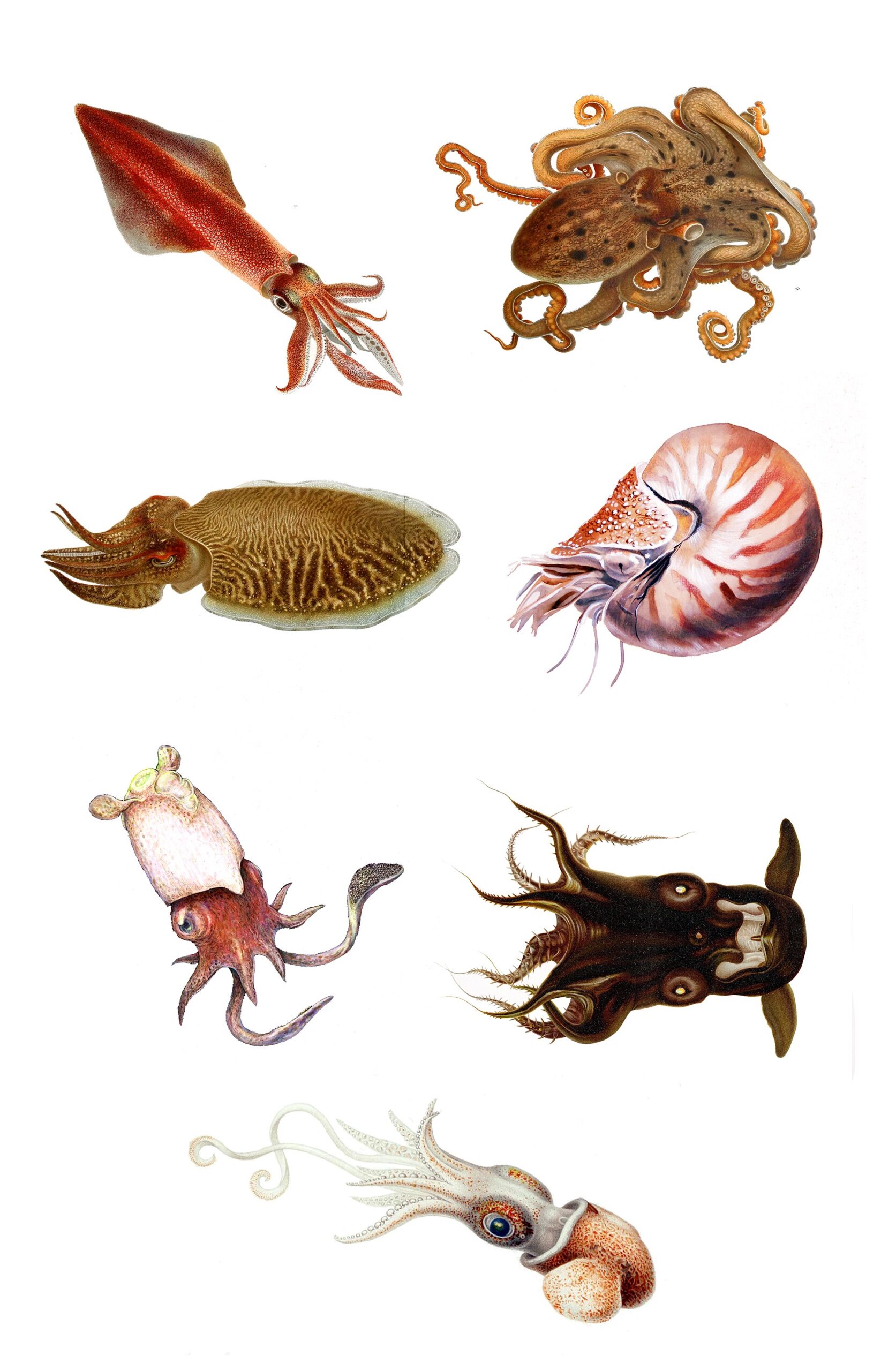
Featured image credit
Image: See respective profiles of photos Compilation made by Citron · Wikimedia Commons · Public domain · original file
Sources and editorial policy
This feature is based on publicly available scientific and institutional sources listed below. Read our editorial and fact-checking policy and AI use policy. Report a correction: kjhtime@gmail.com
References
- wikipedia.org — en.wikipedia.org, accessed 2026-09-23
- itis.gov — www.itis.gov, accessed 2026-09-23
- calacademy.org — www.calacademy.org, accessed 2026-09-23
- facebook.com — www.facebook.com, accessed 2026-09-23
- mbari.org — www.mbari.org, accessed 2026-09-23
- royalsociety.org — royalsociety.org, accessed 2026-09-23
- nih.gov — pubmed.ncbi.nlm.nih.gov, accessed 2026-09-23
- facebook.com — www.facebook.com, accessed 2026-09-23
- aquariumofpacific.org — www.aquariumofpacific.org, accessed 2026-09-23
- zootax.com.cn — www.zootax.com.cn, accessed 2026-09-23
- marinespecies.org — www.marinespecies.org, accessed 2026-09-23