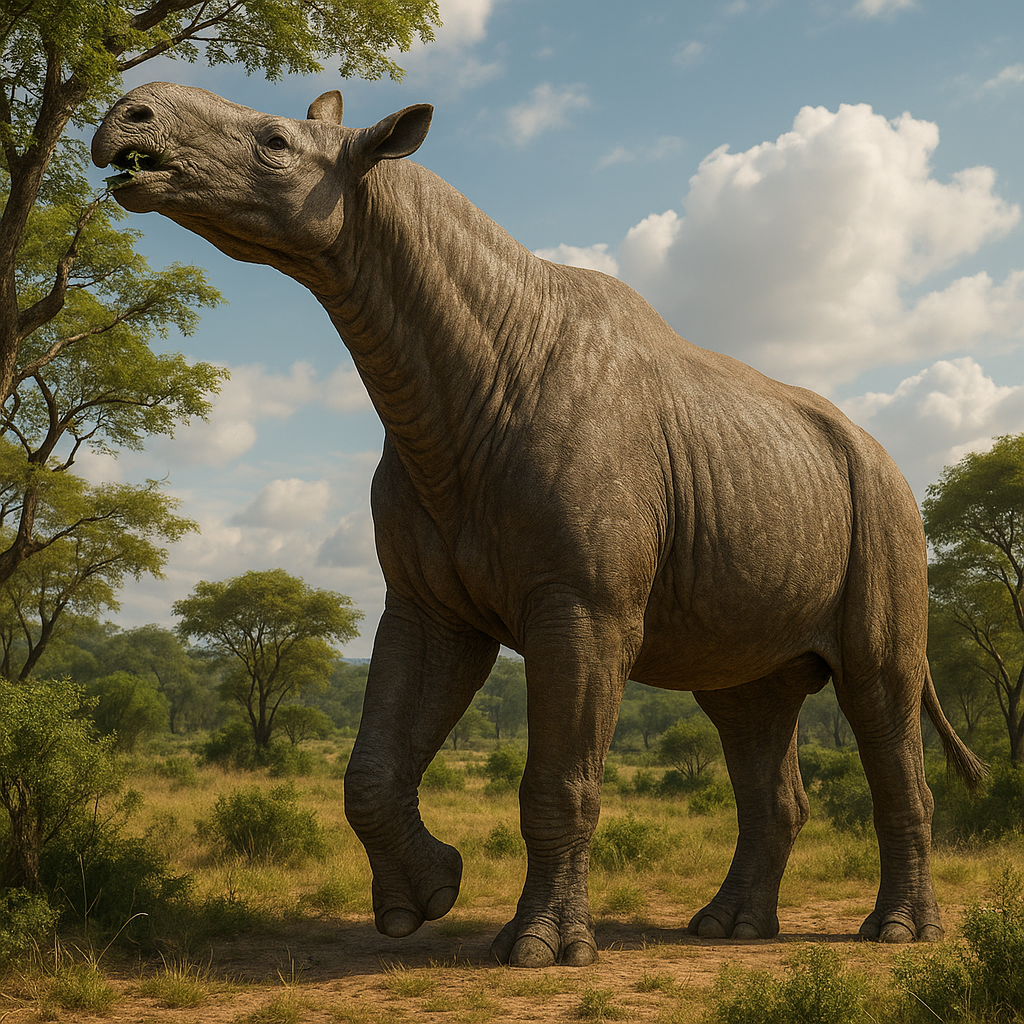
지구 역사상 가장 거대했던 육상 포유류! 파라케라테리움을 만나다!
분류 트리: Animalia > Chordata > Mammalia > Perissodactyla > Hyracodontidae
1. Hook: 코뿔소 조상이 코끼리도 난쟁이로 만든다고?
안녕하세요, TaxonGuru 블로그의 수석 고생물학자이자 생태계 스토리텔러, 에디터 택슨구루입니다! 오늘은 정말 특별한 손님을 모셨습니다. 여러분, 코뿔소의 친척인데 코끼리를 옆에 세우면 마치 오피셜 땅콩처럼 보이게 만드는 생명체가 있었다면 믿으시겠어요? 네, 맞습니다! 상상 이상의 스케일을 자랑하는 지구 역사상 가장 거대했던 육상 포유류, 바로 파라케라테리움 (Paraceratherium transouralicum)을 소개합니다. 이 녀석은 고생물학계의 진정한 '핵인싸'이자 킹갓제너럴이라 불릴 만한 존재랍니다!

2. Scientific Backbone: 학명은 길지만 이름은 웅장하다!
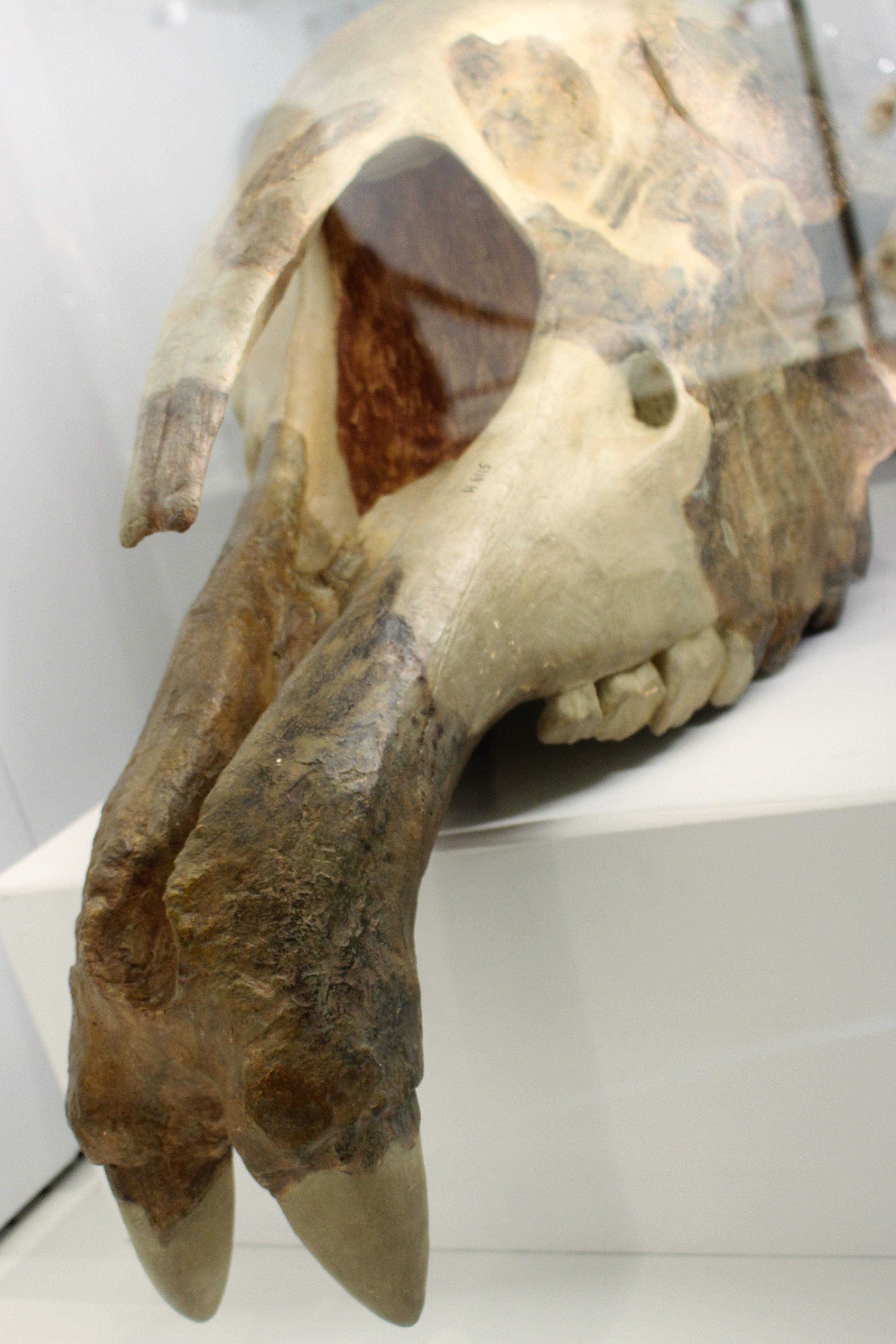
파라케라테리움, 학명으로는 Paraceratherium transouralicum. 이름부터 범상치 않죠? 그저 '코뿔소의 친척'이라고 하기엔 그 위상이 너무나도 엄청납니다. 이 친구는 기제목(Perissodactyla)에 속하는 히라코돈과(Hyracodontidae)의 일원으로, 오늘날의 코뿔소와는 달리 뿔이 없는 특징을 가지고 있습니다. 신생대 올리고세에 아시아 전역을 누비며 자신의 존재감을 과시했죠. '파라케라테리움'이라는 이름은 그리스어로 '뿔 없는 짐승에 가깝다'는 뜻인데, 그 이름처럼 뿔은 없었지만, 그 어떤 뿔 달린 맹수도 감히 넘볼 수 없는 크기로 모든 것을 압도했습니다.
3. Deep Anatomy: 코끼리? 그게 뭔가요, 먹는 건가요?
자, 이제 그 엄청난 스케일을 파헤쳐 볼 시간입니다. 파라케라테리움은 어깨 높이만 해도 무려 4.8미터에 달했고, 머리를 들면 7미터까지 치솟았다고 합니다. 길이가 7.4미터, 몸무게는 15톤에서 20톤에 육박하는 그야말로 움직이는 생체 건물 그 자체였습니다! 오늘날 가장 큰 육상 동물인 아프리카 코끼리의 두 배에 가까운 몸무게죠. 웬만한 대형 버스가 살아 움직이는 모습이라고 상상해보세요! 목은 기린처럼 길었고, 코끼리처럼 굵고 기둥 같은 다리를 가지고 있었습니다. 이 거대한 몸을 지탱하기 위해 발목과 다리뼈는 마치 튼튼한 건축물의 기둥처럼 진화했답니다. 녀석은 주로 나뭇잎과 연한 가지를 뜯어 먹는 초식동물이었는데, 그 긴 목으로 높은 곳의 나뭇가지까지 싹쓸이했을 겁니다.

4. Evolutionary Context: 진화의 정점에서 홀연히 사라지다
파라케라테리움이 이렇게 거대한 몸집을 가지게 된 배경에는 진화적 압력이 있었습니다. 올리고세 초기는 숲이 무성하고 먹을 것이 풍부한 환경이었죠. 경쟁자나 포식자가 적은 환경에서 몸집을 키우는 것은 생존에 유리했습니다. 하지만 기후 변화와 서식지 감소, 그리고 다른 포유류들과의 경쟁 심화로 인해 파라케라테리움은 결국 지구상에서 자취를 감추게 됩니다. 이 녀석의 등장은 육상 포유류의 진화가 어디까지 갈 수 있는지를 보여주는 놀라운 증거이며, 그들의 사라짐은 환경 변화에 얼마나 민감하게 반응했는지를 알려주는 슬픈 교훈이기도 합니다.
5. Verdict & Trivia: 진정한 육상 포유류의 제왕!
파라케라테리움, 이 위대한 생명체는 우리에게 잊혀지지 않을 강렬한 인상을 남겼습니다. 단순히 크기만 큰 것이 아니라, 그 시대의 생태계를 지배하며 핵심 종으로 군림했던 진정한 육상 포유류의 제왕이었죠. 한때 중앙아시아와 동유럽의 숲과 초원을 거닐며, 그 거대한 그림자를 드리웠던 이 녀석을 상상해 보세요. 만약 지금 다시 나타난다면, 아마 모든 동물원과 사파리는 문을 닫고, 이 녀석 하나로 모든 이목이 집중될 것입니다. 뿔 없는 코뿔소의 친척이 코끼리도 난쟁이로 만들었던 시대! 에디터 택슨구루는 파라케라테리움의 이야기가 단순한 옛이야기가 아니라, 지구 생명체의 놀라운 다양성과 진화의 경이로움을 보여주는 살아있는 증거라고 생각합니다.
Earth's Largest Land Mammal Ever! Meet the Paraceratherium!
Classification Tree: Animalia > Chordata > Mammalia > Perissodactyla > Hyracodontidae
1. Hook: What if a Rhino Ancestor Made Elephants Look Like Dwarves?
Hello everyone! This is Editor TaxonGuru, senior paleontologist and ecosystem storyteller for the TaxonGuru blog. Today, we have a truly special guest! Would you believe me if I told you there once was a creature, a relative of the rhinoceros, that made an elephant look like an official peanut when standing next to it? Yes, you heard that right! Let me introduce you to the Paraceratherium (Paraceratherium transouralicum), the largest land mammal in Earth's history, boasting a scale beyond imagination. This fellow was truly the 'ultimate socialite' and a 'King-God-General' in the paleontological world!
2. Scientific Backbone: A Long Name for a Majestic Being!
Paraceratherium, scientifically known as Paraceratherium transouralicum. Its name alone suggests its extraordinary nature, doesn't it? To merely call it a 'rhino relative' would be an understatement of its grand stature. This creature belonged to the order Perissodactyla and the family Hyracodontidae, characterized by its hornless appearance, unlike modern rhinos. It roamed across Asia during the Oligocene epoch, asserting its imposing presence. The name 'Paraceratherium' is derived from Greek, meaning 'near the hornless beast', and true to its name, it lacked horns, yet it dominated everything with a size no horned predator dared to challenge.
3. Deep Anatomy: Elephants? What are those, snacks?
Now, it's time to delve into its astounding scale. The Paraceratherium stood an incredible 4.8 meters (15.7 feet) tall at the shoulder, and its head could reach up to 7 meters (23 feet) when raised. With a length of 7.4 meters (24.3 feet) and weighing between 15 to 20 tons, it was quite literally a walking biological building! That's nearly double the weight of today's largest land animal, the African elephant. Imagine a large bus, alive and moving! It had a long, giraffe-like neck and thick, pillar-like legs, much like an elephant's. To support its massive body, its ankle and leg bones evolved to be like robust architectural columns. This magnificent herbivore primarily browsed on leaves and soft branches, undoubtedly stripping high branches with its long neck.
4. Evolutionary Context: From Evolutionary Peak to Vanishing Act
The enormous size of Paraceratherium was a result of evolutionary pressures. The early Oligocene was an environment lush with forests and abundant food. In a setting with few competitors or predators, increasing body size was advantageous for survival. However, due to climate change, habitat loss, and increased competition with other mammals, the Paraceratherium eventually disappeared from the face of the Earth. Its emergence is astonishing proof of how far terrestrial mammal evolution can go, and its disappearance serves as a somber lesson on how sensitive species are to environmental shifts.
5. Verdict & Trivia: The True Monarch of Land Mammals!
Paraceratherium, this magnificent creature, left an unforgettable, powerful impression on us. It wasn't just large; it was a true monarch of land mammals, reigning as a keystone species and dominating the ecosystems of its time. Imagine this creature, once casting its immense shadow as it roamed the forests and grasslands of Central Asia and Eastern Europe. If it were to reappear today, all zoos and safaris would likely close, and all eyes would be solely on it. The era when a hornless rhino relative made elephants look like dwarfs! Editor TaxonGuru believes that the story of Paraceratherium is not just an old tale, but a living testament to the astonishing diversity and evolutionary wonders of Earth's life.