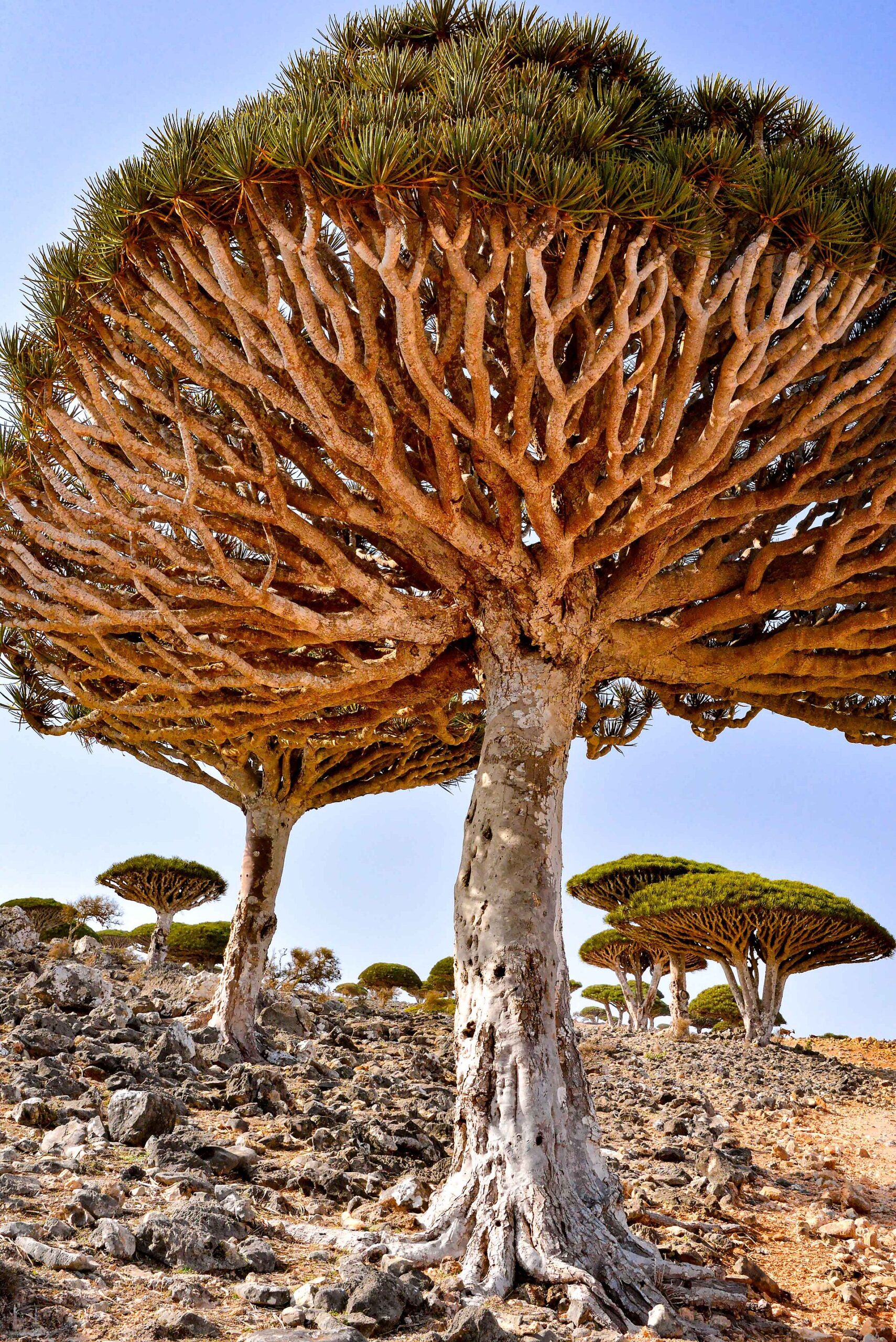
해발 300에서 1,000미터가 넘는 건조한 석회암 고원 위로 구름과 안개가 자욱하게 밀려듭니다. 예멘 소코트라 제도의 피르미힌 고원과 딕삼 고원 지대에 들어서면, 지구의 일상적인 풍경과는 전혀 다른 모습의 나무들이 눈앞에 펼쳐집니다 [1], [5]. 거대한 버섯이나 뒤집힌 우산 모양을 한 독특한 형상의 정체는 바로 아스파라거스과(Asparagaceae)의 상록 외떡잎식물인 용혈수(Dracaena cinnabari)입니다 [1].
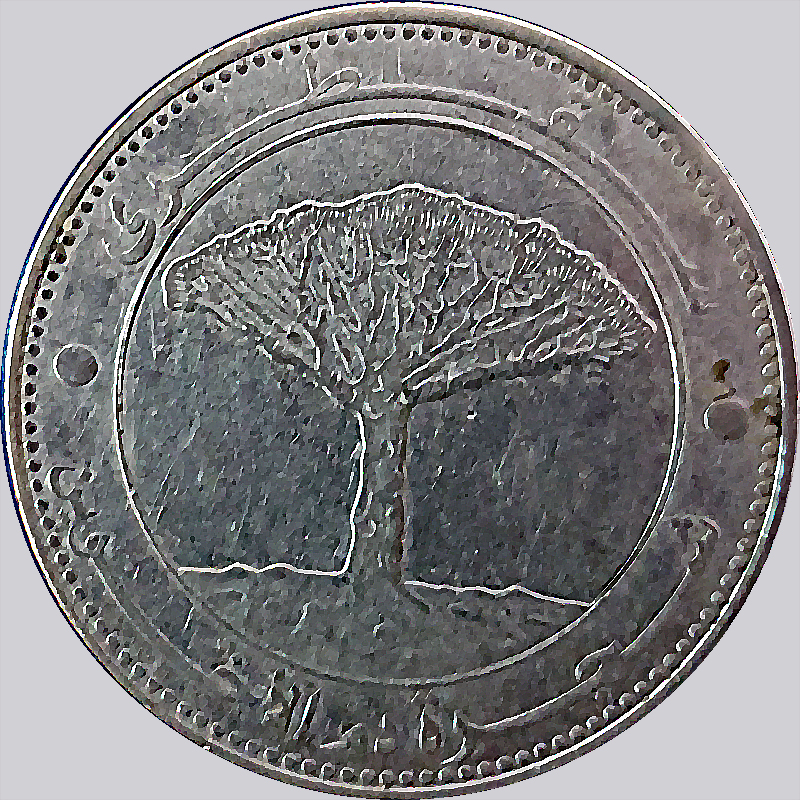
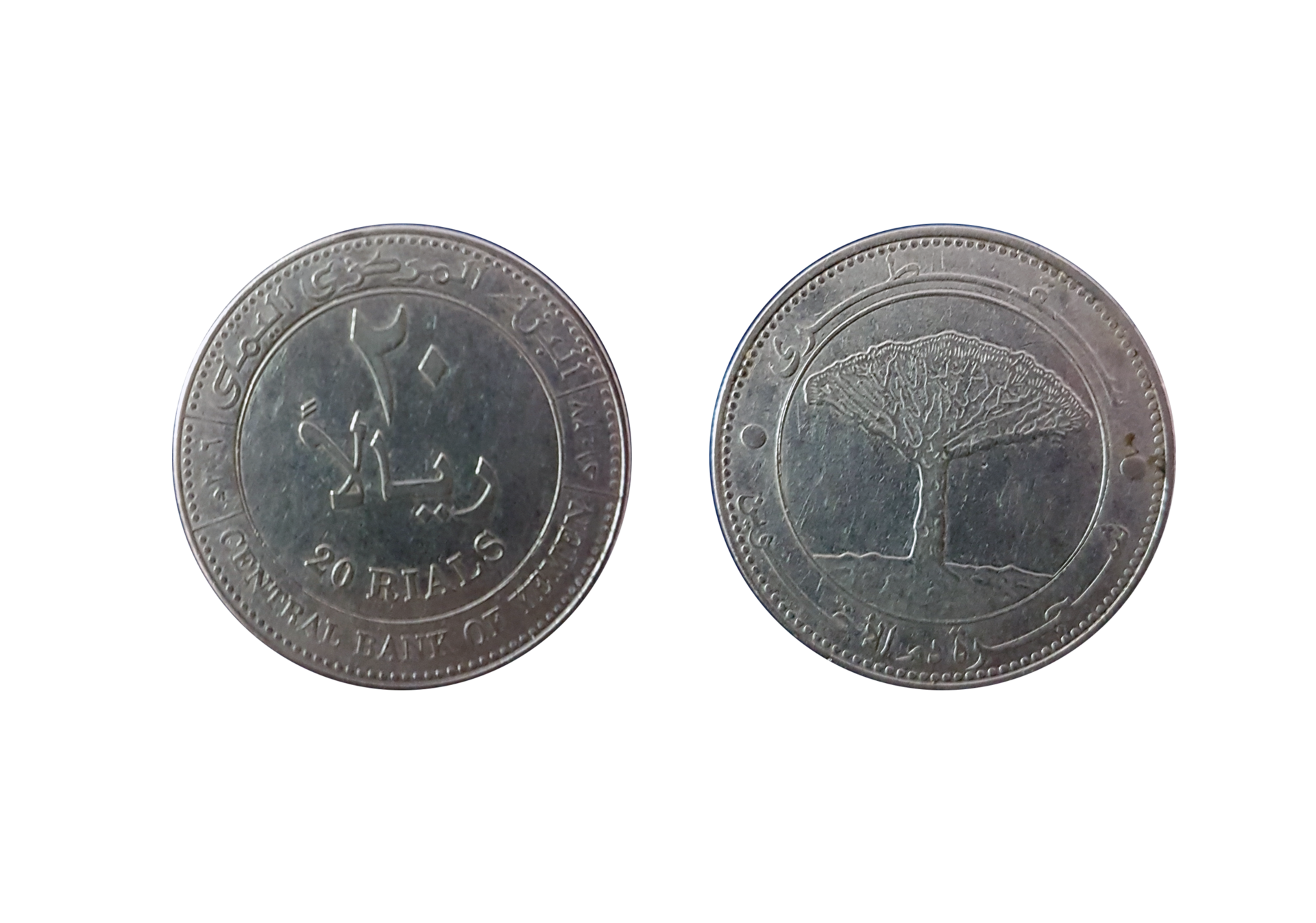
바위투성이 산악 지대의 거친 바람 속에서 독특한 수관을 드러낸 이 식물은 아라비아해의 특수 미기후 속에서 오랜 시간 적응해 왔습니다 [1], [5]. 줄기에 상처가 나면 마치 붉은 피를 흘리는 듯한 모습 때문에 ‘용의 피를 흘리는 나무’라는 이름이 붙었으며, 오늘날 예멘을 상징하는 국가 나무(National tree)로 지정되어 있습니다 [1], [5], [8]. 이 외계 식물 같은 생명체는 과연 어떤 생존의 비밀을 품고 있는 것일까요? [1]
안개가 자욱한 고원, 외계 행성의 식물인가?
소코트라 제도는 바람을 타고 수시로 유입되는 몬순 안개가 고원 지대를 감싸는 특유의 미기후를 형성합니다 [1], [5]. 용혈수는 이러한 건조하고 척박한 환경에 맞춰 완벽하게 설계된 생태적 형태를 자랑합니다 [4], [6].
밀집되게 형성된 우산 형태의 수관은 공기 중에 떠다니는 몬순 안개와 구름 속 수분을 포집하는 효율적인 수집기 역할을 합니다 [4], [6], [8]. 수관에서 모인 물방울은 줄기를 따라 굴러 떨어져 나무의 뿌리 지대로 곧바로 공급됩니다 [4], [6].
또한 이 넓은 우산 모양의 수관은 나무 아래의 토양에 거대한 그늘을 만들어 냅니다 [4], [6]. 강렬한 햇빛 차단은 뿌리가 자리 잡은 토양의 수분 증발을 막아주어, 건조한 고원에서 살아남는 결정적인 생존 무기가 됩니다 [4], [6].
외떡잎식물이 어떻게 두꺼운 기둥을 만들까?
식물학적으로 용혈수는 백합강(Liliopsida) 아스파라거스목에 속하는 외떡잎식물입니다 [1]. 일반적으로 벼나 풀과 같은 외떡잎식물은 줄기가 일정 두께 이상으로 굵어지지 않는 특징을 지닙니다 [2], [4].
그러나 용혈수는 단단하고 두꺼운 목질화 줄기를 형성하며 거대한 크기로 자라납니다 [2], [4]. 어떻게 외떡잎식물이 단단한 목질 기둥을 세울 수 있는 것일까요? [2]
비밀은 바로 ‘비전형 이차 성장(Anomalous secondary growth)’이라는 독특한 세포 분열 방식에 있습니다 [2], [4]. 용혈수는 일반적인 식물과 달리 특수한 비전형 유두 조직을 가지고 있어, 줄기 둘레가 지속적으로 두꺼워질 수 있는 특이한 구조를 형성합니다 [2], [4].
피를 흘리는 나무? 붉은 수액을 둘러싼 오해와 진실
용혈수를 둘러싼 가장 대표적인 오해는 줄기 내부의 관다발을 따라 붉은 체액이나 혈액이 상시 순환하고 있다는 생각입니다 [1], [8]. 그러나 용혈수가 흘리는 붉은 물질은 도관을 흐르는 생리 수액이 아닙니다 [1], [8].
이 붉은 액체는 줄기나 가지에 물리적인 상처가 나거나 병원균이 침입했을 때 상처 부위를 봉합하고 방어하기 위해 분비되는 화학 방어용 수지(Resin)입니다 [8], [9], [10]. 내부에서 항상 순환하는 피가 아니라, 외부 자극에 반응해 분비되는 일종의 방어물질인 셈입니다 [8], [9].
이 붉은 수지 속에는 비플라보노이드와 찰콘 등 다량의 항균 및 약리 성분이 포함되어 있습니다 [8], [9], [10]. 이러한 화학 성분 덕분에 용혈수는 외부 감염으로부터 자신을 보호할 수 있습니다 [8], [9].
역사적으로 ‘용의 피(Dragon’s Blood)’라 불린 약재와 물감 재료가 오직 소코트라 용혈수 단 한 종에서만 얻어졌다는 것도 흔한 오해 중 하나입니다 [1], [10]. 과거 무역로에서 ‘용혈’이라는 명칭은 카나리아제도의 용혈수, 동남아시아의 야자류, 남미의 크로톤(Croton)속 등 여러 붉은 수지 식물들을 통칭하는 용어였으며, 소코트라 용혈수는 그 주요 출처 중 하나였습니다 [1], [10].
꽃이 피면 성장을 멈추고 갈라지는 이분지의 법칙
용혈수의 수관이 그토록 정교한 버섯 모양을 이루는 데에는 독특한 성장 패턴이 숨어 있습니다 [2], [7]. 가지 끝에 달린 잎들의 모임인 로제트 지점에서 꽃이 피고 열매가 맺히면, 해당 줄기의 정단 성장은 완전히 정지합니다 [2], [7].
정단 성장이 멈춘 직후, 줄기 끝은 두 개의 새로운 가지로 갈라지는 ‘이분지(Dichotomous Branching)’를 수행합니다 [2], [7]. 갈라진 가지가 자라나 다시 개화하고 결실을 맺으면 또다시 각각 두 개로 분기하는 과정이 반복됩니다 [2], [7].
이러한 정단 성장 정지와 이분지가 수백 년의 세월 동안 지속적으로 되풀이되면서, 나뭇가지들이 조밀하고 균형 잡힌 기하학적 우산 수관을 완성하게 됩니다 [2], [7].
그렇다면 용혈수의 나이를 나이테로 쉽게 측정할 수 있을까요? [1], [2] 대답은 ‘그렇지 않다’입니다 [1]. 외떡잎식물인 용혈수는 쌍떡잎식물처럼 연간 형성층에 의한 연륜(나이테)을 만들어내지 않습니다 [1], [2], [4]. 따라서 수령을 추정할 때는 줄기의 지름 증분, 가지의 이분지 분기 패턴, 그리고 수학적 성장 모델을 복합적으로 활용해야 합니다 [1], [2], [4].
안개 수집기이자 토양 보호막, 생존 전략이 엮어낸 생태계
용혈수의 형태적 특징과 특수한 이차 성장, 그리고 수수께끼 같은 생리 작용은 개별적인 특성에 머무르지 않고 서로 밀접하게 연결되어 있습니다 [2], [4], [6]. 왜 이러한 요소들의 연결성을 이해하는 것이 중요할까요?
외떡잎식물임에도 비전형 유두 조직을 통해 단단하고 두꺼운 줄기를 지탱할 수 있게 된 용혈수는, 상부에 거대하고 무거운 우산형 수관을 안정적으로 유지할 수 있습니다 [2], [4]. 이렇게 올려진 밀집된 수관은 몬순 안개를 효율적으로 포집하여 뿌리 근처로 물을 떨어뜨리고, 동시에 지표면에 넓은 그늘을 형성하여 토양 수분 증발을 억제합니다 [4], [6], [8].
즉, 특이한 줄기 구조(비전형 이차 성장)가 거대한 수관을 받쳐주고, 그 수관이 안개 포집과 토양 수분 보존이라는 수분 확보 체계를 완성하며, 상처가 났을 때 분비되는 붉은 항균 수지가 건조한 환경 속 병원균 침입을 차단함으로써 혹독한 고원 생태계를 버텨내는 연쇄적인 생존 사슬을 만들어내는 것입니다 [2], [4], [8], [9].
염소의 방목과 기후 변화, 위태로운 고대 숲의 미래
수백 년에 걸쳐 독자적인 생태적 지위를 구축해 온 용혈수이지만, 현재 세계자연보전연맹(IUCN) 적색목록에서 취약(VU, Vulnerable) 등급으로 분류될 만큼 심각한 위기에 처해 있습니다 [1], [4], [5].
가장 치명적인 위협 중 하나는 외래 방목 가축인 염소의 과도한 방목입니다 [4], [5]. 염소들이 새로 자라나는 어린 묘목을 먹어 치우면서, 야생에는 성체 위주의 개체군만 남게 되었고 자연적인 세대교체와 자연 번식이 심각하게 침체되어 있습니다 [4], [5].
여기에 기후 변화로 인한 건조화 현상과 몬순 안개 유입의 감소가 더해져 용혈수의 수분 수집 환경이 악화되고 있습니다 [4], [5]. 또한 상업적 목적의 전통 수지 채취 과정에서 발생하는 줄기 손상 역시 개체군의 건강성을 위협하는 요인입니다 [1], [8].
과거 방목이 심화되기 전 용혈수 군락이 얼마나 널리 분포했는지에 대해서는 다소 논쟁과 불확실성이 존재합니다 [3], [4]. 소코트라 섬 주민들의 민속식물학적 구전 지식과 공간 모델링 연구는 과거 분포지가 현재보다 훨씬 넓었음을 제시하지만, 수세기 전의 정밀 식생 조사 데이터가 부재하여 정확한 고대 경계를 단정하기는 어렵습니다 [3], [4]. 그럼에도 이러한 민속식물학 기반 모델링은 현재 용혈수 군락의 보전 및 복원 구역을 설정하는 데 주요한 참조 자료로 쓰이고 있습니다 [3], [4].
처음 피르미힌 고원의 붉은 바위 위에서 안개를 맞으며 서 있던 그 용혈수의 풍경으로 돌아가 봅니다 [1], [5]. 외계 행성의 생명체처럼 신비로운 우산형 수관과 붉은 방어용 수지는 수백 년간 몬순 안개와 고원의 바람을 견뎌낸 끈질긴 생명의 기록입니다 [1], [4], [8]. 방목 가축과 건조화라는 현대의 위기 속에서, 이 위대한 자연의 유산이 앞으로도 소코트라의 안개 속에 무사히 뿌리 내릴 수 있을지 묻게 됩니다 [4], [5].
대표 이미지 출처
사진: SharabSalam · Wikimedia Commons · CC BY-SA 4.0 · 원본 파일
자료와 편집 원칙
이 글은 공개된 학술·기관 자료를 바탕으로 작성되었으며, 주요 사실은 아래 참고자료에서 확인할 수 있습니다. 편집 및 팩트체크 정책과 AI 활용 정책을 공개하고 있습니다. 오류 제보: kjhtime@gmail.com
참고자료
- wikipedia.org — en.wikipedia.org, 확인일 2026-09-23
- intechopen.com — www.intechopen.com, 확인일 2026-09-23
- proquest.com — www.proquest.com, 확인일 2026-09-23
- mdpi.com — www.mdpi.com, 확인일 2026-09-23
- unep-wcmc.org — world-heritage-datasheets.unep-wcmc.org, 확인일 2026-09-23
- biographic.com — biographic.com, 확인일 2026-09-23
- succulentes.net — succulentes.net, 확인일 2026-09-23
- forbes.com — www.forbes.com, 확인일 2026-09-23
- nih.gov — pubmed.ncbi.nlm.nih.gov, 확인일 2026-09-23
- researchgate.net — www.researchgate.net, 확인일 2026-09-23