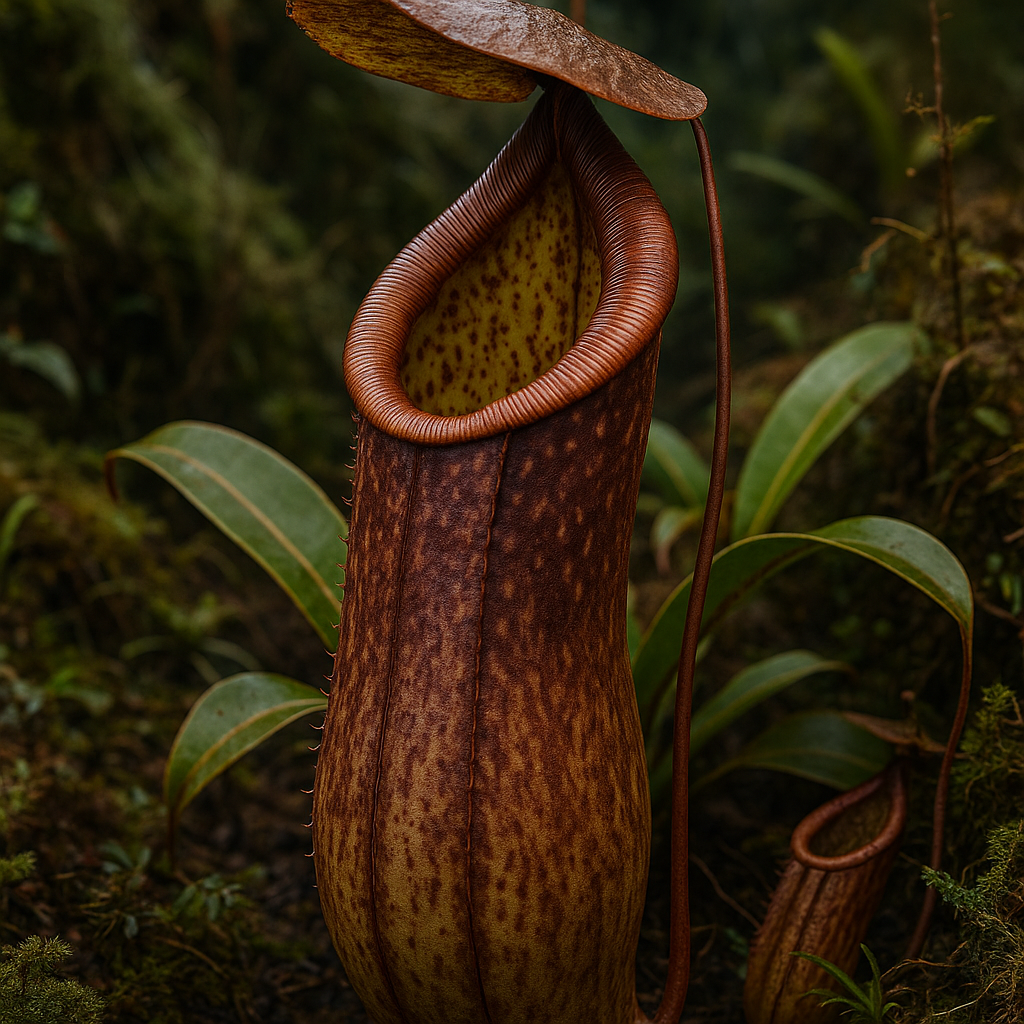
쥐도 삼키는 ‘지옥의 덫’? 아텐버러 투수식물의 은밀한 식탁!
Plantae > Caryophyllales > Nepenthaceae
[Hook: 후킹] 식물계의 연쇄 살인마? 쥐 잡는 투수식물의 등장!
상상해 보세요. 평화로운 숲속, 갑자기 나타난 거대한 주머니가 작은 쥐를 통째로 삼켜버리는 장면을! 영화 속 한 장면 같다고요? 아닙니다. 이건 지구상에 실존하는 식물의 냉혹한 현실입니다. 오늘 에디터 택슨구루가 여러분을 식물계의 어둠, 그리고 위대한 다큐멘터리스트의 이름 뒤에 숨겨진 신비로운 포식자, 아텐버러 투수식물(Nepenthes attenboroughii)의 은밀한 식탁으로 초대합니다. 쥐도 잡아먹는다는 소문, 과연 진실일까요?
[Scientific Backbone: 학술적 배경] 필리핀 팔라완의 숨겨진 보석
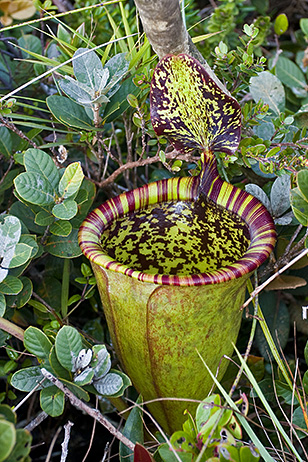
아텐버러 투수식물, 학명으로는 Nepenthes attenboroughii는 2007년 필리핀 팔라완 섬의 고산 지대에서 발견된 희귀한 식충식물입니다. 이 식물은 전 세계적으로 사랑받는 자연 다큐멘터리의 거장, 데이비드 아텐버러 경의 이름을 따 명명되었죠. 그의 탐험 정신과 자연에 대한 경외심을 기리는 아주 적절한 이름이 아닐 수 없습니다. Nepenthes 속은 전반적으로 ‘투수식물’ 또는 ‘벌레잡이통풀’로 불리며, 그 거대한 포충낭으로 작은 곤충부터 때로는 척추동물까지 포획하는 것으로 악명이 높습니다. 그 중에서도 아텐버러 투수식물은 최대 30cm에 달하는 거대한 포충낭으로 명성을 떨치고 있습니다.
[Deep Anatomy: 심층 해부] ‘투수’가 던지는 죽음의 유혹
아텐버러 투수식물의 포충낭은 그야말로 자연이 빚어낸 살인 병기입니다. 컵 모양의 이 주머니는 매끄럽고 왁스 코팅된 벽과 미끄러운 입구(peristome)를 가지고 있어, 낭 속으로 한 번 들어간 먹이는 좀처럼 빠져나올 수 없게 만듭니다. 게다가 이 포충낭 안에는 강력한 소화 효소가 가득한 소화액이 들어있어, 불행히도 빠진 먹잇감을 서서히 분해하죠. 쥐를 통째로 삼킨다는 이야기는 아마도 그 거대한 크기와 강력한 소화 능력 때문에 생긴 오해와 과장의 산물일 수 있지만, 실제로 이 식물은 작은 설치류나 양서류까지도 포획할 수 있을 정도로 위협적인 존재입니다. 마치 자연의 설계자가 심어놓은 정교한 지옥의 덫과 같습니다.
[Evolutionary Context: 진화적 맥락] 왜 식물이 고기를 먹어야만 했을까?
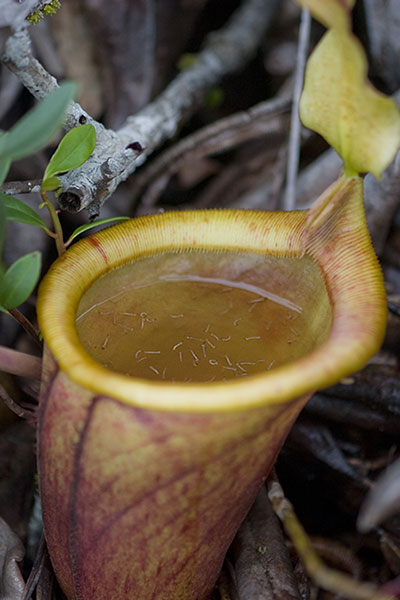
식물이 어째서 곤충은 물론, 쥐까지 탐하는 포식자가 되었을까요? 그 해답은 바로 토양에 있습니다. 아텐버러 투수식물이 서식하는 고산 지대의 토양은 매우 척박하며, 식물 성장에 필수적인 질소와 인 같은 영양분이 턱없이 부족합니다. 이러한 극한 환경에서 살아남기 위해, 이들은 광합성만으로는 얻을 수 없는 영양분을 동물성 단백질에서 보충하는 방향으로 진화했습니다. 이는 자연 선택의 냉혹하면서도 기발한 결과물이며, 생존을 위한 식물의 처절한 몸부림이라 할 수 있습니다. 다른 식충식물들과 마찬가지로, 이들은 자신들의 한계를 뛰어넘어 새로운 생존 전략을 개척한 것입니다.
[Verdict & Trivia: 결론 및 뒷이야기] 다큐 거장에게 바치는 자연의 경이
아텐버러 투수식물은 단순한 식물이 아닙니다. 그것은 생명의 경이로움과 잔혹함, 그리고 진화의 무한한 가능성을 보여주는 살아있는 증거입니다. 데이비드 아텐버러 경의 이름을 딴 이 식물은, 그의 평생에 걸친 자연 탐구 정신에 대한 가장 위대한 헌사 중 하나일 것입니다. 그러나 이 매혹적인 식물은 서식지 파괴와 무분별한 채취로 인해 멸종 위기에 처해 있습니다. 우리가 이 식물의 존재를 알게 된 것은 그리 오래되지 않았지만, 우리가 그 존재를 영원히 잃는 것은 한순간일 수 있습니다. 에디터 택슨구루는 이 기회를 빌어, 이 놀라운 생명체를 보존하기 위한 우리 모두의 관심과 노력을 촉구합니다.
TaxonGuru 블로그, 수석 고생물학자 & 생태계 스토리텔러 에디터 택슨구루 드림
The Hellish Trap That Swallows Rats? Attenborough’s Pitcher Plant’s Secret Dining Table!
Plantae > Caryophyllales > Nepenthaceae
[Hook] The Plant Kingdom’s Serial Hunter? Introducing the Rat-Eating Pitcher Plant!
Imagine this: in a serene forest, a gigantic pouch suddenly appears and swallows a small rat whole! Sounds like a scene straight out of a horror movie, right? Well, this is the harsh reality of a plant that exists on Earth. Today, Editor TaxonGuru invites you to delve into the darker side of the plant kingdom, to the mysterious dining table of a fearsome predator named after a great documentary filmmaker: Attenborough’s Pitcher Plant (Nepenthes attenboroughii). Is the rumor of it eating rats truly real?
[Scientific Backbone] A Hidden Gem of Palawan, Philippines
Attenborough’s Pitcher Plant, scientifically known as Nepenthes attenboroughii, is a rare carnivorous plant discovered in 2007 in the high-altitude regions of Palawan Island in the Philippines. This plant was named in honor of the globally beloved giant of natural history documentaries, Sir David Attenborough – a truly fitting tribute to his spirit of exploration and reverence for nature. The genus Nepenthes as a whole is often called ‘pitcher plants,’ notorious for their large pitchers that capture anything from small insects to, on occasion, even vertebrates. Among them, Nepenthes attenboroughii has gained fame for its impressive pitchers that can reach up to 30 cm (12 inches) in height.
[Deep Anatomy] The Pitcher’s Deadly Allure
The pitcher of Attenborough’s Pitcher Plant is nothing short of a natural killing machine. This cup-shaped pouch features smooth, waxy-coated walls and a slippery rim (peristome), making it nearly impossible for prey to escape once they’ve fallen inside. Furthermore, these pitchers are filled with powerful digestive fluids containing potent enzymes that slowly break down the unfortunate creatures trapped within. While stories of it swallowing entire rats might be an exaggeration fueled by its immense size and formidable digestive capabilities, this plant is indeed threatening enough to capture small rodents and amphibians. It’s like a sophisticated trap from hell, designed by nature itself.

[Evolutionary Context] Why Did a Plant Evolve to Eat Meat?
Why would a plant evolve to become a predator, preying on insects and even rats? The answer lies in the soil. The high-altitude soils where Attenborough’s Pitcher Plant thrives are extremely poor in essential nutrients like nitrogen and phosphorus, which are vital for plant growth. To survive in such harsh environments, these plants evolved to supplement the nutrients they couldn’t obtain through photosynthesis with animal protein. This is a ruthless yet ingenious outcome of natural selection, a desperate struggle for survival by the plant kingdom. Like other carnivorous plants, they have transcended their limitations to forge new survival strategies.
[Verdict & Trivia] Nature’s Wonder Dedicated to a Documentary Legend
Attenborough’s Pitcher Plant is more than just a plant. It is a living testament to the wonder and cruelty of life, and the boundless possibilities of evolution. Named after Sir David Attenborough, this plant stands as one of the greatest homages to his lifelong dedication to exploring nature. However, this captivating plant is endangered due to habitat destruction and rampant collection. While we haven’t known of its existence for very long, we could lose it forever in an instant. Editor TaxonGuru takes this opportunity to urge everyone’s attention and effort towards preserving this incredible life form.
From the TaxonGuru Blog, Chief Paleontologist & Ecosystem Storyteller, Editor TaxonGuru