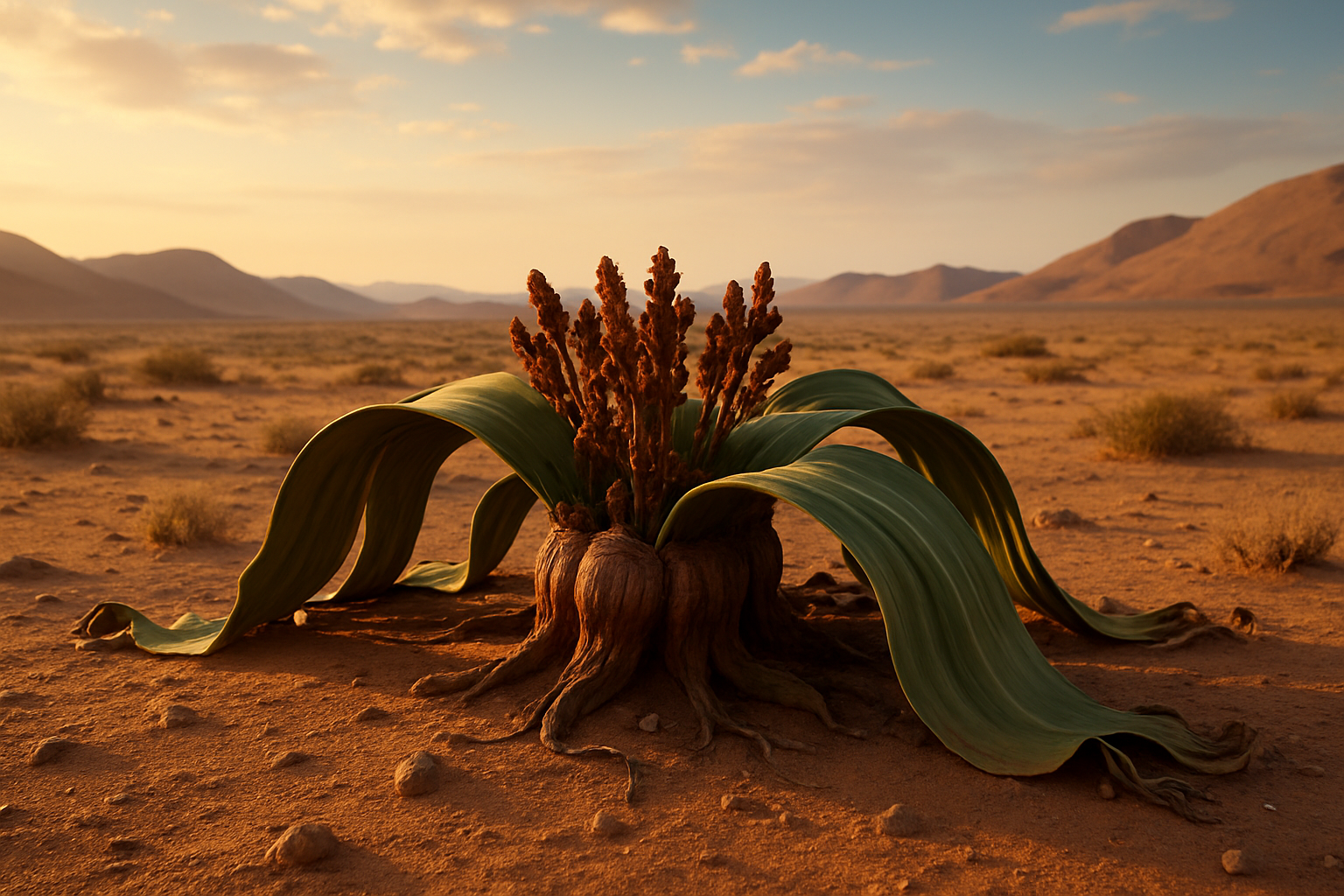
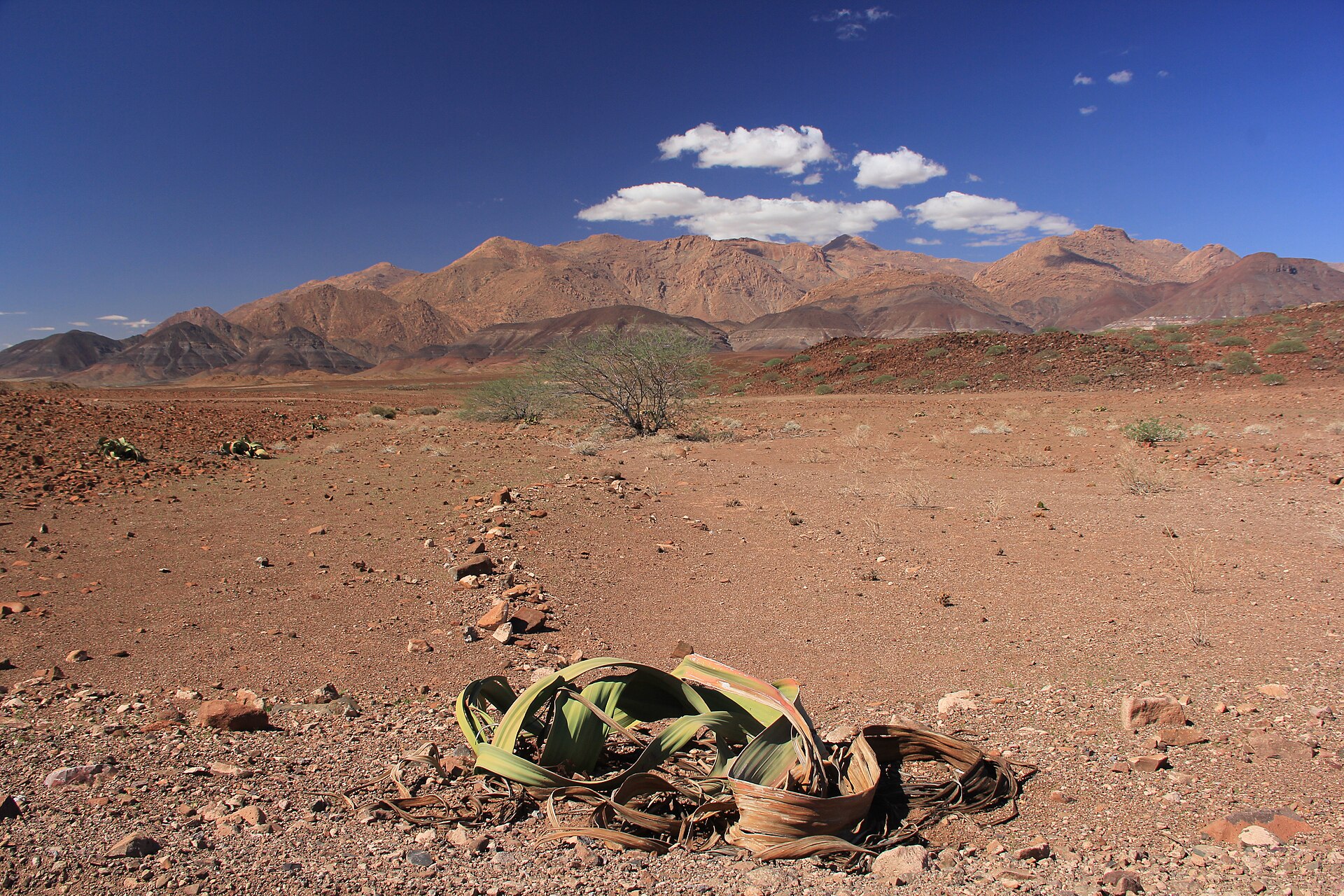
연강수량이 100mm 미만에 불과한 극건조 지대, 나미브 사막의 사막 평원과 건천 지역에 뜨거운 열기가 가득합니다 [2][4]. 바다 쪽에서 불어오는 연안 안개가 이따금 지표면을 감싸 안는 이 황량한 땅은 나미비아 중부의 퀴세브(Kuiseb) 강에서 출발해 앙골라 남서부 연안까지 약 1,000km나 이어집니다 [2][4]. 이 길고 거친 사막 한가운데, 지표면에 길게 엎드려 헝클어진 머리채처럼 잎을 늘어뜨린 이상한 생명체가 눈에 들어옵니다 [1, 2, 4].
마치 오래된 사막의 구조물이나 덤불처럼 보이는 이 식물은 웰위치아과 및 웰위치아목에 속하는 유일한 생존 단형종, 웰위치아(Welwitschia mirabilis)입니다 [1][4]. 나미브 사막에만 국한되어 자생하는 이 고유종 겉씨식물은 1,000년에서 2,000년 이상이라는 놀라운 수명을 자랑하며 자리를 지키고 있습니다 [2, 3, 6]. 과연 이 식물은 어떻게 수천 년 동안 한결같은 모습으로 이 황량한 사막에서 살아남을 수 있었을까요? [1, 2, 3, 6]
수십 장의 더부룩한 잎? 알고 보면 딱 두 장뿐
웰위치아를 처음 목격한 사람들은 흔히 어지럽게 꼬여 있는 수십 장의 잎을 떠올립니다 [2][4]. 하지만 이는 사막의 환경이 만들어낸 착시이자 대표적인 오해입니다 [2, 4, 6]. 웰위치아가 발아한 후 평생 동안 새로 만들어내는 진짜 잎은 단 한 쌍, 즉 딱 2개뿐입니다 [1, 2, 6].
이 독특한 모습의 비밀은 식물의 생장 지점에 있습니다 [1, 2, 6]. 웰위치아는 유묘기를 지나면 줄기 끝에서 성장을 담당하던 정단분열조직이 닫히며 성장을 멈춥니다 [1, 2, 6]. 그 대신 잎의 뿌리 쪽인 기부 분열조직(basal meristem)으로 성장의 중심이 이동합니다 [1, 2, 6]. 평생 동안 기부 분열조직에서 새로운 잎 조직이 끊임없이 밀려 나오는 동안, 사막의 강렬한 바람은 잎을 결 방향으로 가늘게 찢어놓습니다 [1, 2, 6].
결국 여러 장의 잎이 더부룩하게 엉켜 있는 것처럼 보이는 외형은, 딱 두 장의 잎이 수백 년, 수천 년의 세월 동안 거친 사막 바람에 찢겨 띠 모양으로 갈라진 흔적입니다 [1, 2, 4, 6]. 특이한 외형 때문에 야자수나 속씨식물의 일종으로 오해받기도 하지만, 웰위치아는 꽃을 피우지 않는 고대 겉씨식물 계통인 마황강(Gnetopsida)에 속합니다 [1, 4, 6].
사막 안개만 마시며 살아갈 수 있을까?
나미브 사막은 연강수량이 100mm 미만에 불과할 정도로 물이 극도로 귀한 곳입니다 [2][4]. 이곳에 서식하는 웰위치아에게 바다에서 이동해 오는 연안 안개는 매우 반가운 존재입니다 [2, 4, 5]. 그렇다면 웰위치아는 정말 안개 수분만으로 생존하는 것일까요?
세간의 오해와 달리, 웰위치아가 잎 표면으로 안개 수분을 흡수하는 것은 어디까지나 보조적인 수단일 뿐입니다 [2, 4, 5]. 극심한 건조기에도 사막의 열기를 견디며 생존할 수 있는 진짜 비결은 땅속 깊은 곳에 가려져 있습니다 [2, 4, 5].
웰위치아는 수직으로 길고 곧게 뻗어 내리는 뿌리인 직근(taproot)을 땅속 깊은 곳까지 내립니다 [2, 4, 5]. 이 뿌리가 지표면 아래 아득히 깊은 지하수층에 도달함으로써 비가 거의 내리지 않는 사막에서도 안정적으로 물을 퍼 올릴 수 있습니다 [2, 4, 5]. 하늘에서 찾아오는 안개와 땅속 깊은 지하수를 함께 활용하는 이 수분 확보 전략이야말로 웰위치아가 생명을 유지하는 견고한 바탕입니다 [2, 4, 5].
8,600만 년 전 유전자 사건과 2,000년의 수명
방사성 탄소 동위원소 측정을 거친 나미브 사막의 거대한 웰위치아 개체들은 연령이 1,500년에서 2,000년 이상에 달하는 것으로 확인되었습니다 [2, 3, 6]. 지극히 느린 속도로 자라는 이 고대 식물의 유전체 안에는 까마득한 과거의 흔적이 각인되어 있습니다 [3][7].
유전체 분석 연구에 따르면, 웰위치아의 조상은 약 8,600만 년 전 극심한 기후 스트레스가 몰아치던 시기에 유전체 전체가 두 배로 늘어나는 유전자 배가(Whole-Genome Duplication) 이벤트를 경험했습니다 [3][7]. 유전체가 배가되는 현상은 생존에 필요한 새로운 변화의 계기가 될 수도 있지만, 한편으로는 이동성 유전자 조각인 레트로트랜스포존(retrotransposon)이 무분별하게 증식해 유전체를 불안정하게 만들 위험을 동반합니다 [3][7].
웰위치아는 이러한 위험에 대응하여 레트로트랜스포존의 활성을 억제하는 강력한 DNA 메틸화(DNA methylation) 기전을 발달시켰습니다 [3][7]. DNA 메틸화는 DNA에 화학적 표지를 달아 특정 유전자의 작동을 억제하는 제어 방식입니다 [3][7]. 약 8,600만 년 전의 유전자 배가와 이를 통제하기 위해 발달한 강력한 DNA 메틸화 기전은, 이 식물이 지닌 독특한 유전적 바탕을 이해하는 핵심 열쇠로 평가받습니다 [3][7].
바람 대신 곤충을 부르는 겉씨식물의 지혜
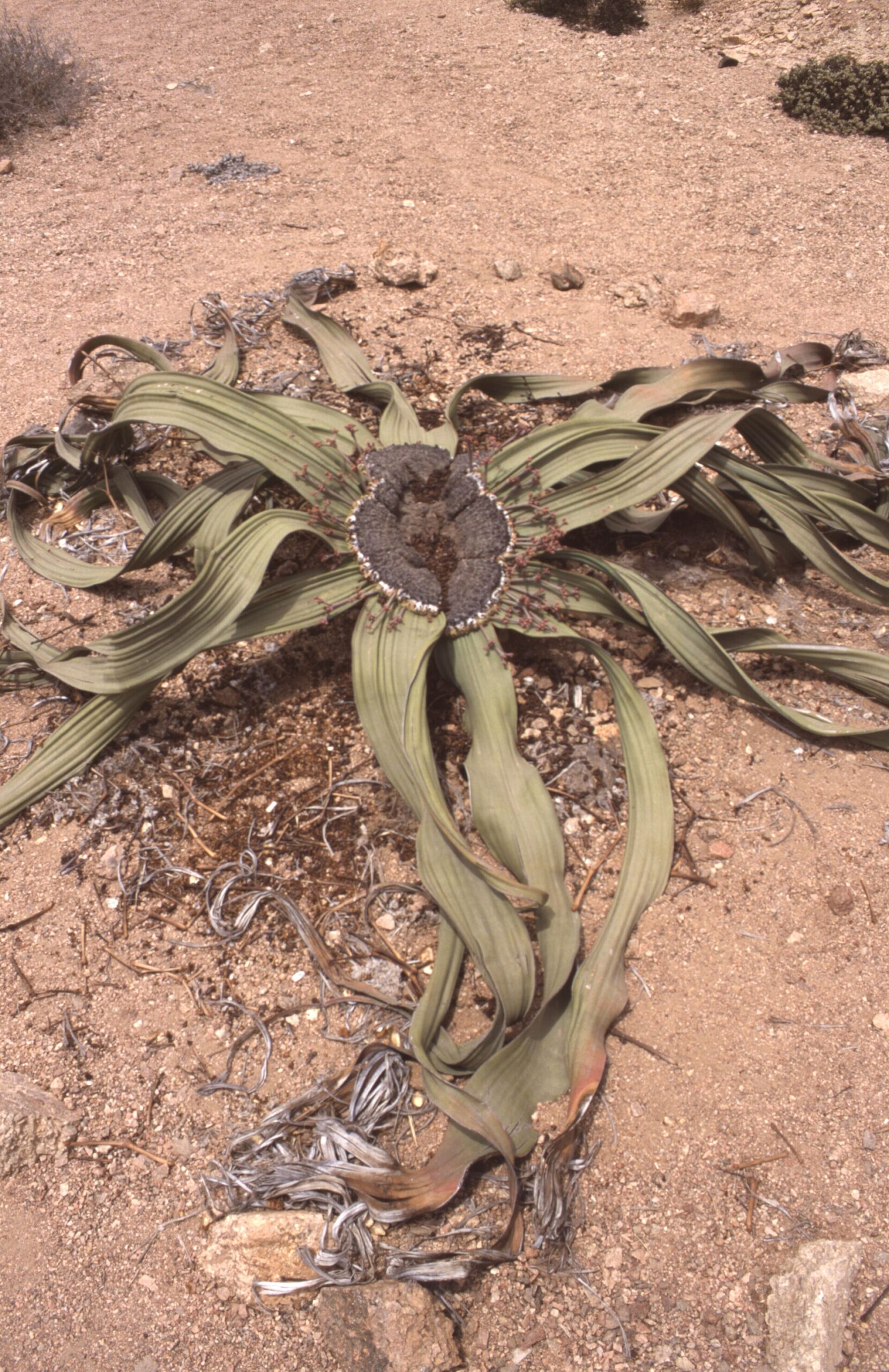
웰위치아는 암포자낭 구상체와 수포자낭 구상체가 서로 다른 개체에서 열리는 암수딴포기, 즉 자웅이주(dioecious) 식물입니다 [1, 2, 4]. 대다수의 겉씨식물은 바람을 이용해 꽃가루를 날려 보내는 풍매 방식을 채택하지만, 웰위치아의 번식 전략은 다소 이채롭습니다 [1, 2, 4].
이 식물은 바람 대신 곤충을 매개로 수분을 이루는 충매 방식을 주된 전략으로 삼습니다 [1, 2, 4]. 웰위치아의 암수 구상체는 달콤한 액체인 단물(꿀방울)을 분비하여 곤충을 유인합니다 [1, 2, 4].
수분이 부족한 사막 환경에서 이 달콤한 단물은 파리, 벌, 노린재 같은 곤충들에게 거부할 수 없는 유혹이 됩니다 [1, 2, 4]. 단물을 찾아 암수 개체를 바쁘게 오가는 곤충들의 몸에 꽃가루가 묻어나면서 자연스럽게 수분이 이루어집니다 [1, 2, 4].
사막 생태계를 지탱하는 그늘과 남겨진 수수께끼
웰위치아가 사막 평원에 펼쳐놓은 넓은 잎과 번식 특성을 연결해 보면, 이 식물이 나미브 사막 생태계에서 왜 핵심종(Keystone Species)으로 불리는지 명확히 이해할 수 있습니다 [2][4]. 거친 환경 속에서 웰위치아가 내어주는 달콤한 단물과 넓은 잎이 만들어내는 그늘은 사막 전체의 오아시스 역할을 합니다 [1, 2, 4].
넓게 퍼진 잎은 뜨거운 태양빛을 차단해 그 아래에 서늘하고 습한 미세기후를 형성하며, 미생물과 곤충, 파충류, 야생동물에게 피신처를 제공합니다 [2][4]. 여기에 구상체에서 분비되는 단물과 잎 자체는 수분이 귀한 사막 동물들에게 유용한 먹이와 수분 공급원이 되어줍니다 [1, 2, 4]. 즉, 한 개체의 웰위치아가 사막의 수많은 생물들을 불러 모으고 살려내는 생태계의 든든한 주춧돌이 되는 셈입니다 [2][4].
이처럼 생태계에서 중요한 위치를 차지함에도, 웰위치아의 생리학과 분류학에는 여전히 과학자들의 활발한 논의가 진행 중인 영역들이 있습니다 [1, 4, 5, 8]. 대표적인 것이 광합성 경로입니다 [5][8]. 야간에 이산화탄소를 고정하는 CAM 대사의 특성이 일부 관찰되어 CAM 식물이라는 주장이 나오기도 했으나, 가스 교환 분석에 따르면 탄소 고정의 대부분은 C3 경로로 이루어지며 CAM의 기여도는 4% 이하에 그칩니다 [5][8]. 이에 따라 현재는 C3 광합성을 기본으로 하면서 환경에 따라 제한적으로 CAM 대사를 활용하는 C3-CAM 유연성을 가진 것으로 봅니다 [5][8].
아종 분류에 대해서도 견해차가 존재합니다 [1][4]. 수꽃 구상체의 돌기 유무 등 형태적 차이에 따라 앙골라 개체군(subsp. mirabilis)과 나미비아 개체군(subsp. namibiana)으로 아종을 나누자는 제안이 있으나, 이는 식물 분류학계 전체에서 보편적으로 통용되는 체계는 아닙니다 [1][4]. 이에 따라 연구자에 따라 단일종으로 기술하거나 2개 아종으로 나누어 기술하는 차이가 나타납니다 [1][4].
현재 웰위치아는 IUCN 적색목록에 글로벌 등급으로 공식 평가되어 있지는 않습니다 [2][4]. 하지만 나미비아와 앙골라의 국내 법률로 보호받고 있으며, CITES 부속서 II에 등재되어 야생 개체와 종자의 국제 거래가 엄격하게 통제되고 있습니다 [2][4].
다시 1,000km에 걸쳐 펼쳐진 나미브 사막의 거친 사막 평원과 건천으로 시선을 돌려봅니다 [2][4]. 1,000년에서 2,000년 이상이라는 아득한 시간 동안, 웰위치아는 단 두 장의 잎을 바람에 내어준 채 사막 바닥에 납작하게 엎드려 자리를 지켜왔습니다 [1, 2, 3, 6].
바람에 결대로 찢긴 잎을 수천 년 동안 유지하면서도 사막의 온갖 생명체에게 그늘과 단물을 내어주는 이 독특한 식물 [1, 2, 4, 6]. 나미브 사막의 열기 속에서 묵묵히 잎을 밀어 올리는 웰위치아의 모습은, 환경의 한계 속에서도 생명이 얼마나 경이로운 생존 방식을 만들어낼 수 있는지 우리에게 깊은 여운을 남깁니다 [1, 2, 3, 6].
대표 이미지 출처
TaxonGuru 제작 · AI 기반 대표 설명용 재현 이미지 · 실제 관찰 사진 아님 · 생성일 2026-09-16
자료와 편집 원칙
이 글은 공개된 학술·기관 자료를 바탕으로 작성되었으며, 주요 사실은 아래 참고자료에서 확인할 수 있습니다. 편집 및 팩트체크 정책과 AI 활용 정책을 공개하고 있습니다. 오류 제보: kjhtime@gmail.com
참고자료
- conifers.org — www.conifers.org, 확인일 2026-09-16
- sanbi.org — pza.sanbi.org, 확인일 2026-09-16
- diagnosticdetectives.com — diagnosticdetectives.com, 확인일 2026-09-16
- wikipedia.org — en.wikipedia.org, 확인일 2026-09-16
- researchgate.net — www.researchgate.net, 확인일 2026-09-16
- ucdavis.edu — conservatory.ucdavis.edu, 확인일 2026-09-16
- datadryad.org — datadryad.org, 확인일 2026-09-16
- uchicago.edu — www.journals.uchicago.edu, 확인일 2026-09-16