Does a creature swimming through the tropical oceans today carry a shell shaped in a mathematically perfect Golden Ratio, preserved unchanged for 500 million years? Popular culture often celebrates the chambered nautilus, Nautilus pompilius, as a flawless living fossil [1][7]. It is frequently portrayed as an ancient aquatic architect that mastered deep-sea geometry before the dinosaurs ever walked the Earth [1][3]. But how much of this famous reputation withstands rigorous scientific investigation [1]?
When marine biologists test these widespread claims against physical evidence, the reality proves to be far more nuanced than urban legends suggest [1][2]. By examining the fossil record, structural mathematics, and deep-sea field observations, we can separate popular myth from confirmed biological fact [1][5]. What emerges is a story less about mathematical perfection and more about remarkable real-world evolutionary adaptation [1][5].
Testing the Myth of the Golden Ratio
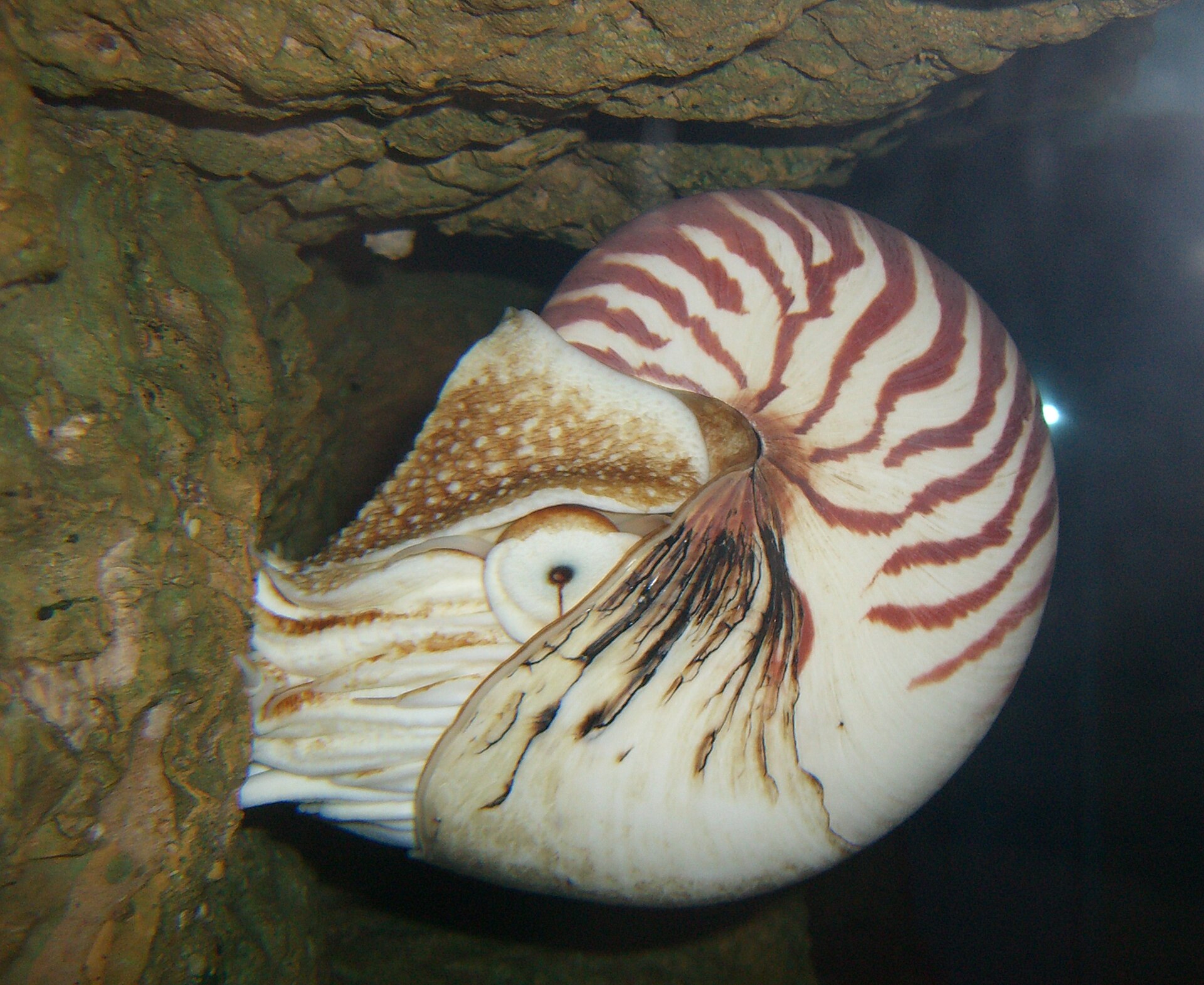
For decades, art history books and popular science commentary have claimed that the shell of Nautilus pompilius exhibits the famous Golden Ratio [1][7]. This specific mathematical proportion, approximately equal to 1.618, is renowned for creating balanced spirals in geometry and art [7]. Proponents of the myth argue that as the chambered nautilus grows, its expanding shell chambers locked into this exact geometric constant [1][7].
To evaluate this claim, researchers carefully measured the geometric growth rate of actual chambered nautilus shells [1][7]. While the shell does form a logarithmic or equiangular spiral, its actual expansion ratio consistently measures between 1.31 and 1.33 [1][7]. Because 1.31 is mathematically distinct from 1.618, the belief that the nautilus is a living symbol of the Golden Ratio is incorrect [1][7]. The spiral shape provides an efficient structural pattern for shell growth, but it does not match the divine proportion so often cited in pop science trivia [1][7].
Is the Modern Chambered Nautilus Really 500 Million Years Old?
Another widespread belief is that Nautilus pompilius itself has been navigating the ocean depths for 500 million years [1][2]. Scientific features and commercial trade descriptions frequently label this specific mollusk as a unchanged survivor from the dawn of complex life [1][3]. To verify this claim, scientists must separate the broad lineage of the animal from the specific modern species [1][2].
Fossil records confirm that the overarching subclass Nautiloidea first emerged during the late Cambrian and early Ordovician periods, roughly 500 million years ago [1][3]. However, comparative anatomical and genetic studies show that the modern species Nautilus pompilius is a much more recent evolutionary development [1][2]. This specific species appeared long after the Pleistocene epoch [1][2]. While its ancestral lineage is indeed ancient, the individual species swimming in our oceans today is a relatively recent member of an old family tree [1, 2, 3].

Inside the Living Submarine: The Siphuncle and Buoyancy
Although Nautilus pompilius is not a 500-million-year-old species with a Golden Ratio shell, its real biological mechanics are extraordinary [1][5]. As a primitive member of the class Cephalopoda, it lives inside a hard, compartmented shell [1][5]. The animal occupies only the outermost main living chamber, leaving behind a series of sealed internal compartments as it grows [1][5].
To control its position in the water column, the nautilus relies on a specialized strand of vascularized soft tissue known as the siphuncle [1][5]. This internal tissue strand extends through every sealed chamber of the shell [1][5]. The animal uses the siphuncle to actively pump salt out of the chamber fluid, creating an osmotic pressure gradient that draws liquid out of the internal compartments [1][5]. By balancing the fluid and gas ratios inside these chambers, Nautilus pompilius regulates its buoyancy like a natural submarine, maintaining neutral buoyancy in deep water [1][5].
Primitive Eyes and Ninety Chemical-Sensing Tentacles
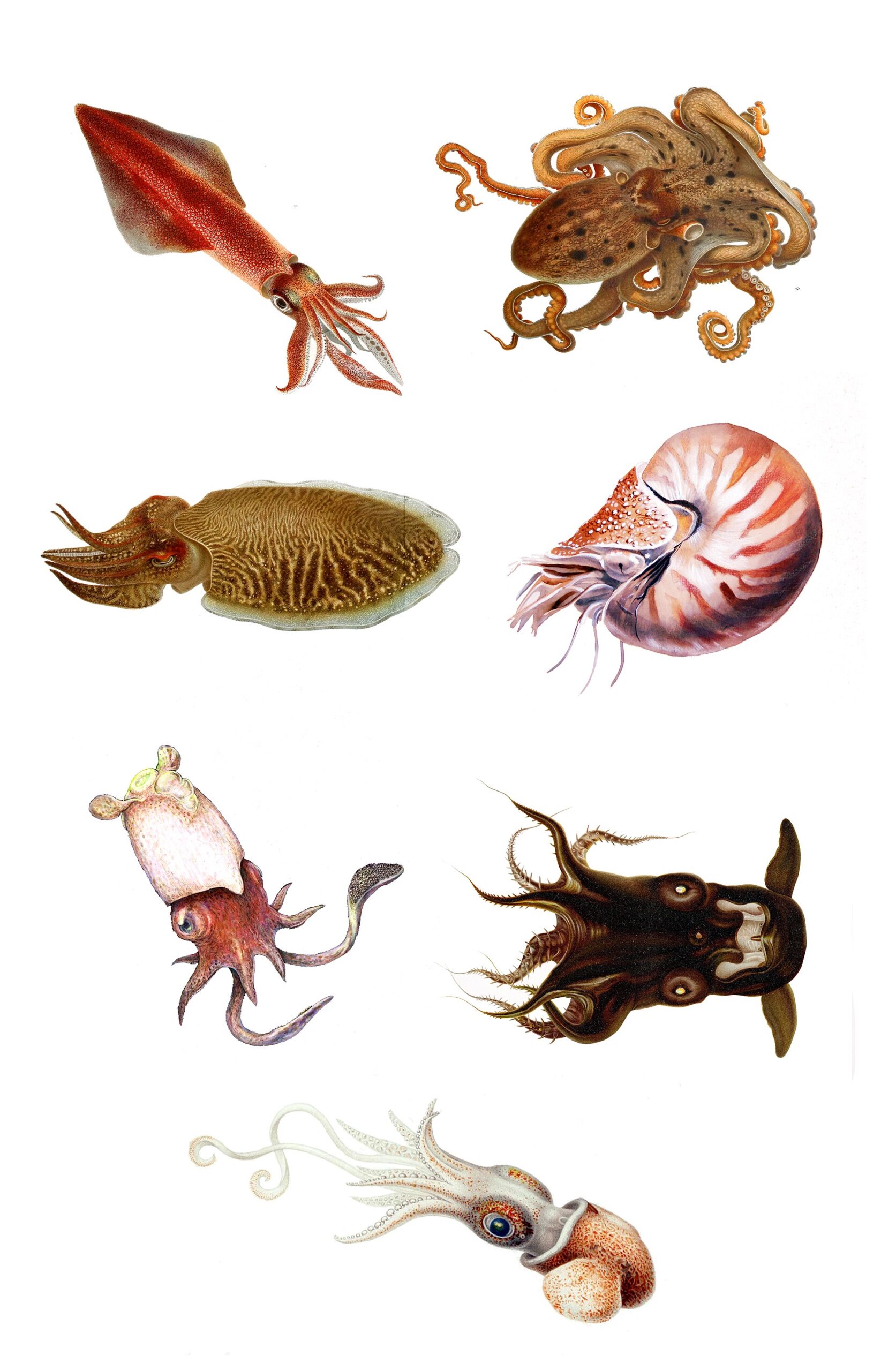
How does Nautilus pompilius compare to modern cephalopods like squids and octopuses? Modern cephalopods are famous for their high-resolution eyes equipped with complex lenses and corneas [1][6]. In contrast, the chambered nautilus possesses a remarkably simple visual system [1][6]. Its eyes function like pinhole cameras—open apertures without lenses that allow light to pass directly into the eye cavity [1][6]. This lensless design produces low-resolution images, leaving the animal with limited visual acuity in the dark ocean depths [1][6].
To compensate for its simple vision, Nautilus pompilius relies on an array of specialized tentacles called cirri [5][6]. While squids and octopuses typically have eight or ten arms fitted with powerful suction cups, the chambered nautilus boasts more than 90 tentacles that completely lack suckers [5][6]. These slender appendages are packed with chemical sensing receptors, or chemoreceptors [5][6]. By sweeping its tentacles through the water, the nautilus detects chemical trails given off by prey, using smell and touch rather than sharp eyesight to locate food in dark waters [5][6].
A Daily Deep-Sea Commute and a Slow Life Strategy
The habitat of Nautilus pompilius spans the tropical Indo-Pacific ocean, including the Coral Triangle, the Philippines, Indonesia, the Great Barrier Reef, the Coral Sea, Micronesia, and Fiji [1][5]. Within these regions, the animal inhabits steep coral reef walls and slopes at depths ranging from 100 to 700 meters [1][5]. Its daily routine revolves around a remarkable behavior known as diurnal vertical migration [1][5].
During daylight hours, Nautilus pompilius remains in deep waters between 300 and 700 meters [1][5]. Remaining at these dark depths helps the animal avoid visual predators while staying in cool water temperatures [1][5]. When night falls, it ascends along the reef slope to shallower depths between 100 and 150 meters to hunt for food [1][5].
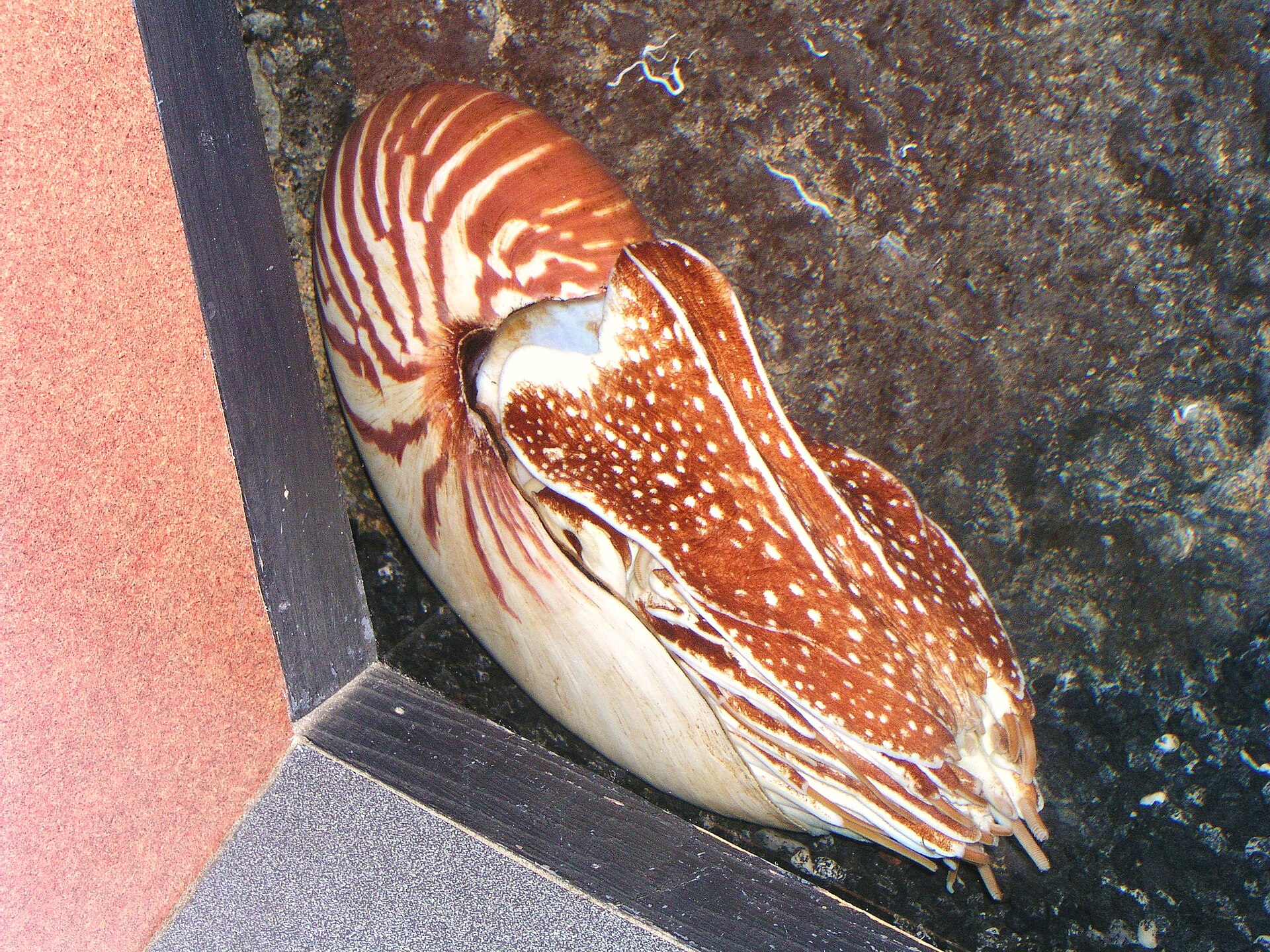
This deliberate lifestyle aligns with an unusual reproductive strategy for cephalopods [4][5]. Most squids and octopuses live fast, reproduce once within a year or two, and die [4][5]. In contrast, Nautilus pompilius follows a K-selected life history strategy characterized by slow growth and high adult survival [5]. It grows at a remarkably slow rate, taking 10 to 15 years to reach sexual maturity [4][5]. Once mature, it has an estimated lifespan of 15 to 20 years or more and reproduces repeatedly over multiple years [4][5].
The Overharvest Crisis and Global Population Uncertainties
Connecting these verified facts reveals why Nautilus pompilius faces severe conservation threats [1][5]. Because the animal ascends to predictable shallower depths every night and grows so slowly, targeted harvesting has devastating impacts on local populations [1][5]. Commercial fishing targets the nautilus primarily for its ornamental shell, which is traded internationally for jewelry and decorative craft items [1][5].
When intensive harvesting occurs, population recovery takes decades due to the animal’s 10-to-15-year maturation timeline [4][5]. In surveyed regions such as the Tanon Strait in the Philippines, researchers documented localized population collapses exceeding 97 percent due to overfishing [1][5]. Consequently, Nautilus pompilius is listed under CITES Appendix II, designated as Threatened under the United States Endangered Species Act, and classified as Vulnerable on the IUCN Red List [1][5].
However, estimating the exact global population size of Nautilus pompilius presents an ongoing scientific challenge [1][5]. Because these mollusks live along remote ocean drop-offs between 100 and 700 meters deep across vast areas of the Indo-Pacific, comprehensive worldwide surveys are impossible to conduct [1][5]. While scientists know that localized targeted harvesting leads to drastic population declines, the total number of individuals remaining across unexplored deep-reef habitats remains uncertain [1][5].
Resolving the Mystery of the Living Fossil
Our investigation into Nautilus pompilius brings us back to our opening question: is this marine animal a 500-million-year-old living fossil with a mathematically perfect shell [1, 2, 7]? The empirical evidence provides a clear answer [1][5]. The shell does not grow according to the Golden Ratio, and Nautilus pompilius as a distinct species emerged relatively recently after the Pleistocene epoch [1, 2, 7].
Yet, dispelling these popular myths does not diminish the marvel of the chambered nautilus [1][5]. Instead, the verified evidence reveals a creature that is far more intriguing than pop science fables suggest [1][6]. From its submarine-like siphuncle osmotic pump to its lensless pinhole camera eyes and 90 chemical-sensing tentacles, Nautilus pompilius stands as a unique biological marvel operating in the ocean depths [1, 5, 6]. Protecting this slow-growing deep-sea navigator ensures that its true scientific story will continue to unfold for generations to come [1][5].
Featured image credit
Image: Diego Delso · Wikimedia Commons · CC BY-SA 4.0 · original file
Sources and editorial policy
This feature is based on publicly available scientific and institutional sources listed below. Read our editorial and fact-checking policy and AI use policy. Report a correction: kjhtime@gmail.com
References
- wikipedia.org — en.wikipedia.org, accessed 2026-10-02
- wikipedia.org — en.wikipedia.org, accessed 2026-10-02
- newworldencyclopedia.org — www.newworldencyclopedia.org, accessed 2026-10-02
- facebook.com — www.facebook.com, accessed 2026-10-02
- noaa.gov — www.fisheries.noaa.gov, accessed 2026-10-02
- worldanimalrescuenetwork.org — worldanimalrescuenetwork.org, accessed 2026-10-02
- marinesanctuary.org — marinesanctuary.org, accessed 2026-10-02