
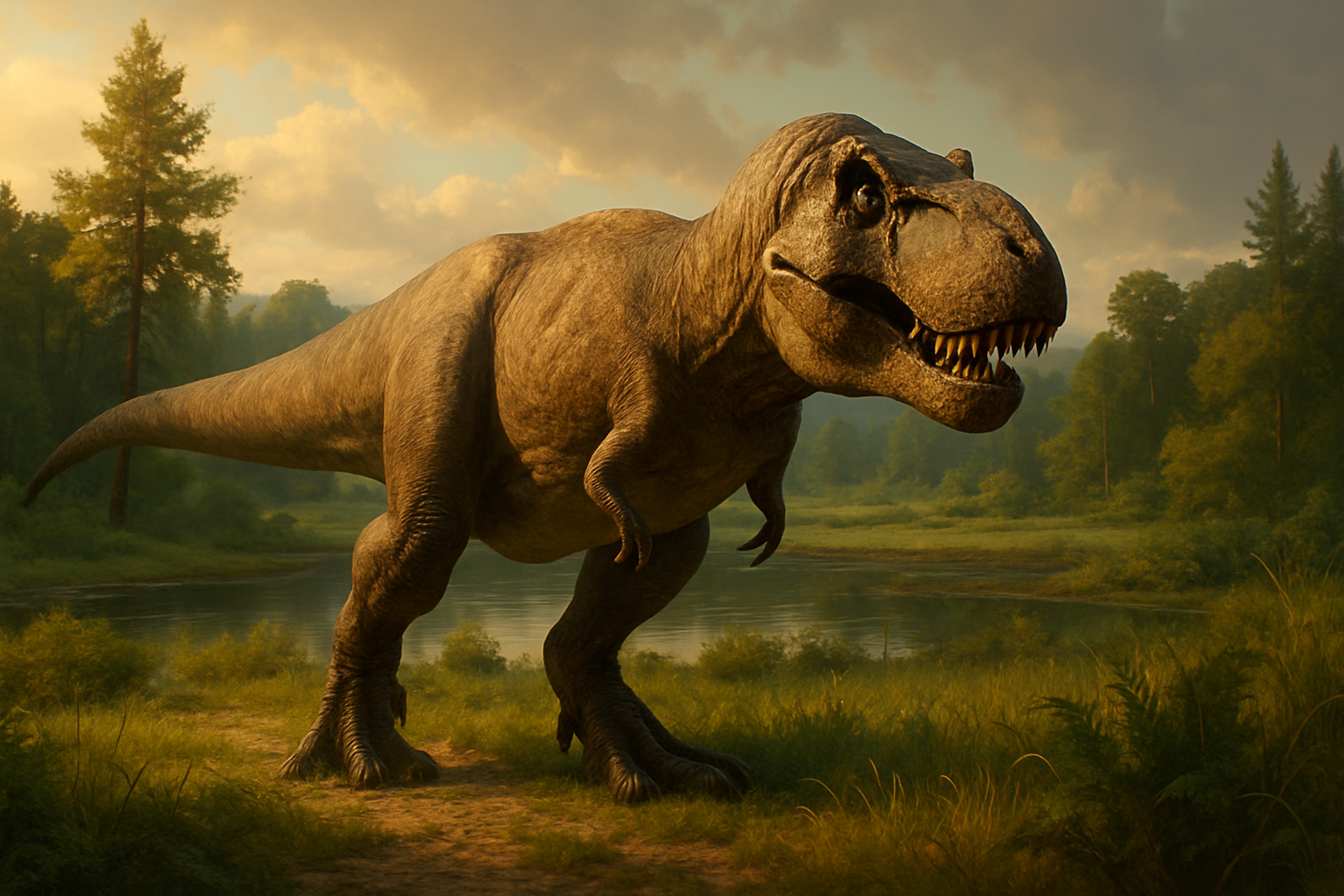
What does it take to survive as a six-to-nine-ton apex predator in an ancient subtropical world? Imagine walking through ancient river valleys carrying shattered ribs and a throbbing jaw infection, yet remaining the undisputed master of your ecosystem [1, 3, 10]. For Tyrannosaurus rex, life in the Late Cretaceous period was not just about wielding sheer physical force—it was a constant exercise in physiological resilience [1, 3, 10].
Bouncing Back from Broken Bones
When paleontologists examined the famous Tyrannosaurus rex specimen known as “Scotty” using high-powered synchrotron micro-CT scans, they unlocked a remarkable story of deep biological recovery [3][10]. High-resolution imaging of a major rib fracture revealed intricate three-dimensional casts of microscopic blood vessels embedded inside the healed bone callus [3][10]. Over millions of years, these delicate structures were replaced by minerals like pyrite [3][10]. They offer direct physical proof of the formation of new blood vessels—a process known as angiogenesis—which enabled the massive theropod to repair devastating skeletal trauma and continue hunting [3][10].
Scotty was far from the only individual to endure serious medical crises [3][10]. Another well-known specimen, “Tristan Otto,” suffered from a severe, long-term jaw bone infection, or osteomyelitis [3][10]. Dual-energy CT scans of Tristan Otto’s lower jaw revealed extensive bone lesions and dense mineral deposits surrounding the roots of its teeth [3][10]. Despite living with a chronic, painful infection in its feeding apparatus, the animal survived for years [3][10]. These pathologies demonstrate that T. rex possessed extraordinary bodily defenses capable of overcoming severe trauma [3][10].
Bone-Crushing Mechanics and Active Hunts
It is easy to understand why Tyrannosaurus rex required such high physical resilience: its feeding habits involved high-stakes, bone-shattering violence [1][3].
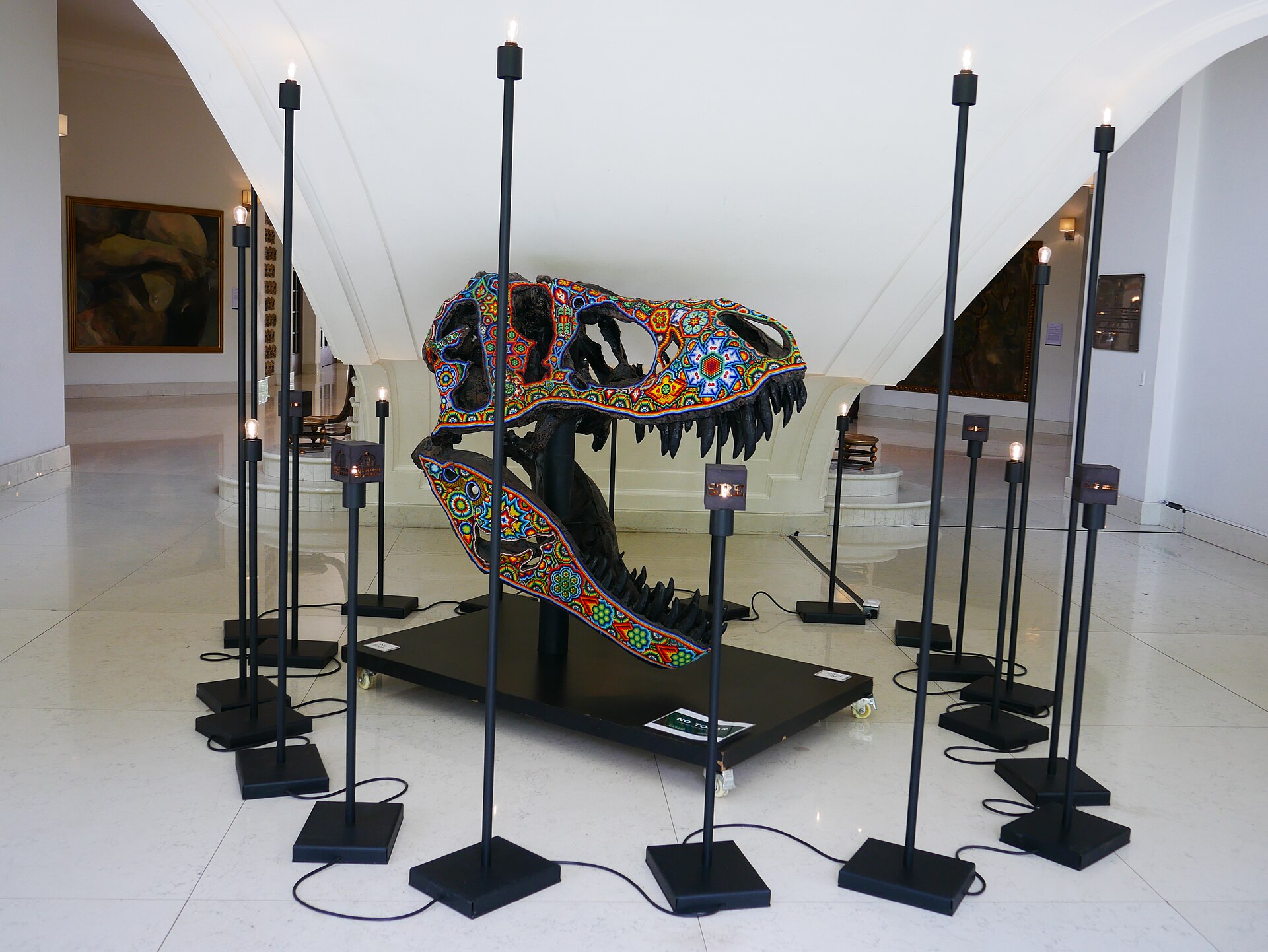
A fully grown adult packed the most powerful bite force of any known terrestrial animal, generating between 35,000 N and 57,000 N of force at its back teeth [1][3]. Rather than slicing thin strips of meat, T. rex possessed thick, robust teeth tailored for a puncture-and-pull feeding mechanism [1][3]. This technique allowed the predator to bite deep into prey, shatter dense bone, and tear away massive chunks of flesh [1][3].
For decades, a persistent myth suggested that T. rex was merely a sluggish, pure scavenger incapable of capturing live prey [1][3]. Fossil discoveries have thoroughly dismantled this idea [1][3]. Paleontologists have uncovered fossils of herbivorous dinosaurs, including Triceratops, featuring healed bite marks made by T. rex teeth [1][3]. Because the bitten prey survived long enough for its bone tissue to heal, these specimens prove beyond doubt that T. rex engaged in active predator-prey combat rather than relying exclusively on abandoned carcasses [1][3].
Speed Limits on a Multi-Ton Body
Popular media often depicts Tyrannosaurus rex effortlessly chasing down fast-moving vehicles at speeds exceeding 70 kilometers per hour [1][6]. However, fundamental biomechanical realities dictate a very different speed limit [1][6].
Advanced three-dimensional biomechanical modeling reveals that an adult weighing six to nine metric tons was severely constrained by its own weight and skeletal stress tolerances [1][6]. Running at extreme speeds would have placed catastrophic stress on its leg bones [1][6]. Instead, biomechanical calculations indicate that a mature adult reached a maximum movement speed of 16 to 40 kilometers per hour (10 to 25 miles per hour) [1][6].
This movement speed was still more than adequate to capture the heavy armored herbivores inhabiting its ecosystem [1][6]. Supported by stereoscopic vision that provided precise depth perception, alongside an exceptional sense of smell, T. rex relied on ambush, devastating bite force, and endurance rather than prolonged high-speed pursuits [1][3].
Growing Up Tyrant: Different Life, Different Niche
As a Tyrannosaurus rex grew from a small hatchling into a giant, its ecological role transformed entirely—a process known as an ontogenetic niche shift, where an organism changes its ecological role as it matures [1][6].
Juvenile tyrannosaurs possessed elongated lower leg and foot bones, making them slender, highly agile predators capable of pursuing fast, nimble targets [1][6]. Following an explosive growth phase, their skeletons broadened, their jaw muscles expanded, and they shifted into heavy, bone-crushing predators tailored for large, armored prey [1][6]. By dividing ecological roles between age groups, young and adult T. rex avoided direct competition for the same food resources [1][6].
This stark difference between young and adult forms sparked long-standing debates regarding small fossil specimens [7, 8, 9]. For years, researchers argued whether slender skeletons belonged to juvenile T. rex individuals or a distinct, smaller genus named Nanotyrannus [7, 8, 9]. Recent studies from 2024 and 2025—analyzing hyoid bone microstructures, internal respiratory air sac pathways, and key fossils such as the “Dueling Dinosaurs”—have significantly strengthened the argument that Nanotyrannus lancensis was a distinct adult species rather than a teenage T. rex [7, 8, 9].
Deep Secrets in the Fossil Record

Despite more than a century of scientific research, important questions about Tyrannosaurus rex remain open [1, 2, 3].
We know that breeding females deposited a temporary, highly vascularized calcium reservoir inside their femur cavities—a specialized bone tissue known as medullary bone [1][3]. Just like modern birds, female T. rex mobilized calcium from this temporary layer to produce eggshells during egg laying [1][3]. However, researchers have not yet discovered definitive T. rex nests, eggs, or fossilized embryos [1][3]. Consequently, scientists must infer its reproductive and nesting habits through bone tissue analysis and juvenile skeletal remains [1][3].
Uncertainties also surround the origin and evolution of the genus across ancient North America [2, 4, 5]. Fossils recovered from New Mexico’s McRae Formation, dated to approximately 70 to 72 million years ago, have been proposed as a distinct species named Tyrannosaurus mcraeensis [2, 4, 5]. Proponents suggest it represents an older ancestral lineage that evolved in southern Laramidia millions of years before T. rex appeared [2, 4, 5]. However, other researchers argue that more evidence is required to confirm whether these fossils represent a truly independent species or variations within existing populations [2, 4, 5].
What Made T. rex the Ultimate Cretaceous Survivor?
When these verified findings are synthesized, a clear explanation emerges for how Tyrannosaurus rex dominated the ancient island continent of Laramidia—stretching across present-day Saskatchewan, Alberta, Montana, Wyoming, Utah, and New Mexico—during the Late Cretaceous Maastrichtian stage, roughly 69 to 66 million years ago [1][3].
Its ecological success was not driven merely by massive size, but by an integrated combination of physiological durability, feeding efficiency, and developmental flexibility [1, 3, 6, 10]. The ability of young and adult individuals to occupy distinct ecological niches ensured that the species efficiently utilized available prey across its subtropical delta and floodplain habitats [1][6]. At the same time, extraordinary internal healing processes—capable of repairing fractured ribs through blood vessel growth and sustaining long-term jaw infections—allowed injured individuals to survive severe physical trauma and maintain their status as apex predators [3][10].
So, what does it take to survive as a six-to-nine-ton apex predator in an ancient subtropical world? As the fossil record demonstrates, Tyrannosaurus rex combined unmatched physical power with an astonishing biological capacity to heal, adapt, and dominate its environment until the close of the Cretaceous period [1, 3, 10].
Featured image credit
Created by TaxonGuru · AI-generated featured explanatory reconstruction · not a documentary photograph · generated 2026-09-17
Sources and editorial policy
This feature is based on publicly available scientific and institutional sources listed below. Read our editorial and fact-checking policy and AI use policy. Report a correction: kjhtime@gmail.com
References
- wikipedia.org — en.wikipedia.org, accessed 2026-09-16
- everythingdinosaur.com — blog.everythingdinosaur.com, accessed 2026-09-16
- nih.gov — pmc.ncbi.nlm.nih.gov, accessed 2026-09-16
- nicklongrich.com — www.nicklongrich.com, accessed 2026-09-16
- harrisburgu.edu — www.harrisburgu.edu, accessed 2026-09-16
- utah.edu — magazine.utah.edu, accessed 2026-09-16
- nationalgeographic.com — www.nationalgeographic.com, accessed 2026-09-16
- yale.edu — news.yale.edu, accessed 2026-09-16
- sciencenews.org — www.sciencenews.org, accessed 2026-09-16
- nih.gov — pmc.ncbi.nlm.nih.gov, accessed 2026-09-16