고래는 원래 육상 동물이었다? ‘파키케투스’의 놀라운 진화 여정
분류 트리: Animalia > Mammalia > Cetartiodactyla > Pakicetidae
안녕하세요, 여러분! ‘TaxonGuru’ 블로그의 수석 고생물학자 에디터 택슨구루입니다. 오늘은 여러분의 상상력을 뒤흔들 아주 특별한 친구를 만나볼 시간이에요. 바다의 왕자 고래, 알고 보니 육지에서 살던 늑대였다는 믿기 힘든 이야기, 준비되셨나요?
[Hook] 고래의 반전 드라마: 물속 대신 숲속을 거닐던 시절?!
아침 드라마 뺨치는 반전 스토리! 광활한 대양을 유영하는 고래가 사실은 숲속을 맘껏 뛰어다니던 네 발 달린 포유류의 후손이라면 믿으시겠어요? 에이, 설마! 하고 고개를 갸웃거릴 분들이 많으실 겁니다. 하지만 고생물학자들의 끊임없는 탐구는 이 놀라운 진실을 밝혀냈죠. 오늘 우리가 만나볼 슈퍼스타는 바로 고래 진화의 ‘잃어버린 고리’이자, 이 미스터리의 핵심인 ‘파키케투스(Pakicetus attocki)’입니다! 이 작은 발자국이 어떻게 거대한 바다의 역사를 바꿨는지, 에디터 택슨구루와 함께 파헤쳐 볼까요?

[Scientific Backbone] 육지 고래의 탄생: 파키케투스 아토키
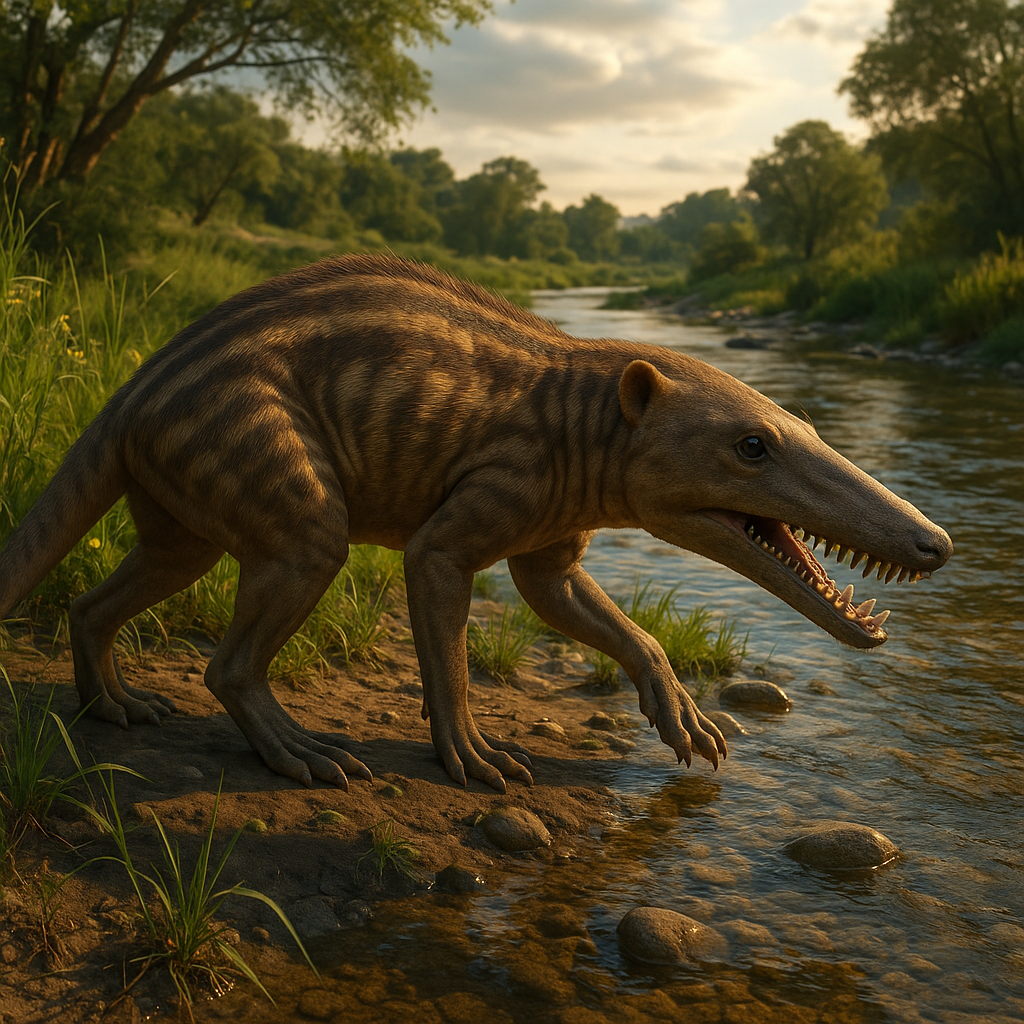
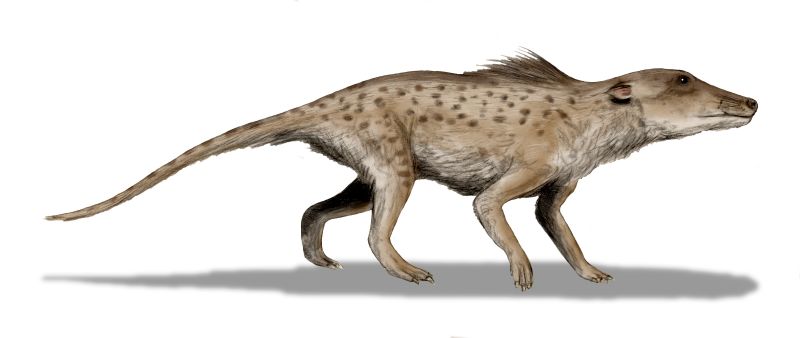
지금으로부터 약 5천만 년 전, 지금의 파키스탄 지역은 드넓은 테티스 해와 접해 있었습니다. 바로 이곳에서 고래 진화의 첫 장이 쓰여지고 있었죠. 1970년대 후반 처음 발견된 ‘파키케투스 아토키’는 ‘파키스탄의 고래’라는 뜻을 가진 이름처럼, 고래의 조상임에도 불구하고 우리가 아는 고래와는 사뭇 다른 모습을 하고 있었습니다. 몸집은 늑대나 큰 개 정도의 크기였고, 네 발로 육지를 걸어 다녔으며, 강가나 얕은 물가에서 사냥을 했을 것으로 추정됩니다. 이 녀석이 고래 조상이라고 하니, 아직도 좀 어색하신가요?
[Deep Anatomy] 숨겨진 단서: 뼈 속에 새겨진 바다로의 초대장
파키케투스의 진정한 매력은 바로 그 골격에 숨겨진 비밀에 있습니다. 특히 두개골을 살펴보면, 현대 고래에게서만 발견되는 독특한 내이(內耳) 구조인 ‘경골 피막(involucrum)’을 가지고 있습니다. 이 뼈는 물속에서 소리를 효율적으로 듣는 데 특화된 부위죠. 마치 미래를 예견이라도 한 듯, 아직 육지에 사는 녀석에게 바다로의 초대장이 뼈 속에 새겨져 있었던 셈입니다! 게다가, 어금니는 뾰족한 육식 동물의 형태를 띠고 있었고, 튼튼한 다리 뼈와 발굽이 달린 발가락은 영락없이 육상 생활에 최적화된 모습이었습니다. 육상 포유류와 초기 고래 사이의 교차점, 그 자체였던 것이죠. 바다로 떠날 준비를 마쳤지만, 아직은 땅 위에 서 있던 묘한 매력의 소유자, 파키케투스! 이 미스터리한 다리가 어떻게 뿅 하고 사라지는지 다음 이야기에서 풀어볼게요!
[Evolutionary Context] 물이 부르는 소리: 생존을 위한 위대한 귀환
그렇다면 파키케투스는 왜 굳이 육상 생활을 버리고 물속으로 들어가기 시작했을까요? 답은 ‘생존’에 있습니다. 당시 육상에는 먹이를 두고 경쟁해야 할 맹수들이 많았고, 반대로 강가나 얕은 바닷가에는 풍부한 어류와 해양 자원이 넘쳐났을 겁니다. 파키케투스는 이 기회를 놓치지 않았습니다. 물속에서 사냥하고, 위험을 피하며 점점 더 수생 환경에 적응해 나갔죠. 수백만 년에 걸쳐 다리가 점점 짧아지고 지느러미로 변하며, 콧구멍이 위로 이동하는 등 놀라운 변화를 겪게 됩니다. 여기서 잠깐! 파키케투스는 소나 하마와 같은 ‘우제목(짝수 발굽을 가진 동물)’에 속하는 포유류로부터 갈라져 나왔다는 증거도 있습니다. 고래가 하마의 먼 친척이라니, 정말이지 생명의 나무는 예측 불가능한 가지들로 가득하네요!
[Verdict & Trivia] 파키케투스: 진화의 위대한 증인
파키케투스는 단순한 화석이 아닙니다. 이 작은 뼈 조각 하나하나가 바로 생명의 적응력과 진화의 위대함을 증명하는 살아있는 증거입니다. 육지에서 바다로, 늑대 같던 모습에서 유려한 바다의 지배자로 변모한 고래의 여정은 ‘불가능은 없다’는 진화의 메시지를 우리에게 전해줍니다. 다음에 고래를 만날 때는, 그들이 한때 육지를 걸었던 ‘파키케투스’의 용감한 후손이라는 사실을 기억해주세요! 에디터 택슨구루였습니다!
흥미로운 트리비아: 파키케투스의 화석은 대부분 강가나 얕은 호수 퇴적층에서 발견되는데, 이는 이들이 완전한 해양 생물이 되기 전, 담수나 기수(민물과 바닷물이 섞인 물) 환경에서 주로 생활했음을 보여줍니다!
When Whales Walked on Land: The Pakicetus Story
Taxonomy: Animalia > Mammalia > Cetartiodactyla > Pakicetidae
Hello everyone! I’m Editor TaxonGuru, the Senior Paleontologist and Ecosystem Storyteller for ‘TaxonGuru’ blog. Today, we’re diving into a mind-blowing story that will challenge everything you thought you knew about whales. Are you ready to discover how the mighty “prince of the sea” was once a land-dwelling creature resembling a wolf?
[Hook] Whales’ Dramatic Twist: From Forests to the Deep Blue Sea?!
Prepare for a plot twist worthy of a blockbuster movie! What if I told you that whales, those magnificent ocean dwellers, are actually descendants of four-legged mammals that once roamed the land? “No way!” you might exclaim, shaking your head in disbelief. Yet, persistent paleontological research has unearthed this astonishing truth. Our superstar today is none other than Pakicetus attocki, the “missing link” in whale evolution and the key to this incredible mystery! How did this humble creature’s journey shape the vast history of the ocean? Let’s uncover it together with Editor TaxonGuru!
[Scientific Backbone] The Birth of the Land Whale: Pakicetus attocki
Roughly 50 million years ago, the region we now call Pakistan bordered the vast Tethys Sea. It was here that the first chapter of whale evolution began to unfold. First discovered in the late 1970s, Pakicetus attocki, whose name means “whale from Pakistan,” looked remarkably different from the whales we recognize today. Roughly the size of a wolf or a large dog, it walked on four legs and is believed to have hunted along riverbanks and shallow waters. Still find it hard to believe this was a whale ancestor?
[Deep Anatomy] Hidden Clues: An Invitation to the Sea Etched in Bone
The true marvel of Pakicetus lies in the secrets hidden within its skeleton. Examining its skull, we find a unique inner ear structure called an ‘involucrum,’ which is found exclusively in modern cetaceans. This bone is specifically adapted for efficient underwater hearing. It’s as if an invitation to the sea was etched into its very bones, predicting a future submerged life even while it lived on land! Furthermore, its molars were pointed, typical of a carnivore, and its sturdy leg bones and hooved toes were undeniably optimized for terrestrial life. Pakicetus was, quite literally, the intersection between land mammals and early whales. A creature with an intriguing charm, ready to embark on an oceanic journey, yet still firmly planted on land! We’ll explore how those legs magically vanished in the next part!
[Evolutionary Context] The Call of the Water: A Grand Return for Survival
So, why did Pakicetus abandon its terrestrial life and begin to enter the water? The answer lies in ‘survival.’ At that time, land was full of predators vying for food, while rivers and shallow coastal areas teemed with abundant fish and marine resources. Pakicetus seized this opportunity. It hunted, avoided dangers, and gradually adapted to the aquatic environment. Over millions of years, its legs shortened and transformed into flippers, its nostrils moved to the top of its head, and it underwent other astonishing changes. And here’s a fun fact: evidence suggests that Pakicetus diverged from artiodactyls (even-toed ungulates), animals like cows and hippos. Whales’ distant relatives being hippos? The tree of life truly branches in unpredictable ways!

[Verdict & Trivia] Pakicetus: A Great Witness to Evolution
Pakicetus is not just a fossil; every single bone fragment is a living testament to life’s adaptability and the grandeur of evolution. The journey of whales, from land to sea, from wolf-like appearance to graceful rulers of the ocean, conveys evolution’s message that ‘nothing is impossible.’ The next time you see a whale, remember that they are the brave descendants of Pakicetus, who once walked the Earth! This has been Editor TaxonGuru!
Fascinating Trivia: Most Pakicetus fossils are found in river and shallow lake sediments, indicating that they primarily lived in freshwater or brackish (a mix of fresh and saltwater) environments before becoming fully marine creatures!