엽록체 도둑 민달팽이: 바다의 무임승차범
Animalia > Mollusca > Gastropoda > Sacoglossa
1. 태양열 에너지, 동물도 가능하다고?
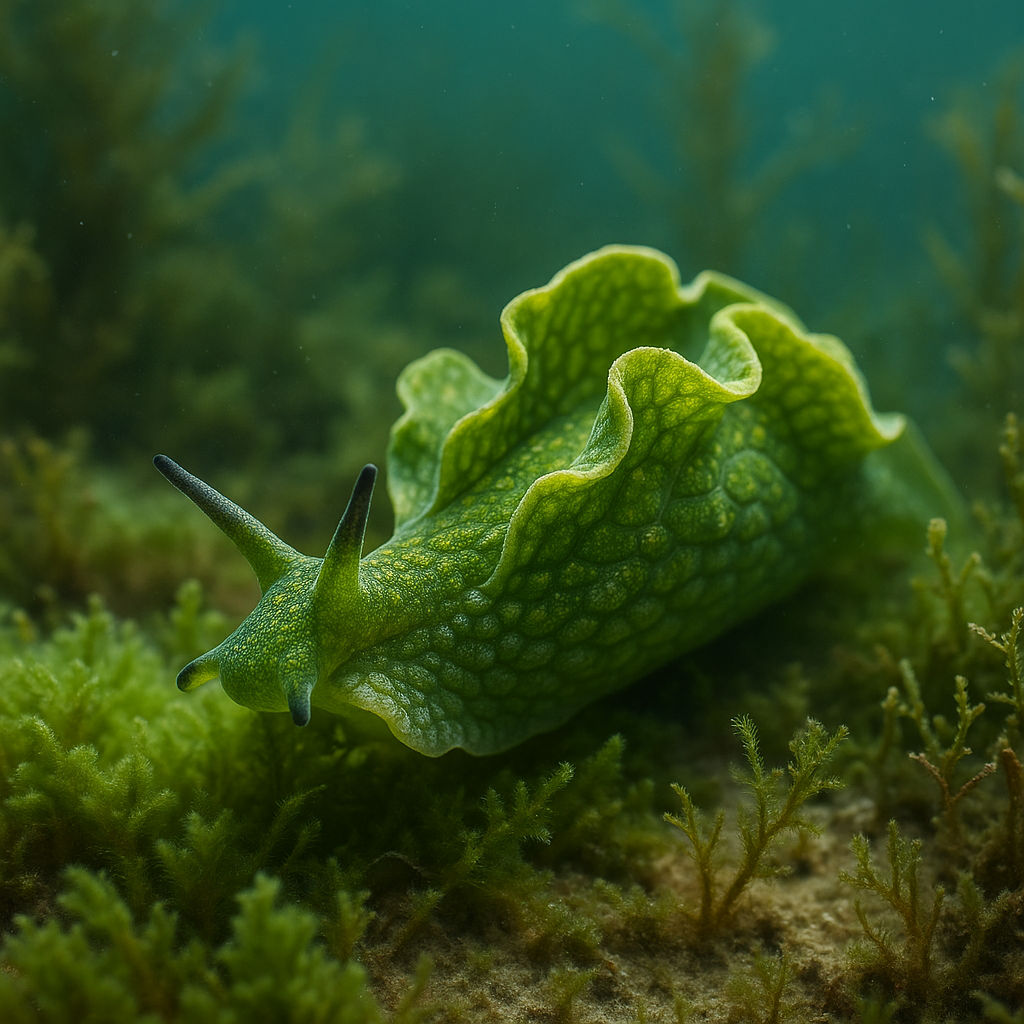
여러분, 밥을 안 먹고 햇볕만 쬐어도 배가 부른 동물이 있다면 믿으시겠습니까? SF 영화 속 이야기 같다고요? 하지만 바다 깊숙한 곳에서는 이 ‘꿈의 에너지원’을 현실로 만드는 생물이 존재합니다. 바로 오늘, 에디터 택슨구루가 여러분을 소개할 주인공, 학명 Elysia chlorotica, 통칭 ‘엽록체 도둑 민달팽이’입니다! 마치 남의 최신형 스마트폰 앱을 통째로 복사해서 자기 폰에 깔아버리는 것처럼, 이 민달팽이는 조류의 엽록체를 훔쳐 자신의 몸에 이식하는 기막힌 재주를 가지고 있죠. 자외선 쬐면 밥 안 먹고 살아가는, 그야말로 바다의 ‘무임승차범’이자 ‘솔라 패널 장착형’ 생명체랍니다.

2. 과학적 뼈대: 엽록체 도둑의 정체
자, 그럼 이 놀라운 생명체의 과학적 뼈대를 좀 살펴볼까요? Elysia chlorotica는 연체동물문(Mollusca)에 속하는 복족류(Gastropoda)의 일종으로, 특히 ‘주머니혀목(Sacoglossa)’에 분류됩니다. ‘Sacoglossa’라는 이름 자체가 ‘액체를 빨아먹는 혀’라는 뜻을 가지고 있는데, 이 친구들은 주로 조류(algae)의 세포 내용물을 빨아먹는 데 특화되어 있어요. 그런데 그냥 빨아먹는 게 아니라, 그 안의 가장 핵심적인 보물, 즉 ‘엽록체(chloroplast)’를 통째로 자기 것으로 만들어서 사용합니다. 이런 현상을 ‘클렙토플라스티(kleptoplasty)’, 즉 ‘엽록체 절취’라고 부르죠. 마치 해킹으로 남의 능력을 훔쳐 자기 능력으로 만드는 것과 같습니다.
3. 심층 해부: 엽록체 복붙의 비밀
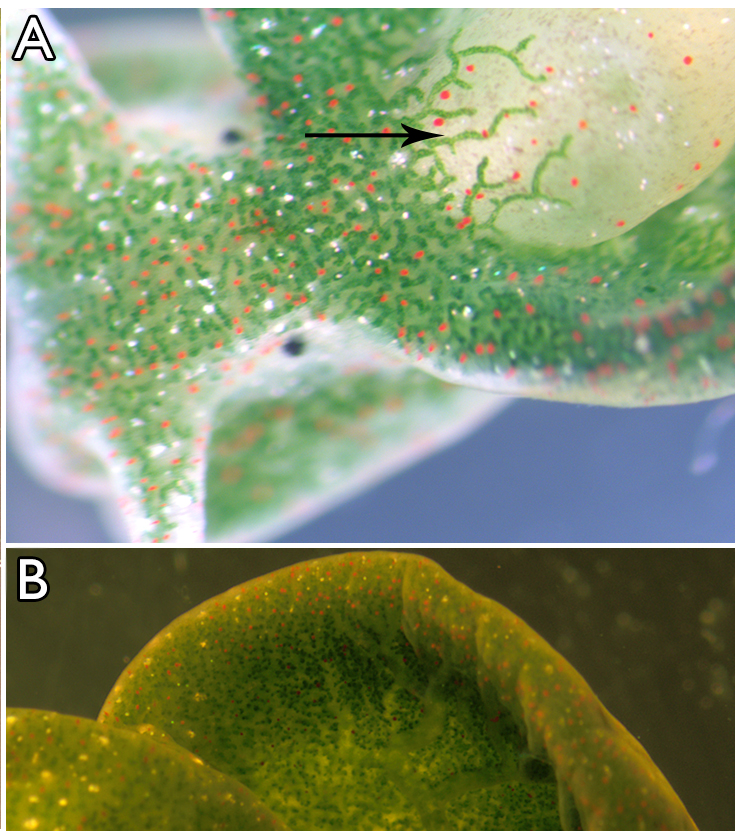
어떻게 이런 일이 가능할까요? Elysia chlorotica는 주로 ‘참갈파래(Vaucheria litorea)’라는 황록조류를 먹습니다. 이 민달팽이는 특수화된 라둘라(radula, 치설)로 조류 세포벽에 구멍을 뚫고, 세포질을 빨아들이죠. 이때 세포질 속에 있는 엽록체만은 소화하지 않고, 자신의 소화선 세포 안으로 흡수하여 통합시킵니다. 단순히 흡수하는 것을 넘어, 민달팽이의 세포는 이 엽록체들을 최대 몇 주에서 몇 달까지 기능적으로 유지시킬 수 있어요! 상상해보세요. 남의 광합성 공장을 통째로 자기 몸에 넣어버리고, 그 공장을 몇 달간 돌리는 겁니다. 더욱 놀라운 사실은, 민달팽이의 게놈에 조류의 유전자 중 엽록체 유지에 필요한 일부 유전자가 수평적으로 전이된 흔적도 발견되었다는 점입니다. ‘복붙’을 넘어선 ‘소스 코드 패치’ 수준이라고 할 수 있죠. 이 정도면 단순 도둑이 아니라, 거의 ‘생체 공학자’ 아닌가요?
4. 진화적 맥락: 왜 이런 능력을?
Elysia chlorotica는 왜 이런 기묘한 능력을 진화시켰을까요? 그 핵심은 ‘생존’과 ‘에너지 효율’에 있습니다. 바다 밑바닥은 먹이 경쟁이 치열하고, 먹이를 찾지 못하는 시기도 빈번할 수 있습니다. 이때 태양 에너지를 직접 활용하는 광합성 능력은 엄청난 생존 이점으로 작용합니다. 먹이가 부족할 때는 햇빛만으로도 에너지를 얻을 수 있으니, 그야말로 ‘자급자족형’ 생명체가 되는 셈이죠. 이는 기존의 다른 공생 관계와는 달리, 상대방을 숙주로 삼아 자기가 직접 ‘생체 발전소’를 가동하는 독특한 전략입니다. 마치 정유공장을 통째로 훔쳐다가 자기 차에 붙여버린 격이랄까요? 진화는 정말 예측 불가능한 방향으로 생명체를 이끄는 것 같습니다.
5. 에디터 택슨구루의 한마디 & 깨알 상식
에디터 택슨구루가 보기에는, Elysia chlorotica는 단순한 바다 민달팽이가 아닙니다. 자연이 빚어낸 최고의 ‘해킹 마스터’이자 ‘지속 가능한 에너지 솔루션’을 몸소 보여주는 살아있는 증거라고 할 수 있죠. 밥 안 먹고 햇볕만 쬐어도 사는 이 놀라운 능력은 우리에게 생명의 경이로움과 무한한 가능성을 다시 한번 일깨워줍니다.
- 깨알 상식: 이 민달팽이는 한번 엽록체를 흡수하면 최대 9개월까지 식사 없이 햇빛만으로 생존할 수 있다고 합니다! 그야말로 장기 무임승차의 달인인 셈이죠. 이 덕분에 Elysia chlorotica는 바이오 연료 및 광합성 연구 분야에서 중요한 모델 생물로 각광받고 있습니다.
Green Sea Slug: The Ocean’s Photosynthetic Stowaway
Animalia > Mollusca > Gastropoda > Sacoglossa
1. Sun-Powered Animals? Believe It!
Folks, would you believe me if I told you there’s an animal that doesn’t need to eat but can simply bask in the sun to feel full? Sounds like something out of a sci-fi movie, right? But deep in the ocean, a creature exists that turns this ‘dream energy source’ into reality. Today, Editor TaxonGuru introduces our star: Elysia chlorotica, commonly known as the ‘Green Sea Slug’ or the ‘chloroplast-stealing sea slug’! Much like someone copying a cutting-edge smartphone app and installing it on their own device, this sea slug possesses the astonishing ability to ‘steal’ chloroplasts from algae and implant them into its own body. It’s truly the ocean’s ‘stowaway,’ a ‘solar-paneled’ organism that thrives on sunlight without needing a single meal.
2. Scientific Backbone: The Chloroplast Thief Revealed
Alright, let’s delve into the scientific backbone of this incredible creature. Elysia chlorotica belongs to the phylum Mollusca, class Gastropoda, and specifically the order Sacoglossa. The name ‘Sacoglossa’ itself means ‘sap-sucking tongue,’ indicating these slugs are specialized in feeding on the cellular contents of algae. But they don’t just consume them; they take the most crucial treasure within – the ‘chloroplasts’ – and make them their own. This phenomenon is called ‘kleptoplasty,’ or ‘chloroplast theft.’ It’s like hacking someone else’s abilities and making them your own.
3. Deep Anatomy: The Secret of Chloroplast Integration
How is such a feat possible? Elysia chlorotica primarily feeds on the yellow-green alga Vaucheria litorea. The slug uses a specialized radula (a chitinous ribbon of teeth) to pierce the algal cell walls and suck out the cytoplasm. Crucially, it doesn’t digest the chloroplasts within this cytoplasm; instead, it absorbs and integrates them into its own digestive gland cells. Beyond mere absorption, the slug’s cells can maintain these chloroplasts functionally for weeks to even months! Imagine a creature incorporating an entire photosynthetic factory into its body and running it for months. What’s even more astonishing is that traces of some algal genes, necessary for chloroplast maintenance, have been found to have transferred horizontally into the slug’s genome. This is beyond simple ‘copy-pasting’; it’s more like a ‘source code patch.’ At this point, can we even call it a thief, or more of a ‘bio-engineer’?
4. Evolutionary Context: Why Such an Adaptation?
Why would Elysia chlorotica evolve such a bizarre ability? The core lies in ‘survival’ and ‘energy efficiency.’ The ocean floor is a competitive environment, and periods of food scarcity can be frequent. In such conditions, the ability to directly utilize solar energy through photosynthesis offers an immense survival advantage. When food is scarce, it can still obtain energy from sunlight, effectively becoming a ‘self-sufficient’ organism. This is a unique strategy, distinct from other symbiotic relationships, where the slug essentially hosts a ‘bio-power plant’ of its own making. It’s like stealing an entire oil refinery and attaching it to your car! Evolution truly guides life in unpredictable directions.
5. Editor TaxonGuru’s Verdict & Fun Facts
Editor TaxonGuru views Elysia chlorotica as more than just a sea slug. It’s nature’s ultimate ‘hacking master’ and a living testament to ‘sustainable energy solutions.’ This incredible ability to live off sunlight without eating constantly reminds us of life’s wonders and infinite possibilities.
- Fun Fact: Once it absorbs chloroplasts, this sea slug can survive for up to 9 months without food, relying solely on sunlight! Talk about a master of long-term freeloading. This remarkable trait has made Elysia chlorotica a significant model organism in biofuel and photosynthesis research.