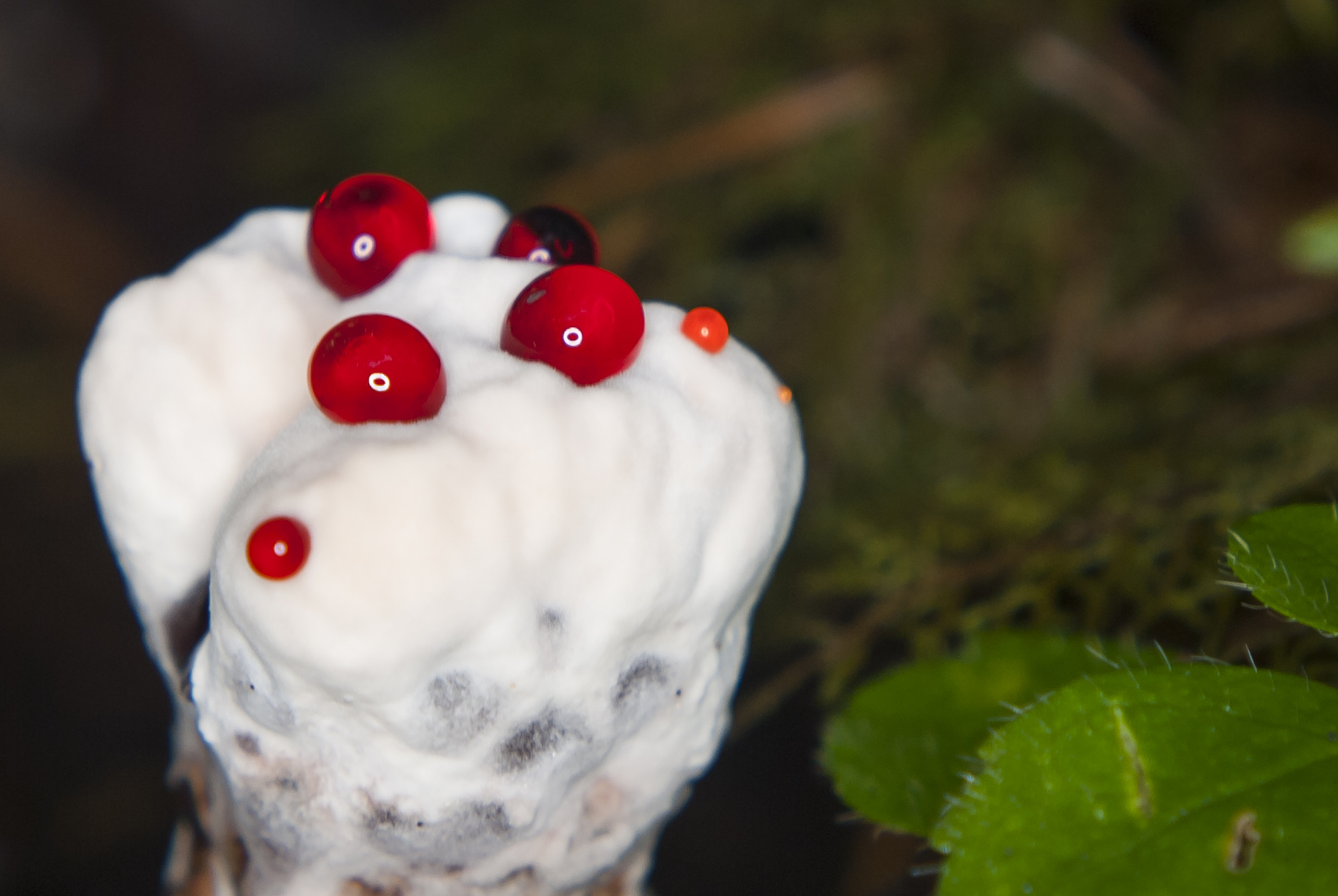
Stepping into an undisturbed, ancient coniferous forest, your eye might catch something that looks like a crime scene scattered across the damp moss. Resting among pine needles is a young fungal cap, its surface studded with glistening, ruby-like beads of thick red liquid. The sight is striking enough to inspire terror, raising an immediate question: Has nature placed a warning label on a deadly killer, or is there a completely different biological story unfolding beneath the tree canopy?
Anatomy of a Forest Phantom: The Red Drops
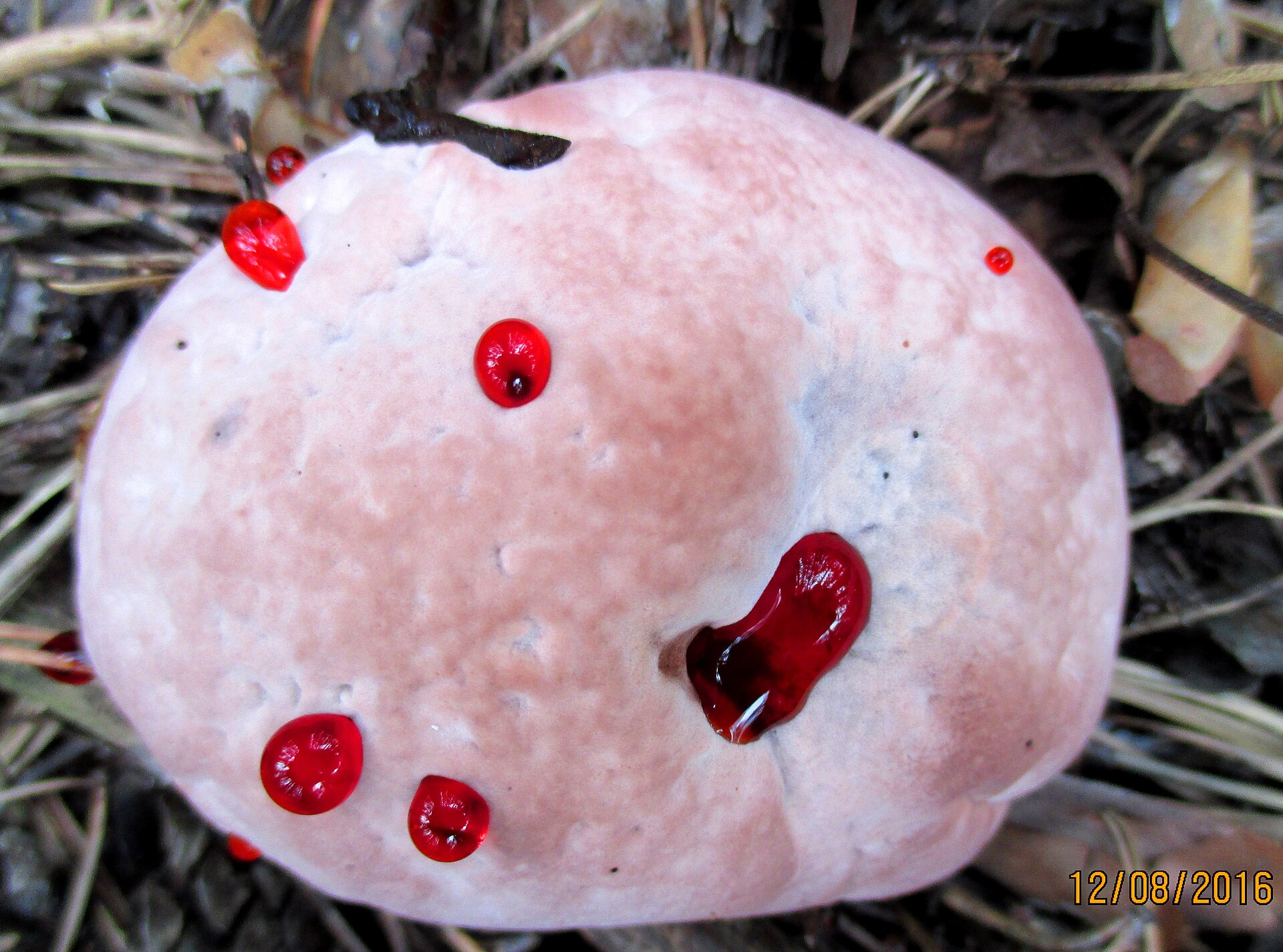
This unusual organism is scientifically classified as Hydnellum peckii, belonging to the family Bankeraceae within the order Thelephorales [5]. Commonly known as the bleeding tooth fungus or the devil’s tooth, its defining visual trick occurs almost exclusively during its young stage [1][5]. During periods of elevated environmental humidity and rapid growth, the fungus undergoes a physiological process where internal moisture and pigments express through the surface in bright red droplets [1, 5, 6].
In plant biology, the exudation of sap or moisture under internal pressure is known as exudation or guttation—a process where liquid drops are pushed out through specialized surface structures [1, 5, 6]. In Hydnellum peckii, this physiological moisture secretion carries pigmented cellular fluid, forming thick droplets on the outer layer [1, 5, 6]. While botanists thoroughly understand how root pressure drives guttation in vascular plants, the precise cellular mechanisms and environmental triggers that control how fungi regulate the timing and volume of this liquid secretion remain an open subject of scientific inquiry [5][6].
Myth vs. Reality: Is the Devil’s Tooth Truly Deadly?
Because of its blood-like exudate and ominous popular names, a widespread myth persists that touching or consuming Hydnellum peckii will deliver a swift, fatal dose of poison [3][5]. Misconceptions frequently turn bizarre visuals into biological urban legends, leading casual woodland observers to assume that the liquid is a lethal toxin designed to kill animals or humans on contact [3][5].
The verified scientific reality is far less sinister. Laboratory evaluations confirm that Hydnellum peckii contains no lethal toxins whatsoever [3][5]. However, dispelling the poison myth does not make this fungus a candidate for the dinner table. The fruiting body is entirely inedible because its tissue matures into a tough, woody texture [1][4]. Furthermore, the mushroom possesses an intensely acrid, pepper-like, and bitter taste that causes gastrointestinal distress if consumed [1][4]. It will not cause fatal poisoning, but its physical density and harsh chemical taste ensure that no animal or human will attempt a second bite [1][4].
Beneath the Moss: A Mutual Life Support System
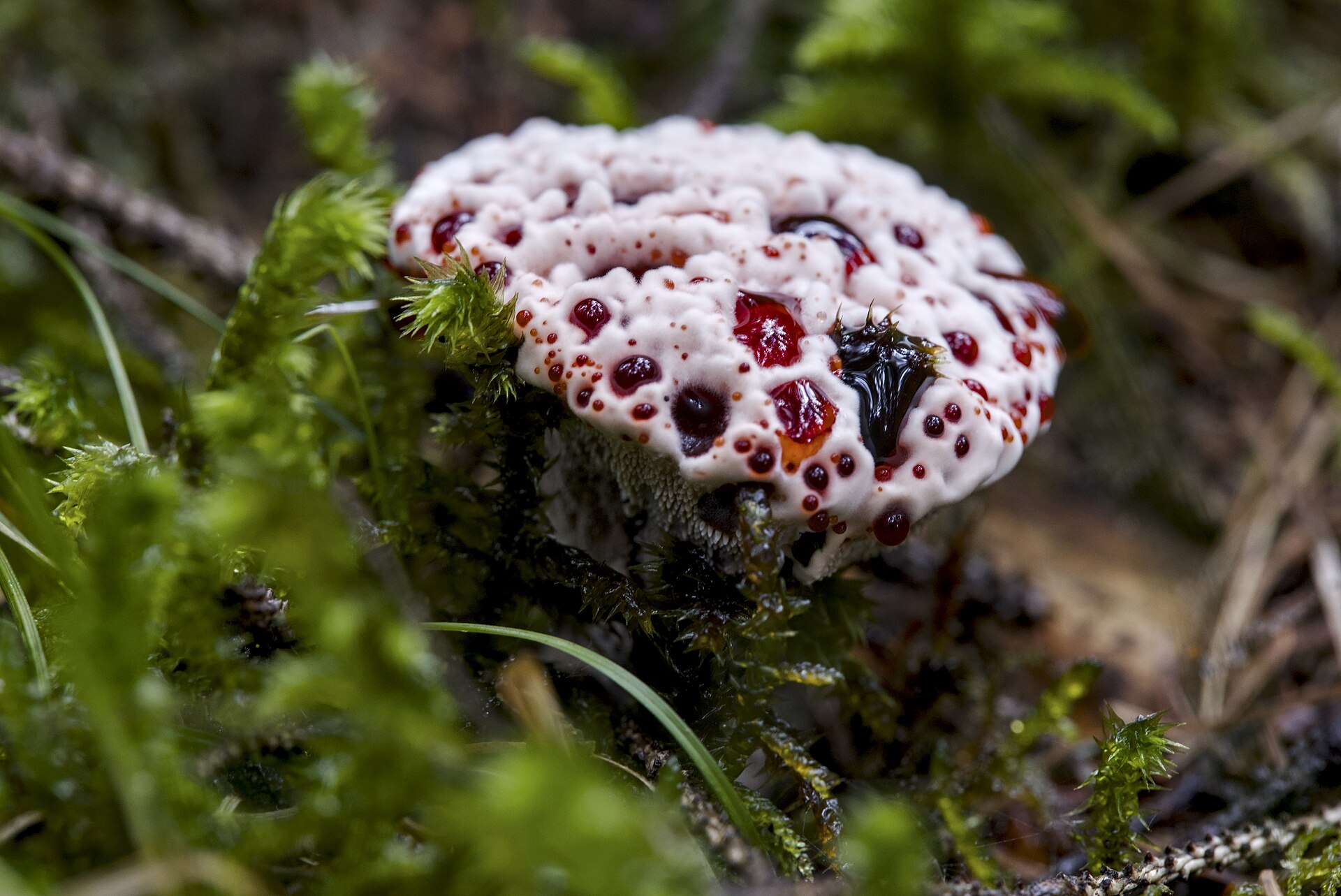
Behind its unappealing taste lies a crucial ecological partnership. Rather than breaking down dead wood as a saprotroph, Hydnellum peckii forms an ectomycorrhizal mutualism—a cooperative root partnership between fungi and plants where fungal threads wrap around tree roots without penetrating the host’s inner cell walls [1, 6, 7]. It establishes this subterranean link with living conifers, particularly pine and spruce trees, in the acidic soils and moss carpets of undisturbed old-growth forests [1, 6, 7].
Through this subterranean exchange network, the fungus extracts essential soil nutrients—specifically phosphorus and nitrogen—along with soil moisture, and transfers them directly to the host tree roots [1, 6, 7]. In return, the conifer supplies the fungus with energy-rich carbohydrates created through canopy photosynthesis [1, 6, 7]. Without this subterranean trade system, both the tall conifers and the fungus would struggle to gather adequate resources in nutrient-poor acidic soils [1, 6, 7].
Chemical Treasures: From Natural Dyes to Anticoagulants
Beyond its survival strategy in the soil, the chemical profile of Hydnellum peckii holds remarkable functional value. The fungal tissue and its sticky red fluid contain a natural chemical compound known as atromentin [5][6]. Biochemical studies demonstrate that atromentin possesses biological properties similar to heparin, a widely used medical blood thinner that prevents clot formation [5][6].
In addition to its anticoagulant behavior, atromentin exhibits antibacterial properties. It actively inhibits fatty acid synthesis inside target bacterial cells, demonstrating effective antibacterial action against specific pathogens such as Streptococcus [5][6]. Outside of medical research, humans have found creative uses for this inedible species. Crafters extract natural pigments from its tissue to dye textiles, yielding subtle shades of beige, green, and blue without relying on synthetic chemicals [3][5].
Taxonomic Debates and Environmental Fragility
Despite its distinct physical traits, the exact taxonomic classification of Hydnellum peckii has generated minor scientific debate. Major taxonomic databases, including the Global Biodiversity Information Facility (GBIF) and Index Fungorum, categorize Hydnum diabolus as a synonym for Hydnellum peckii [2][5]. Conversely, select fungal databases such as MycoBank and iNaturalist treat Hydnum diabolus as a distinct independent species, citing subtle differences in fruiting body morphology [2][5]. While mainstream mycological taxonomy favors merging them under a single species name, the debate illustrates the ongoing challenges of classifying fungal lineages [2][5].
On an ecological scale, the global footprint of Hydnellum peckii spans coniferous regions across North America, Europe, Asia, and the Middle East [5]. Globally, its conservation status on the IUCN Red List remains unlisted or under review [5]. However, local conservation records reveal severe regional declines. The species is officially classified as Endangered in the United Kingdom, and it has been declared Regionally Extinct in the Netherlands [5]. The primary drivers behind this loss are air pollution—specifically acid rain—and the fragmentation or destruction of undisturbed old-growth forest habitats [5].
Why the Devil’s Tooth Matters
When we connect these verified scientific facts, Hydnellum peckii emerges not as a dangerous monster of the forest floor, but as a vital bioindicator of woodland health. Its strict requirement for undisturbed, old-growth pine and spruce habitats [1, 6, 7], combined with its acute sensitivity to acid rain [5], means that its presence signals an ancient, unpolluted ecosystem. The very chemical features that render it inedible—such as atromentin with its antibacterial and anticoagulant properties [5][6]—are evolutionary adaptations that protect a slow-growing subterranean partner [1, 6, 7]. The local extinction of this species in regions like the Netherlands serves as a clear warning of how atmospheric pollution can disrupt subterranean fungal networks long before the surrounding tree canopy shows visible signs of decay [5, 6, 7].
The next time you walk through a humid pine woodland and spot a young cap glistening with droplets of red fluid, there is no need to fear a fatal poison [3][5]. The startling view of Hydnellum peckii is simply a living demonstration of fungal guttation, underground trade, and chemical defense [1, 5, 6]. Respect its bitter defense, admire its ruby-like exudate, and remember that its presence marks a healthy, undisturbed forest floor where ancient natural processes are still intact [1, 5, 7].
Featured image credit
Image: Scott Darbey from Canada · Wikimedia Commons · CC BY 2.0 · original file
Sources and editorial policy
This feature is based on publicly available scientific and institutional sources listed below. Read our editorial and fact-checking policy and AI use policy. Report a correction: kjhtime@gmail.com
References
- first-nature.com — www.first-nature.com, accessed 2026-10-28
- kureansiklopedi.com — kureansiklopedi.com, accessed 2026-10-28
- mushroom-appreciation.com — www.mushroom-appreciation.com, accessed 2026-10-28
- mykoweb.com — www.mykoweb.com, accessed 2026-10-28
- wikipedia.org — en.wikipedia.org, accessed 2026-10-28
- buffalo.edu — soil.evs.buffalo.edu, accessed 2026-10-28
- weebly.com — alpinemicrobialobservatory.weebly.com, accessed 2026-10-28