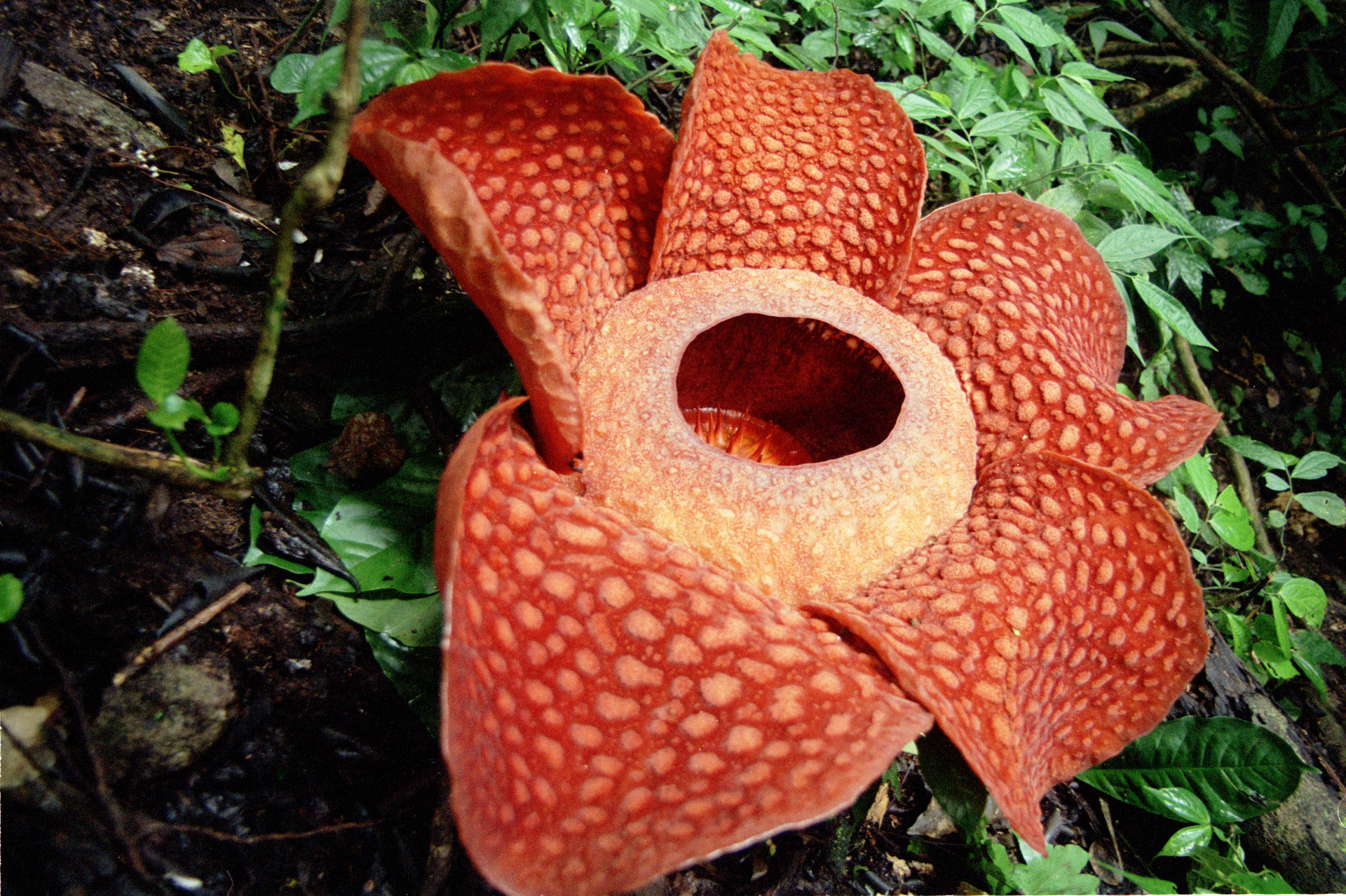
Deep within the humid, shadowed understory of Southeast Asian tropical rainforests, stepping across damp leaf litter brings you to one of the most astonishing sights in the natural world [1][4]. You might expect to scan the high canopy for grand ecological marvels, but on the forest floors of Sumatra and Borneo, the true record-breaker rests near the ground [1][6]. Here grows Rafflesia arnoldii, commonly known as the Giant Padma—a plant that defies almost every standard rule of botany [1][6].
Invisible Infiltrator: Life Without Leaves, Stems, or Roots
To understand Rafflesia arnoldii, one must first dismantle the typical image of a plant. It possesses no leaves, no stems, no roots, and completely lacks photosynthetic tissue—the specialized cellular machinery plants normally use to convert sunlight into energy [1][6]. Instead, it functions as an obligate parasite, an organism that is entirely incapable of completing its life cycle without exploiting a host [1][6].
For almost its entire existence, this plant remains completely invisible to the human eye [1][6]. It lives inside woody vines of the host genus Tetrastigma, existing solely as microscopic, thread-like cellular strands embedded within the host tissue [1][6]. From inside these vines, Rafflesia arnoldii draws every drop of water and nutrient it requires to survive, revealing its presence only when it is ready to flower [1][6].
Sizing Up the World’s Largest Single Flower
When the parasite finally emerges from the bark of its host vine, it produces the largest single flower on Earth [2][3]. On average, these blooms expand to a massive diameter of 90 to 100 centimeters [2][3]. The absolute record holder, documented by Guinness World Records, measured an extraordinary 111 centimeters across and weighed 11 kilograms [3].
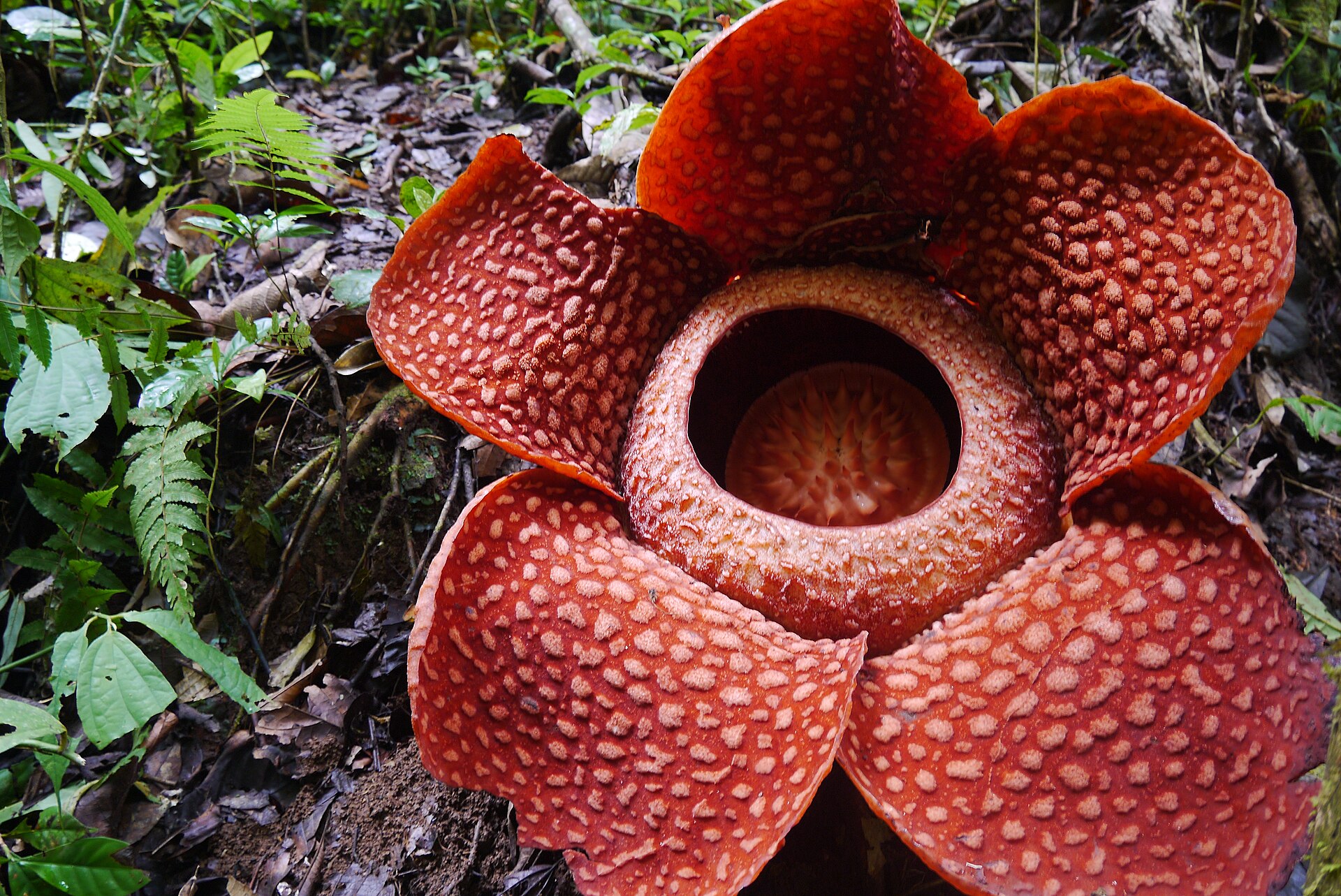
A common myth suggests that a single petal from this plant is larger than a full-grown adult human [1][3]. While the overall diameter of the bloom is indeed giant, individual perigone lobes—the specialized leaf-like floral structures that act as petals—typically measure about 30 to 40 centimeters in length [1][3]. Although huge for a single petal structure, one petal alone is vastly smaller than a human being [1][3].
Single Flower or Cluster? Clearing Up the Corpse Flower Confusion
Because of its pungent floral odor, Rafflesia arnoldii is often confused with another giant rainforest organism, the Titan Arum (Amorphophallus titanum) [1][2]. Both species are colloquially referred to as “corpse flowers,” but they represent fundamentally different floral structures [1][2].
The Titan Arum produces the world’s largest unbranched inflorescence, which is a complex cluster made of hundreds of tiny individual flowers attached to a central axis [1][2]. By contrast, Rafflesia arnoldii produces the world’s largest single flower—a solitary, undivided blossom rather than an aggregation of smaller blooms [1, 2, 3].
Ten Months of Patience, Seven Days of Presence
The timeline of Rafflesia arnoldii is characterized by extreme patience followed by rapid decay. A bud resting on the host vine takes between 9 and 10 months to slowly swell and mature into a bloom [1][8]. Yet after nearly a year of development, the open flower lasts for only 3 to 7 days [1][8]. As those few days end, the tissue rapidly turns black and decomposes into dark sludge [1][8].
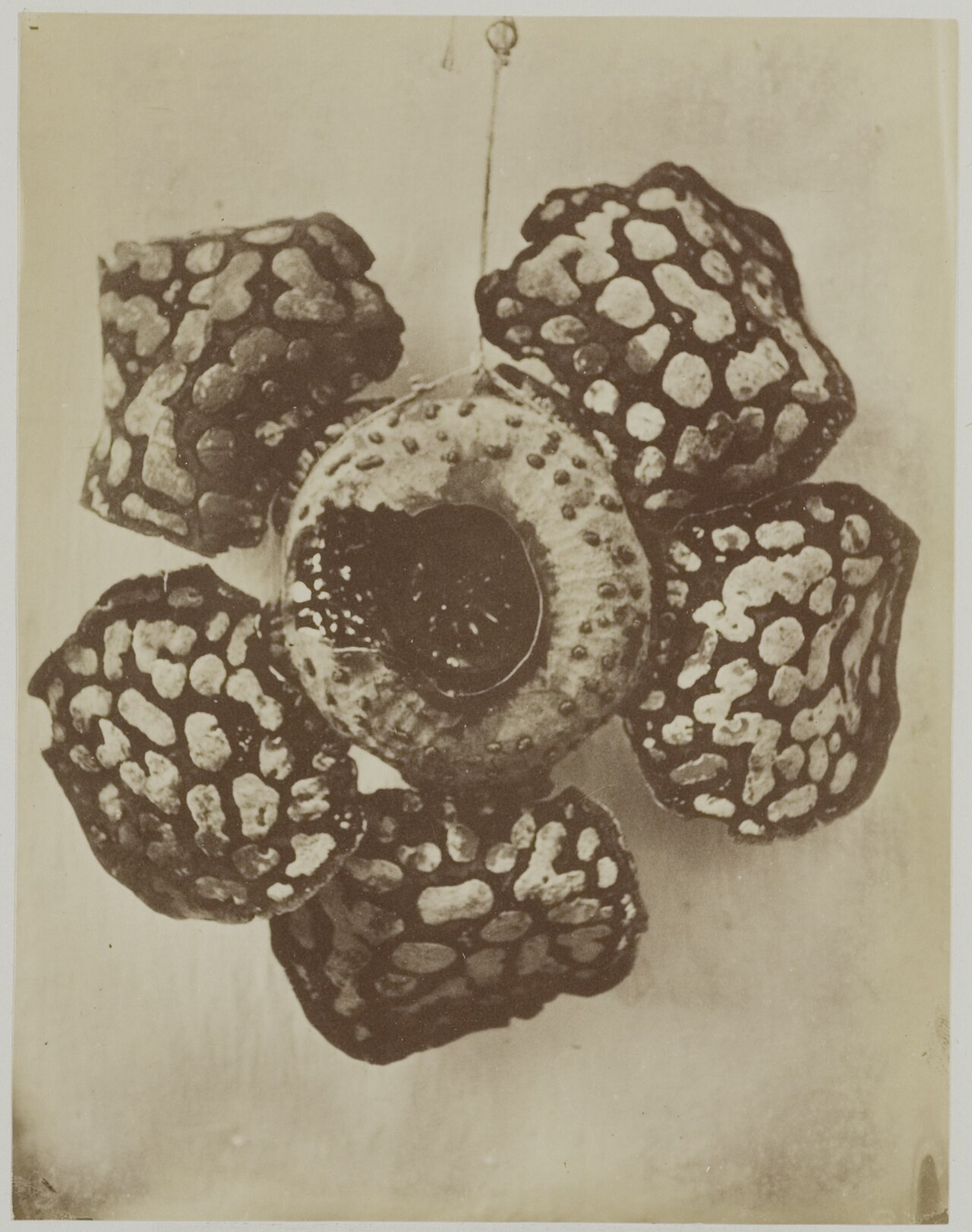
Reproductive success during this brief window is further complicated by the plant’s sexual system. Rafflesia arnoldii is dioecious, meaning it is a plant species where male and female reproductive structures occur on separate individual plants [1][7]. An individual blossom is strictly male or strictly female [1][7]. For fertilization to occur, a male and a female flower must bloom simultaneously within close physical proximity during their fleeting 3-to-7-day lives [1, 7, 8].
The Chemistry of Rot: Attracting the Right Pollinators
Because Rafflesia arnoldii has only a few days before it rots, it cannot afford to rely on gentle breeze or generalist pollinators. To attract its preferred vectors, the flower releases volatile sulfur compounds into the surrounding forest air [4][7].
These chemical emissions mimic the distinct odor of decaying flesh [4][7]. Attracted by the stench, carrion flies—specifically flesh flies and blowflies—fly into the floral chamber believing they have found a dead animal [4][7]. As they crawl inside, they inadvertently carry pollen from male flowers to female flowers, completing the pollination process [4][7].
Unsolved Mysteries: From Seed to Host
While the pollination strategy involving flies is well established, other phases of the plant’s life history remain open research questions [1][7]. Researchers have observed small mammals, such as tree shrews and squirrels, as well as ants, feeding on the mature fruit and potentially moving seeds across the rainforest floor [1][7].
However, the precise contribution of each animal vector to successful seed dispersal remains uncertain, and field data regarding their quantitative impact is limited [1][7]. Furthermore, scientists have not yet identified the exact biochemical signaling compounds that allow a seed to infect a new Tetrastigma host vine and penetrate its outer layer [1][7].
Synthesis: A Fragile Strategy in a Diminishing Forest
Connecting these verified facts reveals why Rafflesia arnoldii is so exceptionally vulnerable to environmental change. Consider its lifestyle: it cannot exist without a specific host vine genus, it remains invisible until flowering, it requires 9 to 10 months to form a bud, its flowers last under a week, and male and female flowers must open at the same time near one another to reproduce [1, 6, 7, 8].
When habitat destruction fragments the tropical understory, these interconnected dependencies begin to break down [1][4]. Furthermore, ex-situ conservation in botanical gardens and artificial cultivation have proven extraordinarily difficult because replicating the delicate host-parasite dynamic outside the wild ecosystem rarely succeeds [4][5]. While not yet formally evaluated on the official IUCN Red List, scientific research overwhelmingly recommends classifying Rafflesia arnoldii as Endangered or Critically Endangered, and it is currently protected as a rare plant under Indonesian law [4].
Standing in the quiet rainforest understory of Sumatra or Borneo, coming across an open Rafflesia arnoldii is a rare encounter with botanical extremes [1][4]. Within a week, that 11-kilogram bloom will turn black and dissolve back into the earth, leaving behind only cellular threads hidden inside a vine—a striking reminder of nature’s most peculiar evolutionary paths [1, 3, 6, 8].
Featured image credit
Image: Henrik Ishihara Globaljuggler · Wikimedia Commons · CC BY-SA 3.0 · original file
Sources and editorial policy
This feature is based on publicly available scientific and institutional sources listed below. Read our editorial and fact-checking policy and AI use policy. Report a correction: kjhtime@gmail.com
References
- wikipedia.org — en.wikipedia.org, accessed 2026-09-20
- loc.gov — www.loc.gov, accessed 2026-09-20
- guinnessworldrecords.de — www.guinnessworldrecords.de, accessed 2026-09-20
- smithsonianmag.com — www.smithsonianmag.com, accessed 2026-09-20
- liverpoolmuseums.org.uk — www.liverpoolmuseums.org.uk, accessed 2026-09-20
- britannica.com — www.britannica.com, accessed 2026-09-20
- britannica.com — www.britannica.com, accessed 2026-09-20
- harvardmagazine.com — www.harvardmagazine.com, accessed 2026-09-20