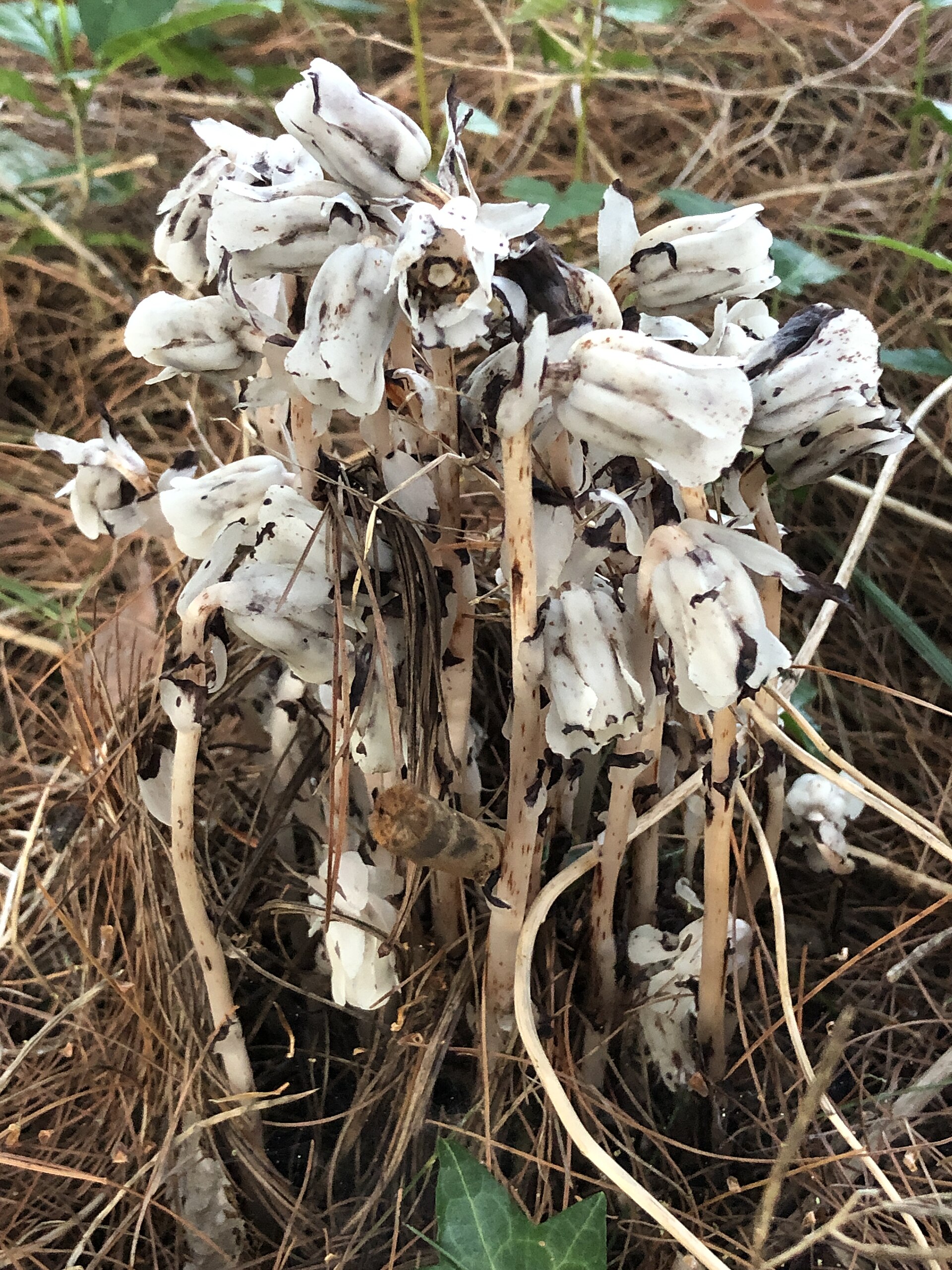
Stepping into a dense, humid forest where the canopy weaves a ceiling so thick that daylight barely touches the forest floor, you might expect to see damp soil, decaying fallen leaves, and perhaps a cluster of mushrooms. But amidst the deep shade, an unsettling vision often emerges: a stalk so completely devoid of green that it glows like polished ivory or pale alabaster in the dim understory [1][4]. Bending downward at its tip like the bowl of a clay smoking pipe, this ghostly organism seems to defy every rule of elementary biology. How can a flowering plant flourish in absolute darkness without a single drop of chlorophyll [1][4]?
This striking organism is Monotropa uniflora, known commonly as the Ghost Pipe or Ghost Plant [1]. Far from being a fleeting spectral illusion, it is a masterclass in evolutionary adaptation, revealing how life can abandon the standard botanical playbook of solar energy and thrive through a complex, hidden underground heist [1][5].
Not a Mushroom: The Pale Angiosperm
Upon first encountering Monotropa uniflora pushing through dark, acidic soil, most onlookers make an immediate assumption: it must be a fungus [1][4]. Its complete lack of green pigment, translucent white to pale pink stem, and preference for damp, shadowed woodland floors closely mirror the habits of wild mushrooms [1][4]. Yet this visual impression is entirely misleading [1][4].
Monotropa uniflora is not a fungus at all, but a true vascular plant belonging to the heath family, Ericaceae [1][2]. Known as sujeongnanpul in Korea, it possesses all the structural hallmarks of an angiosperm—including true roots, stems, flowers, stamens, and seeds [1, 2, 4]. Historically, botanists sometimes placed it inside its own independent family, Monotropaceae, but modern taxonomy firmly nests it within the Ericaceae subfamily Monotropoideae, distinct from related species such as Monotropastrum humile [2][3].
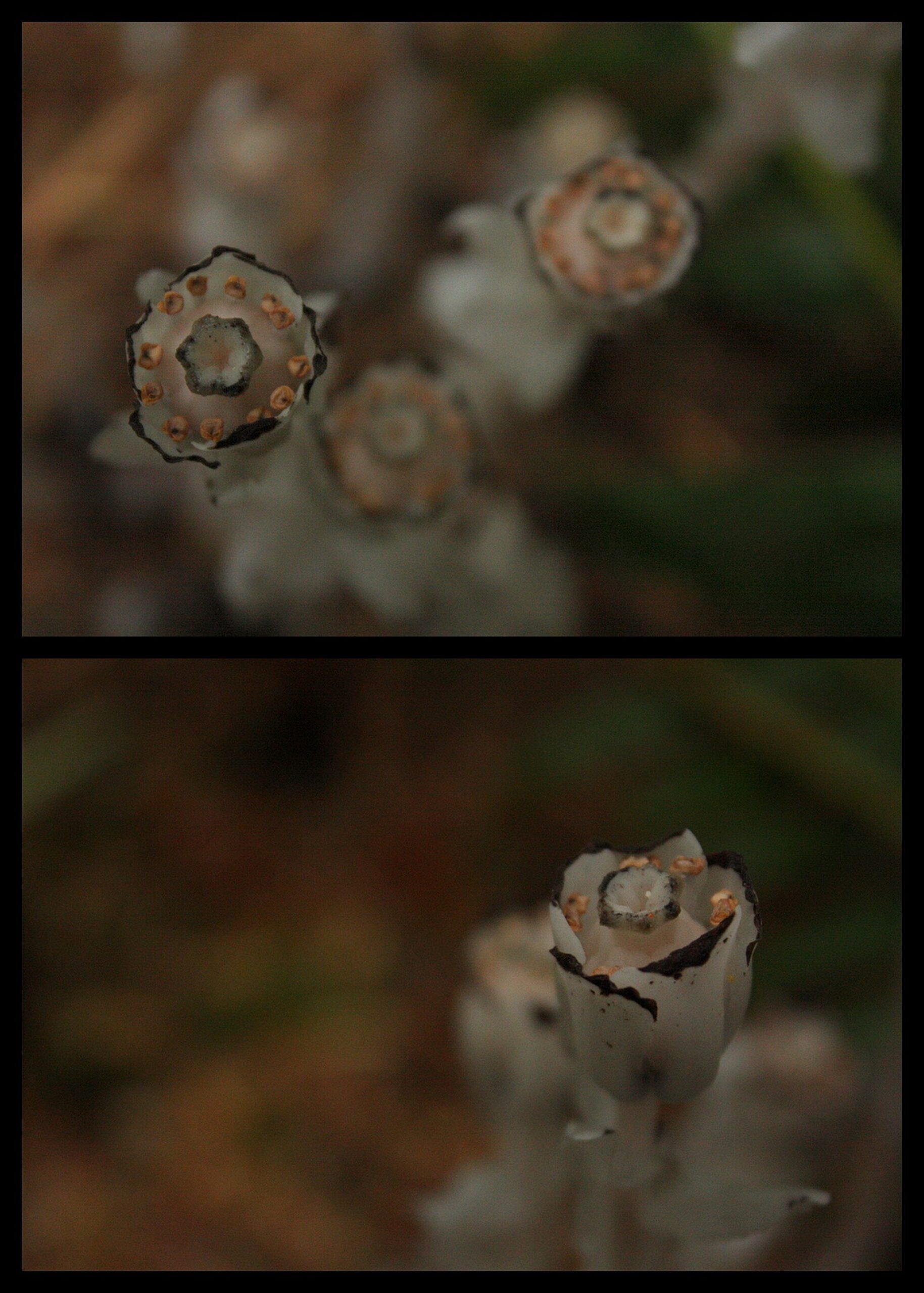
Unlike almost all other vascular plants, however, Monotropa uniflora produces zero chlorophyll [1][4]. Chlorophyll is the vital green pigment that allows plants to capture sunlight and split water and carbon dioxide into sugars during photosynthesis. Having entirely lost the capacity to photosynthesize, the plant has no use for green leaves; its leaves have been reduced to small, pale scales hugging a stem that reaches translucent white or light pink tones [1][4].
How to Eat Without Sun: The Hidden Tripartite Heist
If a plant cannot photosynthesize, how does it build its tissues and power its life cycle? For decades, naturalists assumed that Monotropa uniflora was a saprophyte—an organism that directly breaks down dead leaves, rotting wood, and leaf litter to extract organic nutrients [1][5]. This widespread myth persisted until modern isotopic tracing techniques completely overturned the assumption [1][5].
Isotope research revealed that Monotropa uniflora relies on a complex lifestyle known as mycoheterotrophy—a relationship where a non-photosynthetic plant gets its food from fungi rather than creating its own [1][5]. However, the plant does not simply feed on the fungus itself. Instead, it participates in a dramatic three-way nutrient chain involving giant canopy trees, soil fungi, and itself [1][5].
- The Tree: High above in the sunlight, massive coniferous or hardwood trees photosynthesize, creating an abundance of carbon sugars [1][5].
- The Fungi: In the soil, beneficial mycorrhizal fungi—specifically those belonging to the brittlegill family, Russulaceae—form mutually beneficial partnerships with the tree’s root system [1][5]. The fungi supply the tree with water and mineral nutrients gathered from the soil, and in exchange, the tree feeds the fungal network carbon sugars [1][5].
- The Thief: Monotropa uniflora sinks its compact root system directly into the microscopic thread network of those same Russulaceae fungi [1][5]. It siphons away the organic carbon that the fungal network received from the living trees [1][5].
This reveals another common misconception: Monotropa uniflora is not a direct plant parasite attached directly to tree roots [1][5]. It acts as an indirect parasite, tapping into the fungal intermediary that bridges the gap between canopy tree and forest floor [1][5]. By extracting nutrients second-hand, it effectively feeds on sunlight captured by trees tens of feet above it, without ever needing to expose a single leaf to the sun [1][5].
The Bumblebee Dance and the 180-Degree Flip
While its feeding strategy occurs silently underground, the reproductive cycle of Monotropa uniflora displays a noticeable mechanical transformation above ground [1][6]. When the plant first emerges from the rich woodland soil, its single flower droops distinctly downward, forming the characteristic pipe-like crook that gives the species its common name [1][6].
This downward orientation is an evolutionary design tailored for its primary pollinators: long-tongued bumblebees in the genus Bombus [1][5]. The nodding bell structure protects the inner floral parts from rain while allowing visiting bumblebees to land beneath the flower, crawl inside the bell, and gather nectar and pollen, transferring pollen grains between neighboring stems [1][5].
Once pollination is successfully completed, the stem begins an extraordinary physical maneuver [1][6]. Over a short period, the hooked tip straightens out, rotating the stem a full 180 degrees until the flower stands completely vertical, pointing straight up toward the forest ceiling [1][6].
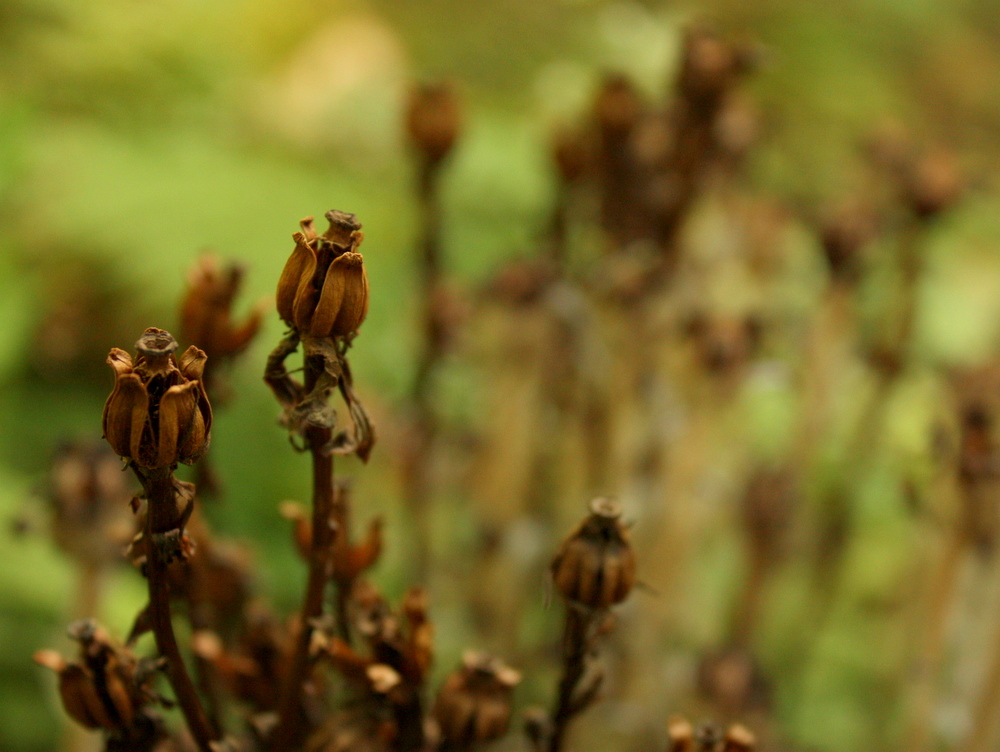
This shift from a nodding bell to a vertical pillar serves a clear function for seed dispersal [1][6]. As the flower matures into a dry fruit capsule, it produces thousands of microscopic seeds known as “dust seeds” [1][6]. Encased in delicate, ultra-thin membrane structures, these tiny seeds are far lighter than standard plant seeds [1][6]. Standing upright elevates the capsule above the damp leaf litter, allowing forest breezes to catch the dust seeds and carry them across wide stretches of the woodland floor [1][6].
A Global Ghost Across Oceans
Despite its delicate appearance and highly specialized ecological niche, Monotropa uniflora boasts an unusually broad, disjunct geographic distribution [1]. It is native to temperate and boreal climate zones across two major regions of the world [1]:
- North and Central America: Spanning vast regions from Canada across the United States, extending south through Mexico and into Central America [1].
- East Asia: Native to dense forests across Korea, Japan, and China [1].
Across these disparate landmasses, the plant’s requirements remain identical [1]. It thrives strictly in high-humidity, deeply shaded environments characterized by damp, acidic soils rich in organic matter, typically under dense coniferous, deciduous, or mixed forest canopies [1].
Globally, NatureServe categorizes Monotropa uniflora as G5 (Secure) because of its vast range [6]. In South Korea, the National Institute of Biological Resources classifies it as Least Concern (LC) [2]. However, these global and national designations can obscure local vulnerabilities [2]. Because the plant is intimately bound to stable underground fungal networks and mature forest canopy shade, it is exceptionally sensitive to habitat drying, timber clearing, and forest fragmentation [2]. When a forest floor dries out or its canopy is cleared, the delicate Russulaceae fungal web collapses, causing local populations of Monotropa uniflora to vanish rapidly [1, 2, 5].
Folk Remedies and Scientific Caution
The unusual appearance of Monotropa uniflora has long attracted human curiosity, leading to various ethnobotanical traditions [1][5]. Historical records show that several Native American tribes utilized liquid extracts prepared from the plant in traditional medicine, employing them primarily as sedatives and pain relievers [1][5].
In modern botany and toxicology, however, scientists urge strong caution regarding any medicinal consumption of the species [1][5]. Because mycoheterotrophic plants bioaccumulate substances directly from soil fungal networks, there are significant toxicity concerns, including the potential uptake and concentration of heavy metals from the soil environment [1][5]. Combined with a severe lack of modern clinical trial data regarding its chemical composition and physiological safety, experts strongly advise against self-administration or harvesting the plant for therapeutic use [1][5].
The Forest’s Silent Network Indicator
Connecting the life strategy of Monotropa uniflora reveals why this pale botanical anomaly matters so much to modern ecology [1][5]. By surrendering chlorophyll entirely [1][4], the plant traded self-sufficiency for absolute dependence on a delicate biological chain: a living photosynthetic tree supplying carbon to a Russulaceae fungus, which in turn feeds the non-green plant [1][5]. Combined with its requirement for high humidity and moist, undisturbed soil [1][2], the presence of Monotropa uniflora serves as a direct indicator of an ancient, undisturbed forest network beneath the soil.
When you spot a ghost pipe rising like an ivory pillar from the dark soil, you are not looking at a plant that lives in isolation, nor are you looking at a simple fungus [1][4]. You are glimpsing the visible tip of an invisible underground barter system—proof that even in the absolute darkness of the forest understory, life finds a way to tap into the distant sunlight overhead [1][5].
Featured image credit
Image: Famartin · Wikimedia Commons · CC BY-SA 4.0 · original file
Sources and editorial policy
This feature is based on publicly available scientific and institutional sources listed below. Read our editorial and fact-checking policy and AI use policy. Report a correction: kjhtime@gmail.com
References
- wikipedia.org — en.wikipedia.org, accessed 2026-10-22
- nibr.go.kr — www.nibr.go.kr, accessed 2026-10-22
- forest.go.kr — www.forest.go.kr, accessed 2026-10-22
- maryland.gov — news.maryland.gov, accessed 2026-10-22
- jstor.org — daily.jstor.org, accessed 2026-10-22
- mt.gov — fieldguide.mt.gov, accessed 2026-10-22