Imagine sinking three hundred meters beneath the fractured ice sheets of the Weddell Sea. In this pitch-black realm, the surrounding water drops to a bone-chilling -1.8 degrees Celsius—cold enough to turn the body fluids of a typical fish into sharp ice crystals. Yet, resting quietly on the ocean floor is a slender, ghost-like creature: the Ocellated icefish (Chionodraco rastrospinosus). If you were to draw a sample of its blood, you would not see the rich, dark red liquid found in every other vertebrate on the planet. Instead, a completely clear fluid flows through its veins [3].
How does a complex backboned animal survive in the coldest waters on Earth without the red blood cells that keep every other vertebrate alive? Is this unusual creature truly a living glass sculpture with an entirely clear body, or is there a far more complex biological truth hidden beneath the Antarctic ice? To understand this extreme survivor, scientists have had to unravel a story of genetic loss, radical cardiovascular engineering, and underwater nest-building.
Life at the Frozen Bottom: The World of Chionodraco rastrospinosus
The Ocellated icefish is an endemic species native exclusively to the icy coastal waters surrounding Antarctica [1]. Marine surveys record its presence around the Antarctic Peninsula, the South Shetland Islands, the South Orkney Islands, the Scotia Sea, and the Weddell Sea [1]. While it can occasionally be found anywhere from the surface down to depths of 1,000 meters, it spends most of its life on the seabed between 200 and 400 meters deep [1].
In this dark benthic environment, water temperatures consistently hover between a freezing -1.8°C and +1.5°C [1]. For most marine animals, surviving at such low temperatures requires extraordinary physiological adaptations. For Chionodraco rastrospinosus, living in sub-zero water is simply a normal day on the Antarctic seafloor [1].
Myth vs. Reality: Is the Icefish Truly Bloodless and Transparent?
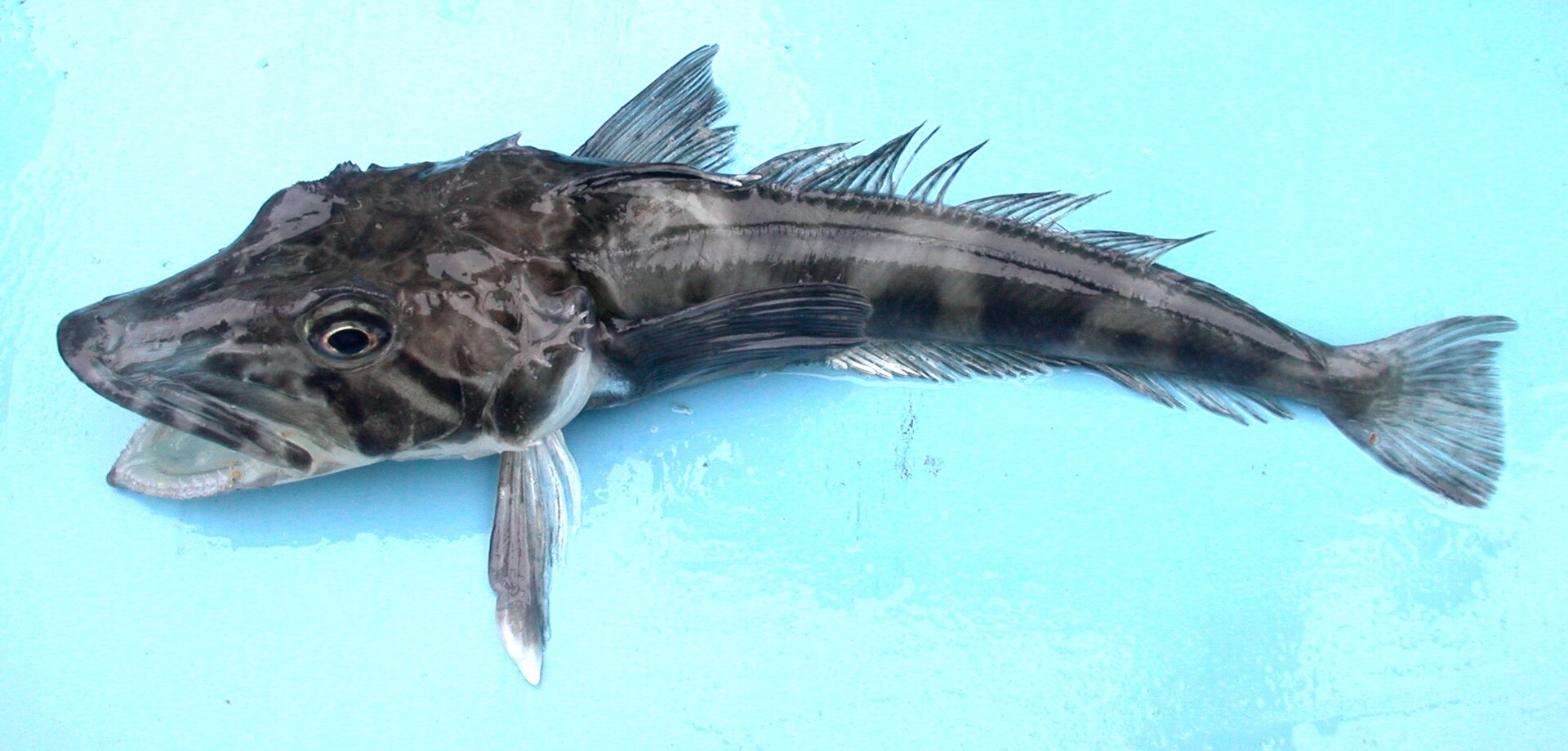
Because of its unusual appearance, popular myths often surround the Ocellated icefish. A widespread misconception claims that this animal lives with no blood in its body whatsoever [2][3]. In reality, the fish possesses a complete, fully functional vascular system filled with circulating fluid [2][3]. What it lacks are red blood cells and hemoglobin—the iron-rich respiratory protein that gives blood its signature red color [3][5]. Without hemoglobin, its blood plasma remains colorless and transparent [3].
Another popular myth suggests that adult icefish are completely clear like carved glass, leaving their internal organs and beating hearts continuously visible from the outside [1][3]. While larvae and very young juveniles do exhibit remarkable translucency, mature adults tell a different story [1][3]. Adult Chionodraco rastrospinosus possess smooth, scaleless skin colored with greyish pigments and marked by dark, eye-like spots or transverse bands along their sides [1][3]. Because this skin layer covers the body, adult icefish are not glass-like windowpanes, and their internal hearts are not openly visible [1][3].
Breathing Without Red: The Science of Hemoglobin-Free Life
For almost all backboned animals, hemoglobin is essential because it binds oxygen molecules in red blood cells and carries them to tissues throughout the body. Millions of years ago, a genetic mutation disrupted hemoglobin synthesis in the ancestors of Chionodraco rastrospinosus, completely halting the production of functional red blood cells [3][5]. In warmer climates, such a loss would be quickly fatal. However, the unique environment of Antarctica created an evolutionary loophole [3][5].
Cold water holds significantly more dissolved oxygen than warm water [3][5]. Because the Southern Ocean is saturated with oxygen, and because the icefish maintains a very low metabolic rate, oxygen can dissolve directly into its colorless blood plasma without needing hemoglobin to bind it [3][5]. To supplement oxygen intake through its gills, the fish relies on cutaneous respiration—a process where oxygen passively diffuses through its thin, smooth, scaleless skin directly into the rich capillary beds beneath [4][7].
The Engine Beneath the Scales: A Massive Heart and Myoglobin Safeguard
Relying solely on dissolved oxygen in blood plasma comes with a major drawback: plasma carries far less oxygen per volume than red blood cells do [5][6]. To make up for this low oxygen capacity, Chionodraco rastrospinosus transformed its cardiovascular system into a high-volume pumping engine [5][6]. The volume of blood circulating through its body is approximately five times greater than that of a red-blooded temperate fish of similar size [5][6].
Pushing this massive volume of fluid requires serious mechanical power. The icefish relies on an oversized heart working alongside an extensive, highly branched capillary network [5][6]. Interestingly, not all Antarctic icefish solve cardiac strain the same way. While some related icefish species—such as Chaenocephalus aceratus—have lost both hemoglobin and myoglobin (the muscle-specific oxygen-binding protein), Chionodraco rastrospinosus retains an Hb⁻ Mb⁺ phenotype [5][6]. Its heart ventricle continuously expresses myoglobin, providing crucial physiological support to keep its oversized cardiac tissues pumping continuously [5][6].
Biological Antifreeze and Seabed Architecture
Surviving in seawater as cold as -1.8°C presents a physical threat beyond oxygen delivery: body fluids can easily freeze, forming destructive ice crystals [4][7]. To prevent its internal fluids from turning to ice, Chionodraco rastrospinosus produces special biological molecules called Antifreeze Glycoproteins (AFGP) [4][7]. These proteins bind to micro-ice crystals as soon as they form in the bloodstream, stopping their growth and allowing the fish to live comfortably in sub-zero waters [4][7].
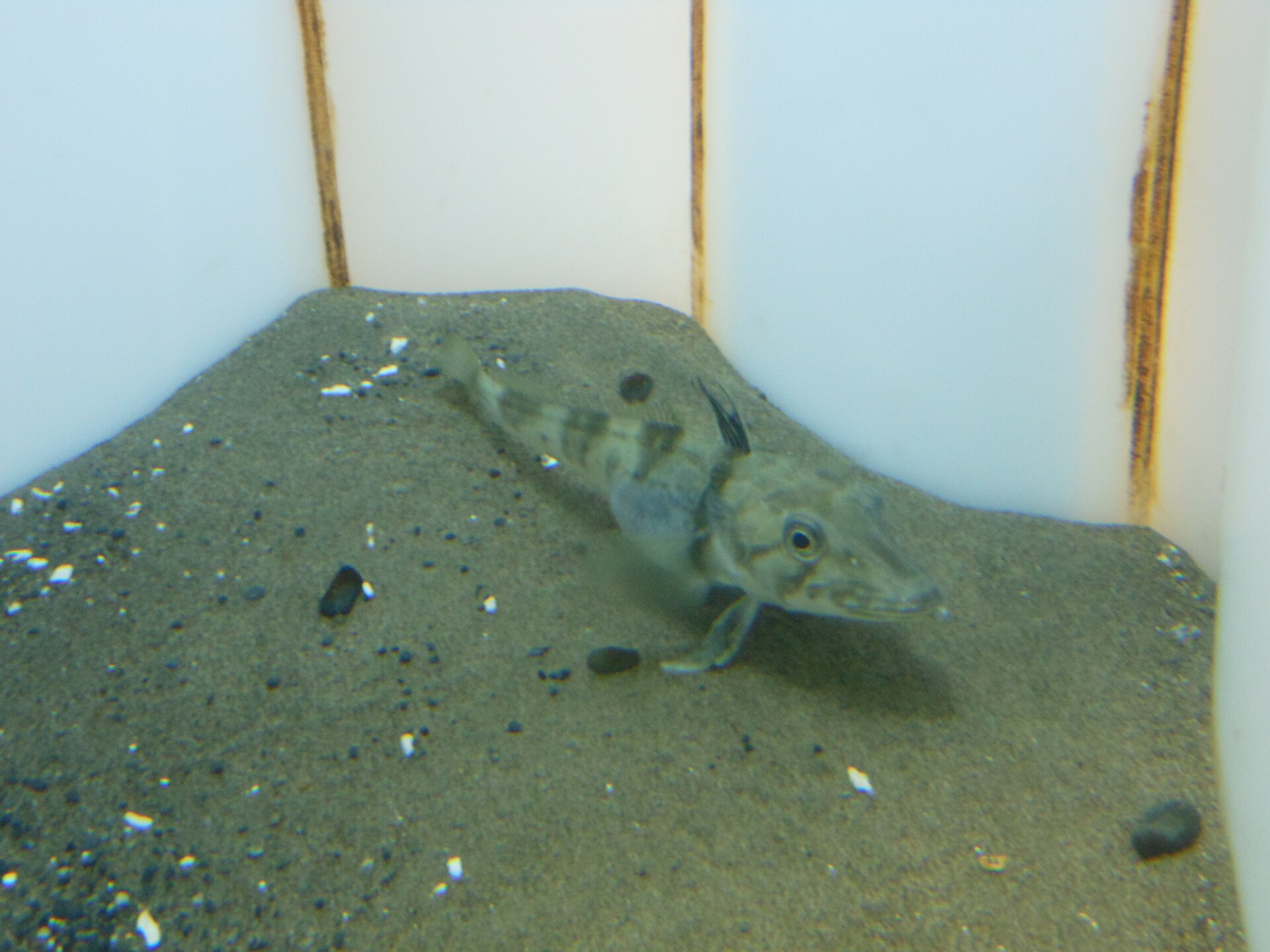
When the breeding season arrives, mature male icefish demonstrate surprisingly complex behaviors on the ocean floor [8]. Males undergo distinct anatomical changes, developing specialized knob-like structures on the tips of their anal fins [8]. They use these modified fins like tools to sweep away sand and loose gravel from the seabed, constructing smooth, flattened nests [8]. Once eggs are deposited, the male stays behind to actively guard the nest against ocean floor hazards [8].
What Antarctic Icefish Teach Us About Biological Limits
When we connect these evolutionary adaptations, Chionodraco rastrospinosus offers a profound look at how life solves extreme physiological challenges. The loss of hemoglobin was a major genetic defect [3][5]. Yet, when paired with the oxygen-rich Antarctic waters, thin skin for skin-breathing, liquid antifreeze proteins, an oversized heart, five-fold blood circulation, and heart-specific myoglobin, this species turned a loss into a thriving survival strategy [3, 4, 5, 6, 7].
Despite its biological significance, key gaps remain in our understanding of this species. The Ocellated icefish is currently listed as Not Evaluated (NE) on global conservation status indices [1]. Because gathering field measurements in extreme polar environments is difficult, scientists still lack long-term data regarding its natural lifespan and overall population dynamics in the Antarctic wilderness [1].
Returning to the dark, silent seabed three hundred meters below the frozen surface, the ghost-like silhouette of Chionodraco rastrospinosus quietly patrols its gravel nest [1][8]. It is not a mythical ghost or a bloodless statue made of glass, but a master of polar engineering [2][3]—a vivid proof that even without red blood, life finds a brilliant way to rule the coldest corners of our planet.
Featured image credit
Created by TaxonGuru · AI-generated featured explanatory reconstruction · not a documentary photograph · generated 2026-09-03
Sources and editorial policy
This feature is based on publicly available scientific and institutional sources listed below. Read our editorial and fact-checking policy and AI use policy. Report a correction: kjhtime@gmail.com
References
- gbif.org — www.gbif.org, accessed 2026-09-03
- facebook.com — www.facebook.com, accessed 2026-09-03
- popsci.com — www.popsci.com, accessed 2026-09-03
- polar-ice.org — polar-ice.org, accessed 2026-09-03
- biologists.com — journals.biologists.com, accessed 2026-09-03
- oup.com — academic.oup.com, accessed 2026-09-03
- calacademy.org — www.calacademy.org, accessed 2026-09-03
- nih.gov — pmc.ncbi.nlm.nih.gov, accessed 2026-09-03