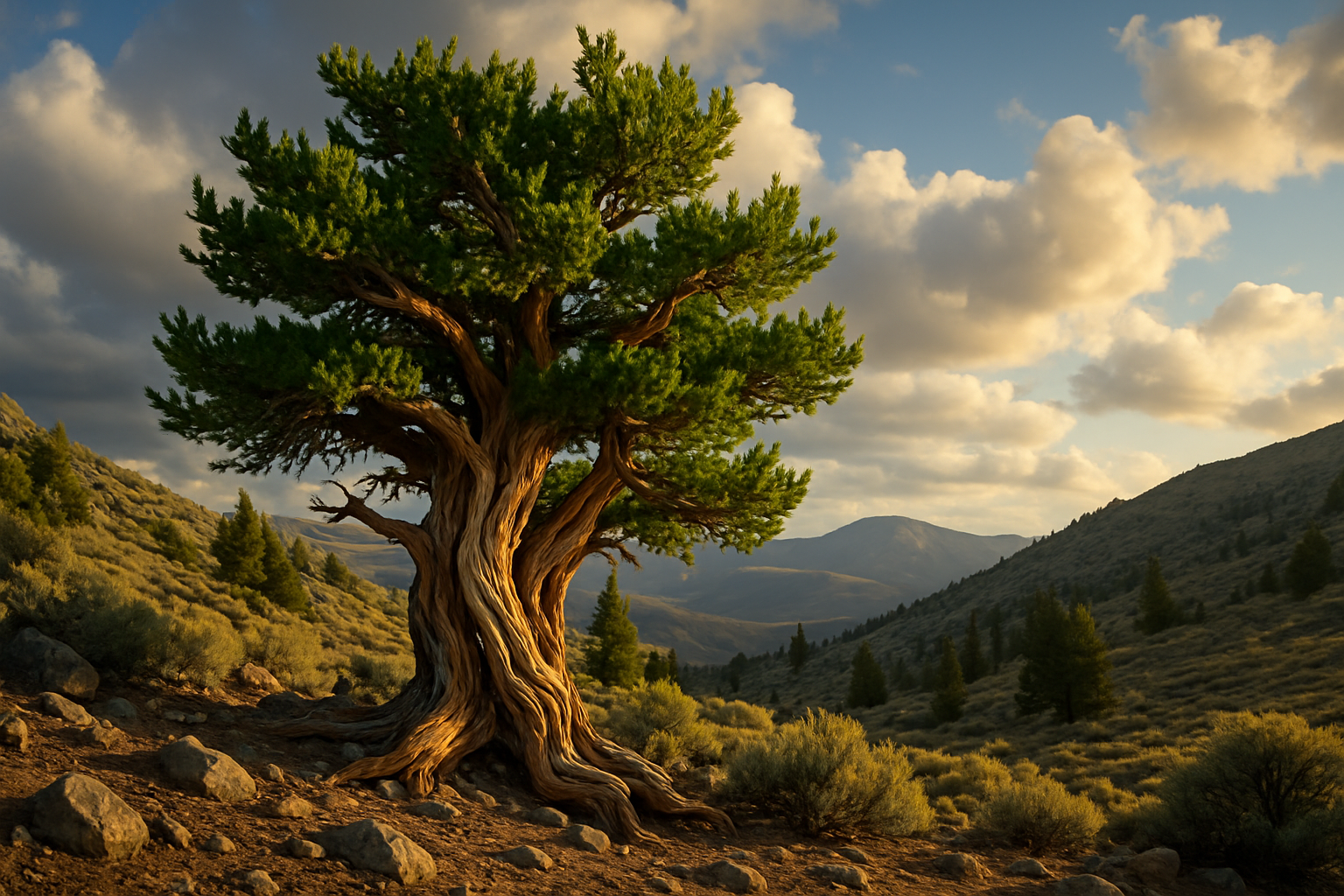
Imagine standing on a cold, exposed mountain ridge at 3,000 meters altitude in eastern California, where freezing winds scour the ground and the soil consists of pale, chalky alkaline rock. Under a harsh alpine sky, there are no giant green canopy trees or lush underbrush. Instead, twisted, sculpted wood clings to empty slopes, looking more like wind-polished driftwood than a living plant. Yet this gnarled organism has been breathing high-altitude air since ancient human civilizations were in their infancy.
How does a single tree manage to endure in a landscape where almost no other life can stake a claim? The answer lies in Pinus longaeva, commonly known as the Great Basin bristlecone pine, a master of extreme thrift that turns brutal environmental adversity into an insurance policy for longevity [1][2].
Life on High-Altitude Dolomite Ridges
The Great Basin bristlecone pine belongs to the family Pinaceae within the phylum Pinophyta and class Pinopsida [1]. It inhabits subalpine and alpine treelines across eastern California—including the White Mountains—as well as high ridges in Nevada and Utah [1][2]. These trees occupy dry, windswept slopes at elevations ranging between 1,700 meters and 3,400 meters [1].
The ground beneath these trees offers little initial promise for plant life. They thrive on alkaline limestone and dolomite soil, a light-colored sedimentary rock that lacks critical organic nutrients [1][2]. While most plants perish in such alkaline conditions, Pinus longaeva faces minimal competition because few other species can establish roots here [1].
A common belief about ancient trees is that they must grow into massive titan-like structures, much like the famous giant sequoias. However, the Great Basin bristlecone pine debunks this assumption by growing to modest heights between 5 and 16 meters [1][7]. Rather than expanding its physical volume, the species directs its energy strictly into persistence [1].
The Art of Extreme Thrift
Surviving in high-altitude desert conditions requires strict energy conservation. While many evergreen trees shed their foliage every few seasons, Pinus longaeva retains its needle-like leaves for 10 to 30 years [2, 6, 7].
By keeping the same needles active for up to three decades, the pine avoids spending precious energy constructing an entirely new set of leaves each spring [2][6]. This long-term needle retention allows continuous food production through photosynthesis whenever temperature and moisture permit [6].
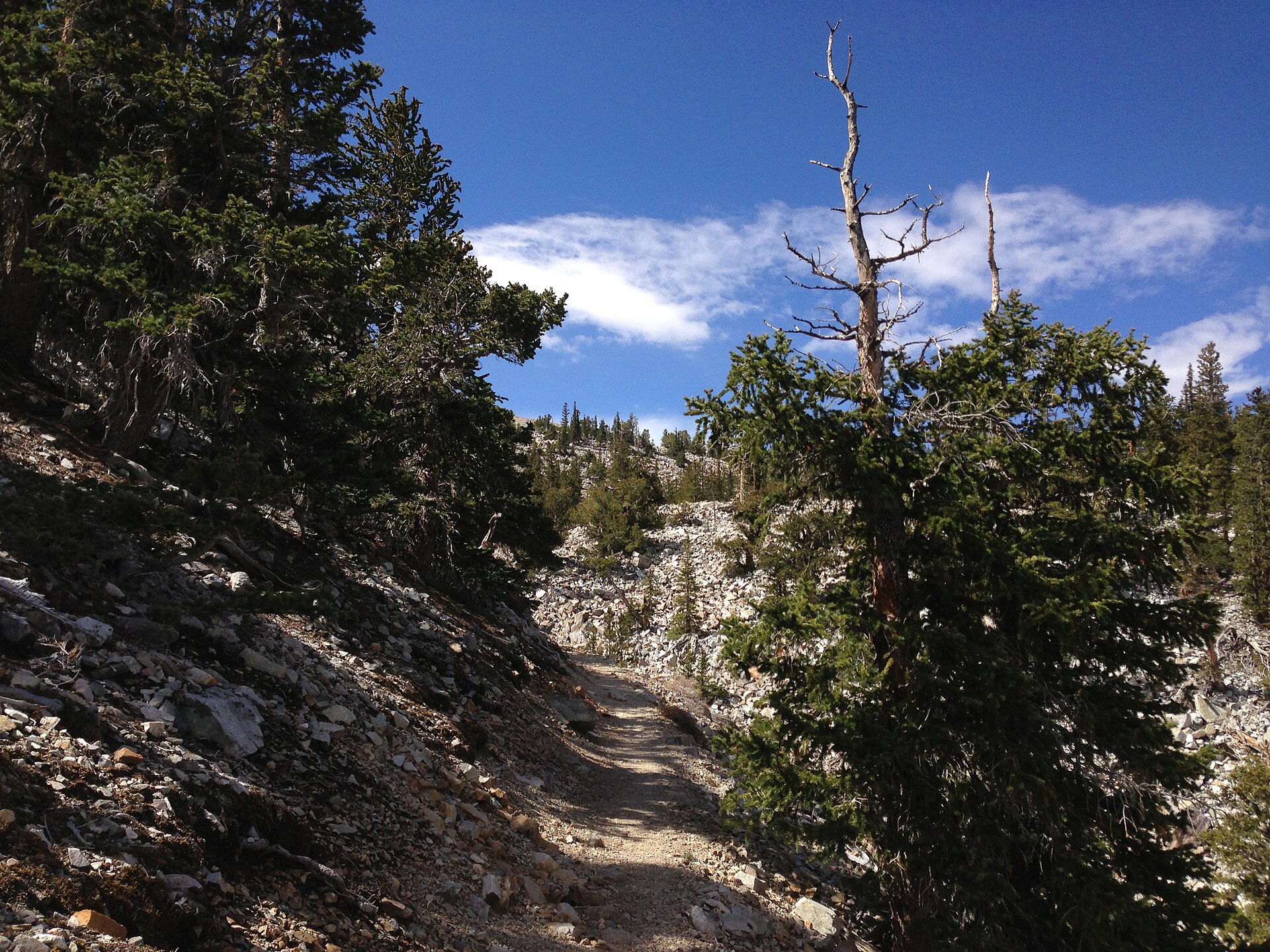
Severe cold and prolonged droughts force the tree to construct its annual growth rings at a microscopic pace [3][6]. This extraordinarily slow growth rate creates wood with high physical density [3]. Coupled with high concentrations of sticky natural sap, or resin, the wood forms a barrier that shields the tree against rot, wood-decaying bacteria, fungi, and insect infestations [3][6].
Stripping Down to Stay Alive
As centuries pass and severe mountain weather damages sections of the tree, Pinus longaeva executes a survival tactic known as strip-barking [2][6]. Instead of attempting to support an entire trunk full of wood, the tree abandons dying branches and allows large areas of wood to turn into dead structural timber [2][6].
The tree maintains life through a narrow strip of living bark and active cell tissue, known as the cambium layer, which connects a single root to a small cluster of green foliage above [2][6]. By reducing its living mass to this minimal strip, the pine continues to transport water and nutrients without exhausting its limited resources [2][6].
The common name of this resilient tree stems from its reproductive structures. The scales on its female seed cones bear slender, sharp prickles, or bristles, at their tips, identifying it as a bristlecone pine [2][7].
Single Stems vs. Clonal Colonies
Are all ancient plants structured in the same way? Many people confuse individual old trees with famous massive plant networks like Pando or Old Tjikko, assuming they survive through similar mechanisms [1][4].
The fundamental distinction comes down to whether an organism is clonal or non-clonal. Clonal plants reproduce vegetatively, creating identical underground root networks that sprout new stems over thousands of years while individual above-ground trunks die after a few centuries [1][4].
Pinus longaeva is a non-clonal organism, meaning it grows as a single individual from a single seed without cloning itself through roots [1][4]. The exact same trunk and root system that sprouted thousands of years ago remain functional today, making it one of the oldest single-stem individual organisms on Earth [1][4].
Prometheus, Methuselah, and Missing Records
The documented history of individual bristlecone pines contains notable milestones as well as loss. In 1964, on Wheeler Peak in Nevada, a researcher named Donald Currey cut down a specimen labeled WPN-114, known informally as Prometheus, for research purposes [1][5].
Subsequent ring counts revealed that Prometheus contained between 4,867 and over 4,900 growth rings at the time it was cut down [1][5]. The loss highlighted the astounding age of these high-altitude stands and shifted scientific focus toward non-destructive core sampling [1][5].
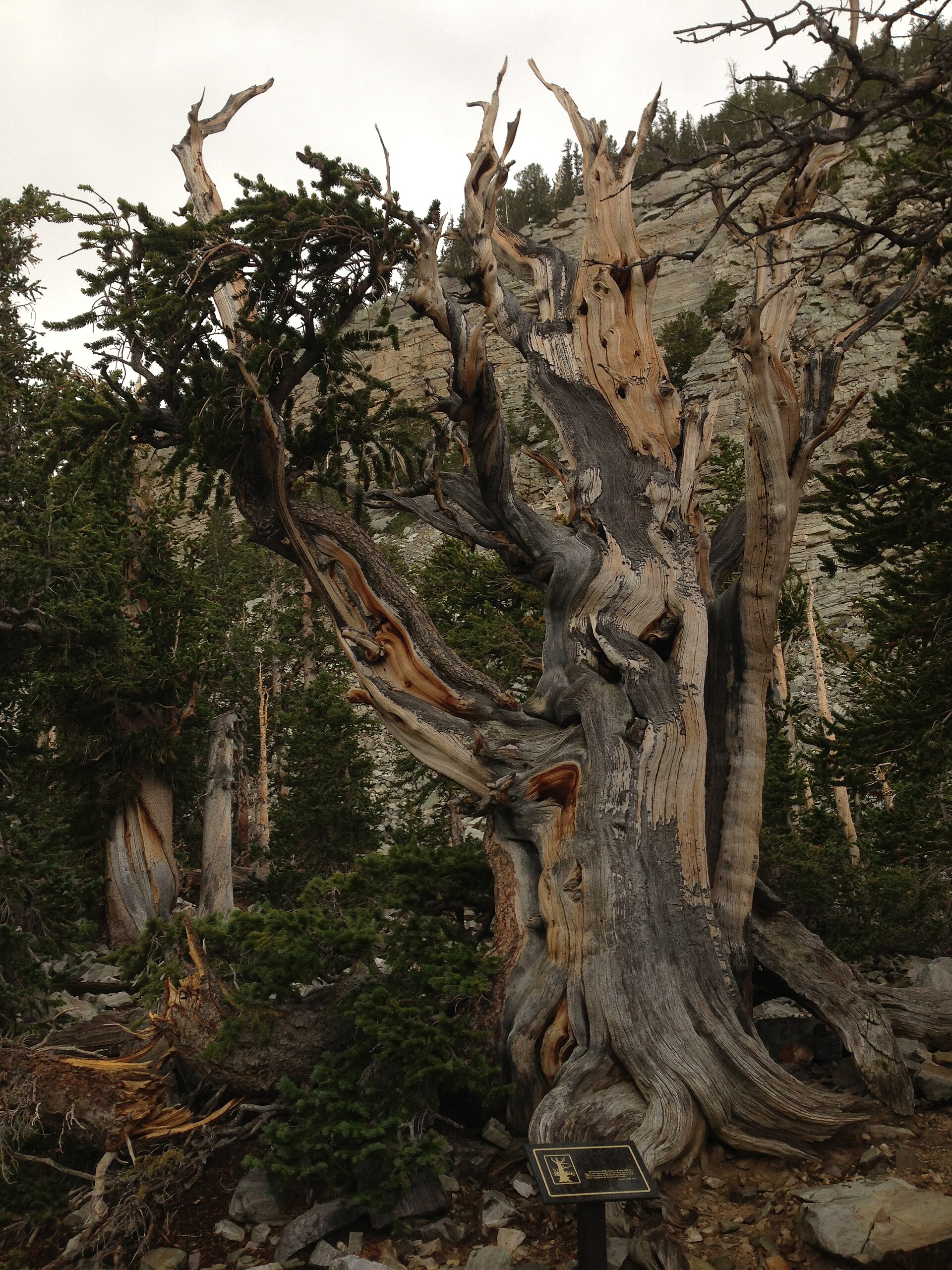
Today, the record for the oldest officially verified living non-clonal tree belongs to Methuselah, located in the White Mountains of California [1][4]. Dendrochronologists—scientists who study dated tree rings—have verified Methuselah’s age at approximately 4,850 years old [1, 4, 8]. To protect Methuselah from human damage or vandalism, officials keep its precise micro-level coordinates confidential [1].
Navigating Unverified Lifespan Claims
In popular culture and scientific discussions, claims of even older trees frequently surface. In 2010, researcher Tom Harlan reported discovering a core sample from a White Mountains bristlecone pine indicating an age exceeding 5,060 years [1][6]. However, following Harlan’s death in 2013, the physical core could not be recovered, and no peer-reviewed paper was published to validate the claim [1][6].
Similarly, a 2022 study proposed that a Patagonian cypress (Gran Abuelo) in Chile might be approximately 5,400 years old [1][4]. That claim relied on statistical growth modeling rather than a complete direct tree-ring core count, and it remains unverified in peer-reviewed dendrochronological literature [1][4]. As a result, Pinus longaeva retains the official record for direct, verified tree-ring counts [1][4].
An editorial synthesis of these verified biological features reveals why Pinus longaeva achieves such unprecedented longevity. It is not ideal, gentle conditions that grant the bristlecone pine its multi-millennial lifespan, but rather extreme environmental stress [1][2]. High alkalinity, drought, freezing winds, and nutrient-poor dolomite soil eliminate ecological competitors [1][2]. In turn, the severe cold forces slow growth that produces dense, resin-saturated wood, while strip-barking and 30-year needle retention minimize energy expenditure [2, 3, 6]. The tree survives thousands of years precisely because its environment is too harsh for wood-destroying pests to thrive and too barren for forest fires or competing vegetation to take hold [1, 3, 6].
High-Altitude Resilience and Conservation
Despite living on the ecological edge, populations of Pinus longaeva are currently stable [1]. The species is listed as Least Concern (LC) on the IUCN Red List and holds a NatureServe rank of G4, or Apparently Secure [1][2].
Because major stands are located within national parks and protected wilderness reserves, human logging and development remain strictly controlled [1][2]. While research continues regarding their high-altitude adaptations, full numerical details on their genetics and microscopic microbial relationships remain limited in current comprehensive summaries [1].
Looking back at that wind-scoured ridge in the White Mountains, the modest, twisted silhouette of Pinus longaeva stands as a testament to persistence. By growing slowly in places where nothing else can, hanging onto its needles for decades, and paring its living body down to a single band of bark, this 5 to 16 meter pine has quietly outlasted human empires [1, 2, 7].
Featured image credit
Created by TaxonGuru · AI-generated featured explanatory reconstruction · not a documentary photograph · generated 2026-09-06
Sources and editorial policy
This feature is based on publicly available scientific and institutional sources listed below. Read our editorial and fact-checking policy and AI use policy. Report a correction: kjhtime@gmail.com
References
- wikipedia.org — en.wikipedia.org, accessed 2026-09-05
- nps.gov — www.nps.gov, accessed 2026-09-05
- treesandshrubsonline.org — www.treesandshrubsonline.org, accessed 2026-09-05
- treesatlanta.org — www.treesatlanta.org, accessed 2026-09-05
- joshkwinkler.com — joshkwinkler.com, accessed 2026-09-05
- conifers.org — www.conifers.org, accessed 2026-09-05
- nps.gov — www.nps.gov, accessed 2026-09-05
- green.earth — www.green.earth, accessed 2026-09-05