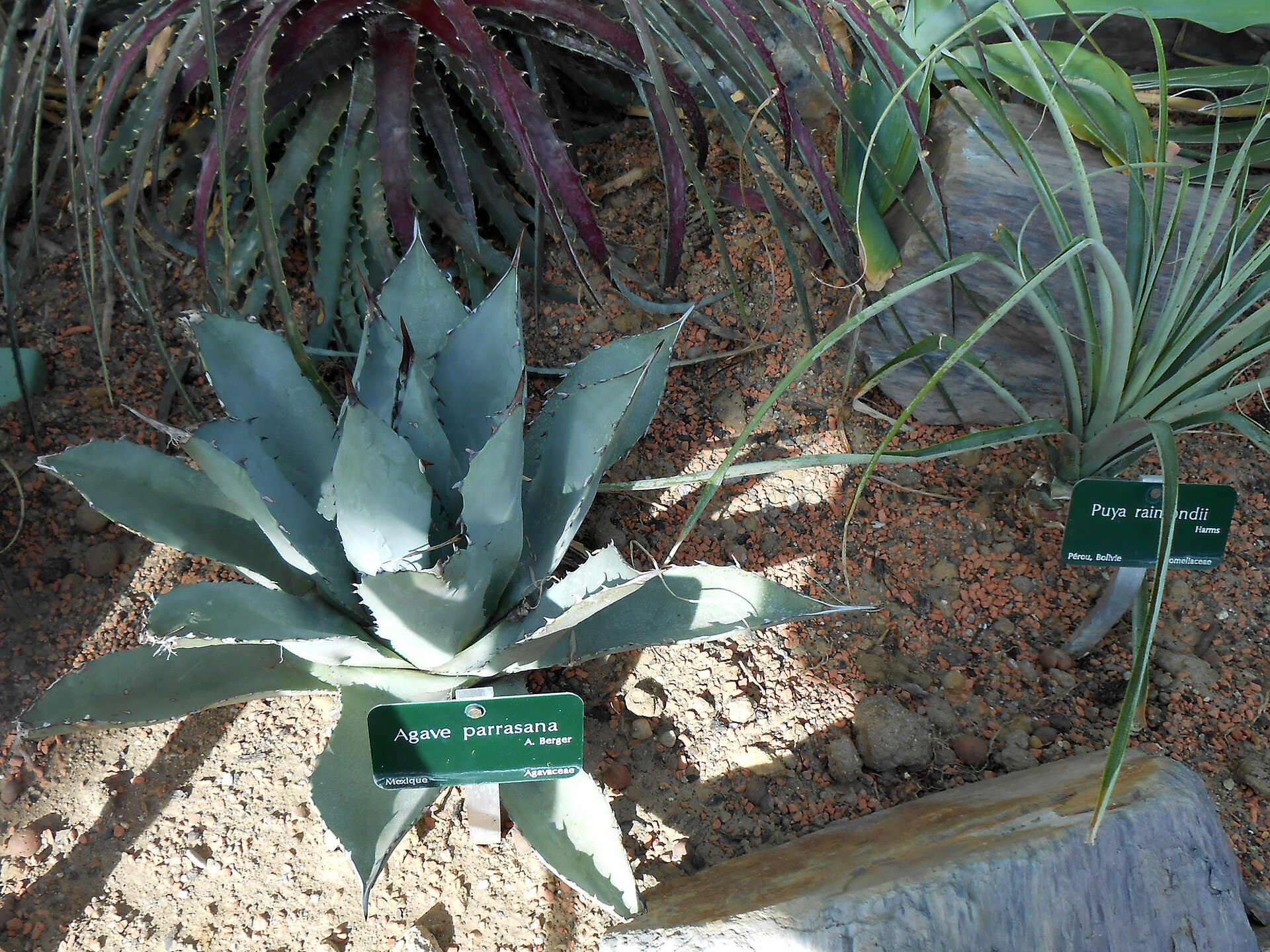
Imagine standing on the bleak, windswept slopes of the high Andean grasslands, somewhere between 3,000 and 4,800 meters above sea level [1]. The air at this altitude is thin, the solar radiation is intense, and temperatures drop sharply once night falls [1][2]. Rising above the dry, rocky terrain is an immense rosette of leaves that looks as though it belongs to a bygone epoch. For decades, this massive plant quietly gathers solar energy and mountain moisture in one of Earth’s most challenging environments [1][2]. What actually happens when an alpine plant spends nearly a century preparing for a single, explosive burst of life before dying completely?
The High-Altitude Giant of the Puna
The botanical subject of this Andean spectacle is Puya raimondii, commonly known as the Queen of the Andes [1]. Belonging to the pineapple family, Bromeliaceae, this giant species grows natively in the high-altitude Puna and Altiplano ecosystems of Peru and Bolivia [1][2]. The dry, rocky slopes it calls home subject the plant to intense daily sunlight, powerful mountain gusts, and severe swings between day and night temperatures [2].
Unlike many lowland bromeliads that form wide clumping colonies, Puya raimondii develops as a distinct, single central rosette throughout its extended vegetative phase [1][2]. To withstand the freeze-thaw cycles of its environment, the leaves are filled with specialized water-storage tissues and a thick, air-filled internal layer that shields its vital tissues from extreme frost [2][3].
A Century of Patience for One Grand Finale
The defining life strategy of Puya raimondii is its single-use reproductive cycle, known formally as monocarpic reproduction [1][2]. Rather than producing flowers every spring, the plant acts as a massive energy reservoir, storing carbohydrates over a span of 40 to 150 years in the wild [1][2]. Under ideal cultivated conditions in botanical gardens, where warmth and water are consistently managed, this growth period can shorten significantly to about 28 to 30 years [1][2].
When the reproductive phase finally arrives, Puya raimondii shoots up an unbranched flower spire—referred to in botany as a simple inflorescence—of staggering proportions [1][6]. The standalone flowering tower measures between 4 and 10 meters in height [1][6]. When combined with the underlying basal rosette, the entire blooming plant reaches a total height of 12 to 15 meters, making it the tallest simple flower stalk on Earth [1][6].
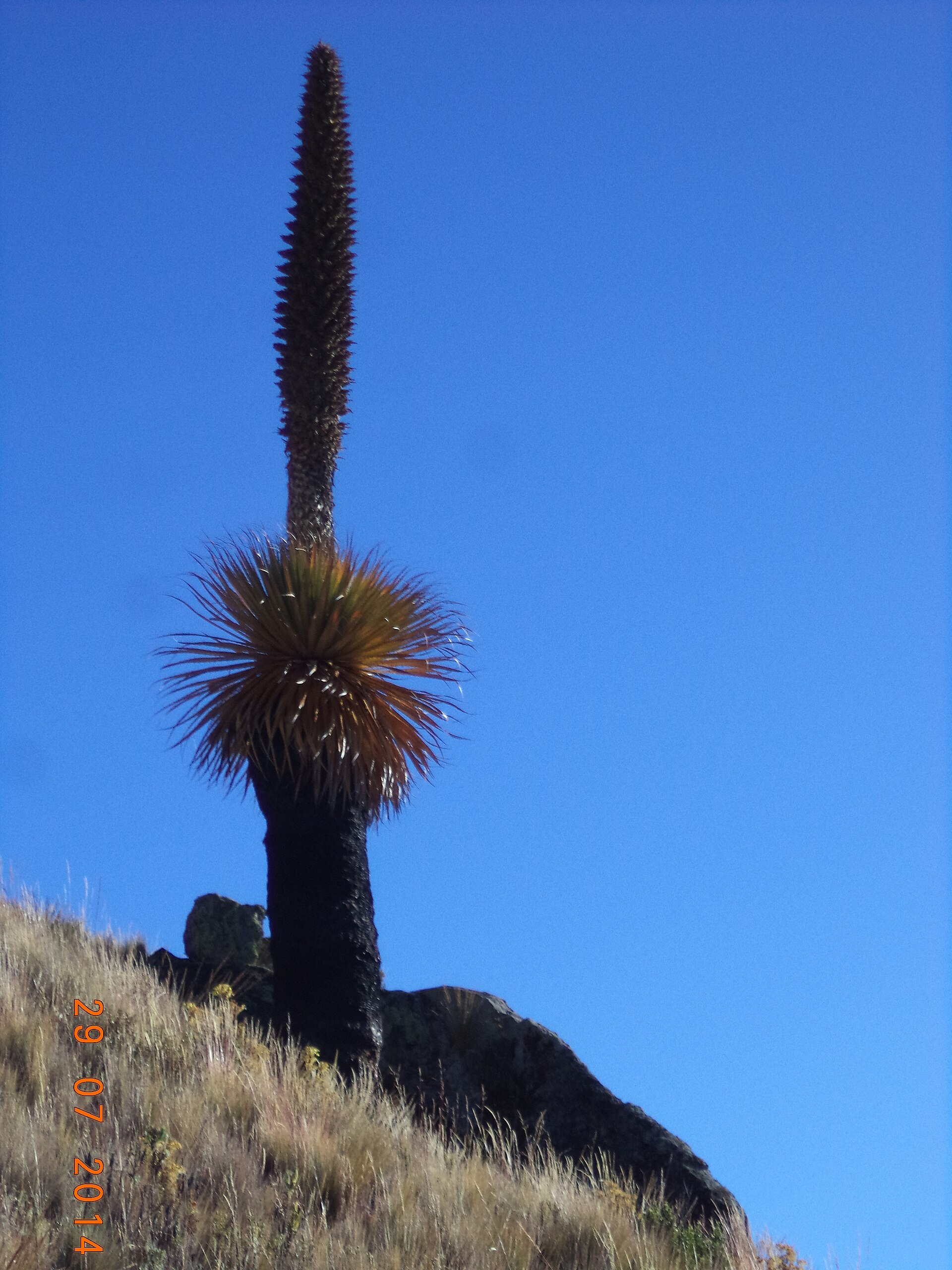
Across this massive spire, between 8,000 and 30,000 cream-white flowers bloom during its final months [1][2]. After successful pollination, the plant yields an enormous volume of offspring, releasing between 6 million and 12 million small, winged seeds into the alpine wind [1][2]. Once seed drop is complete, the plant produces no side shoots or vegetative offsets—often called “pups”—to carry on its growth; instead, the entire plant dries out and dies [1][2].
C3 Metabolism on Cold Alpine Slopes
To cope with dry conditions, many plants within the pineapple family rely on a specialized water-conserving metabolic system called Crassulacean Acid Metabolism, or CAM photosynthesis, which opens stomata at night to capture carbon dioxide. How does Puya raimondii manage to construct such a massive body on dry mountain slopes without using this CAM strategy?
Physiological research reveals that Puya raimondii retains the standard plant carbon-fixation pathway known as C3 photosynthesis [2][3]. While CAM photosynthesis provides a distinct advantage for tropical and desert succulents operating under hot daytime conditions, C3 photosynthesis is far more efficient in the freezing temperatures of high-altitude ecosystems where low temperatures slow down CAM enzymes [2][3]. Rather than altering its chemical pathway, Puya raimondii combats aridity through physical structures, relying on its dense water-storing leaf tissues and insulating air pockets [2][3].
A Life-Giving Hub in the High Andes
Despite surviving in a barren environment, Puya raimondii operates as a vital keystone species—an organism whose presence disproportionately supports and structures its surrounding community [2][3]. When a rosette flowers, it transforms the dry slopes into a bustling resource hub for mountain wildlife [2][3].
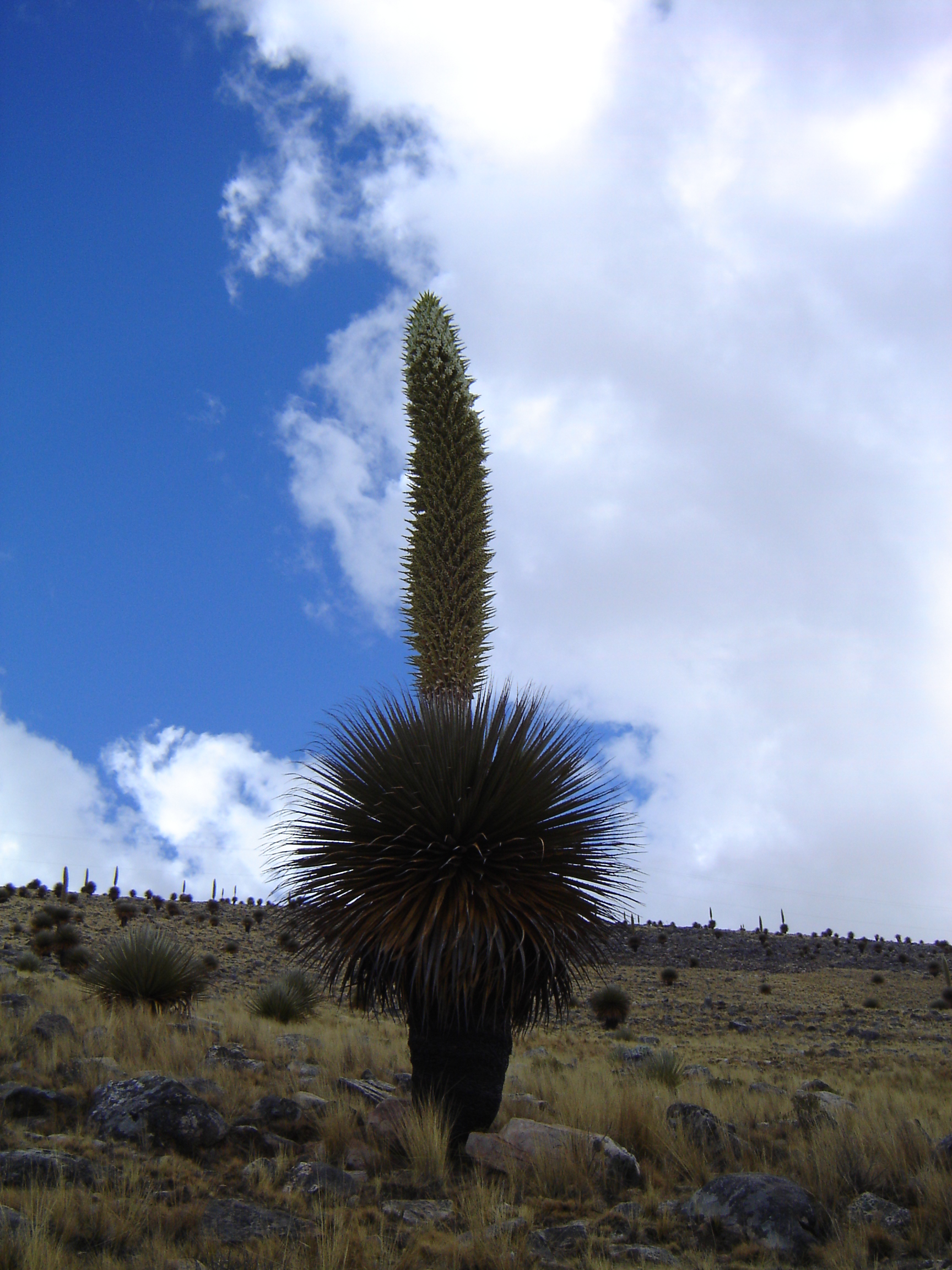
The vast cluster of cream-white blooms generates huge volumes of nectar, attracting high-altitude insects and native birds [1, 2, 3]. Among its most frequent visitors is the giant hummingbird (Patagona gigas), which uses the high-volume nectar supply as a key food source [2][3]. Beyond providing food, the plant’s rigid, spiny leaves and immense floral columns offer secure roosting locations and sheltered nesting sites against fierce Altiplano storms [2][3].
Connecting these biological facts reveals why Puya raimondii matters so deeply to alpine ecology: by spending up to a century accumulating solar energy and scarce mountain water via C3 photosynthesis, a single giant rosette eventually converts its entire stored life force into a massive, concentrated pulse of nectar, seeds, and shelter, briefly boosting the carrying capacity of an otherwise barren landscape before passing away [1, 2, 3].
Entangling Spines and the Carnivorous Myth
The aggressive appearance of Puya raimondii has fostered persistent regional myths and scientific debates over the years. Because its leaves are lined with sharp, hooked spines, passing birds or domestic livestock like sheep occasionally become entangled in the foliage and perish [1][5]. These occurrences led to early conjectures that the plant might be protocarnivorous—a term describing plants that capture animals to trap nutrients from decaying remains through the surrounding soil [1][5].
Is Puya raimondii actually a meat-eating plant? Scientific evaluation has thoroughly disproved this notion [1][5]. The species produces no digestive enzymes, nor does it feature active trapping structures or chemical lures [1][5]. Botanists have confirmed that the hooked leaf spines serve exclusively as a physical defense mechanism to protect the succulent rosette from grazing herbivores [1][5]. Any nutrients absorbed from animals that accidentally die nearby represent incidental ecological recycling rather than a specialized carnivorous strategy [1][5].
An Uncertain Future on the Wind
Today, Puya raimondii faces severe conservation challenges and is officially listed as Endangered on the IUCN Red List [2]. Human disturbances, particularly prescribed pasture burning, land clearing, and intense livestock grazing, regularly destroy young rosettes before they ever reach reproductive maturity [2]. Furthermore, habitat fragmentation has split remaining stands, resulting in low genetic diversity across its native range [2].
Climate change introduces additional complications. While some researchers hypothesized that the plant’s light, winged seeds might enable it to migrate upward into cooler alpine zones as global temperatures climb, field measurements suggest clear physical limits [2][4]. Most seeds land within a short radius—typically 10 to 15 meters—from the base of the parent plant, restricting rapid upward range shifts [2][4]. Because long-term monitoring across remote high-altitude regions remains logistically difficult, precise demographic trends and wild lifespan estimates carry ongoing scientific uncertainty [1][2].
Looking back at the rocky Puna slopes, seeing a lone Puya raimondii rosette standing against the mountain horizon offers a rare perspective on evolutionary time. By holding its ground through decades of severe frost and dry winds, this high-altitude titan demonstrates an extraordinary survival strategy—enduring a century of solitary patience for a single, magnificent tower of cream-white flowers beneath the Andean sky [1, 2, 6].
Featured image credit
Image: Traumrune · Wikimedia Commons · CC BY-SA 3.0 · original file
Sources and editorial policy
This feature is based on publicly available scientific and institutional sources listed below. Read our editorial and fact-checking policy and AI use policy. Report a correction: kjhtime@gmail.com
References
- wikipedia.org — en.wikipedia.org, accessed 2026-10-08
- frontiersin.org — www.frontiersin.org, accessed 2026-10-08
- researchgate.net — www.researchgate.net, accessed 2026-10-08
- researchgate.net — www.researchgate.net, accessed 2026-10-08
- reddit.com — www.reddit.com, accessed 2026-10-08
- wikipedia.org — en.wikipedia.org, accessed 2026-10-08