Deep inside a moist cushion of green moss clinging to tree bark, a life-or-death crisis unfolds on a microscopic scale. As sunlight penetrates the forest canopy, the microscopic film of water surrounding the moss leaves begins to evaporate. For many small organisms, losing this ambient moisture means instant destruction. Yet for Echiniscus testudo, commonly known as the armored turtle water bear, this drying world is a manageable routine [1][7].
Tiny Armor in the Microscopic Canopy
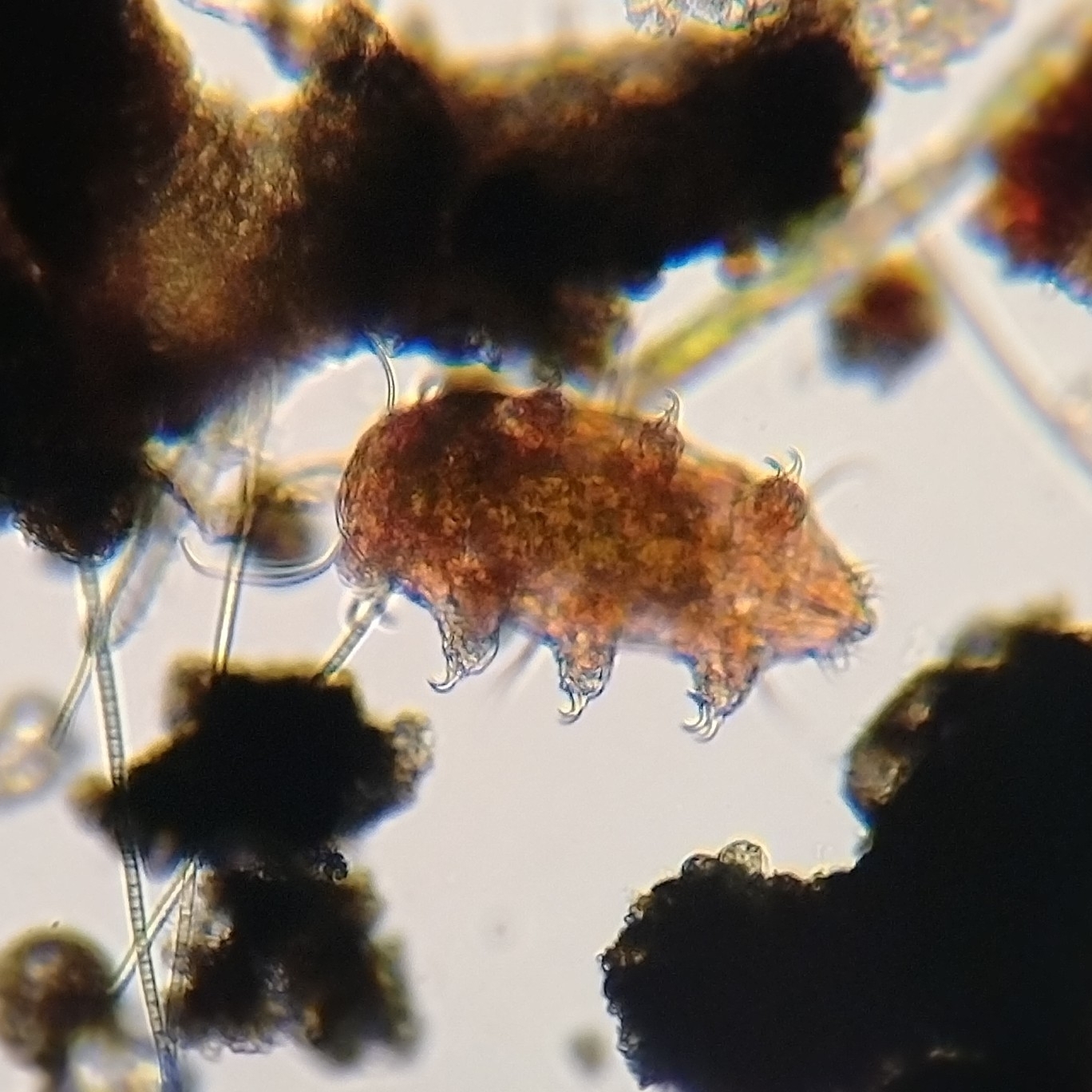
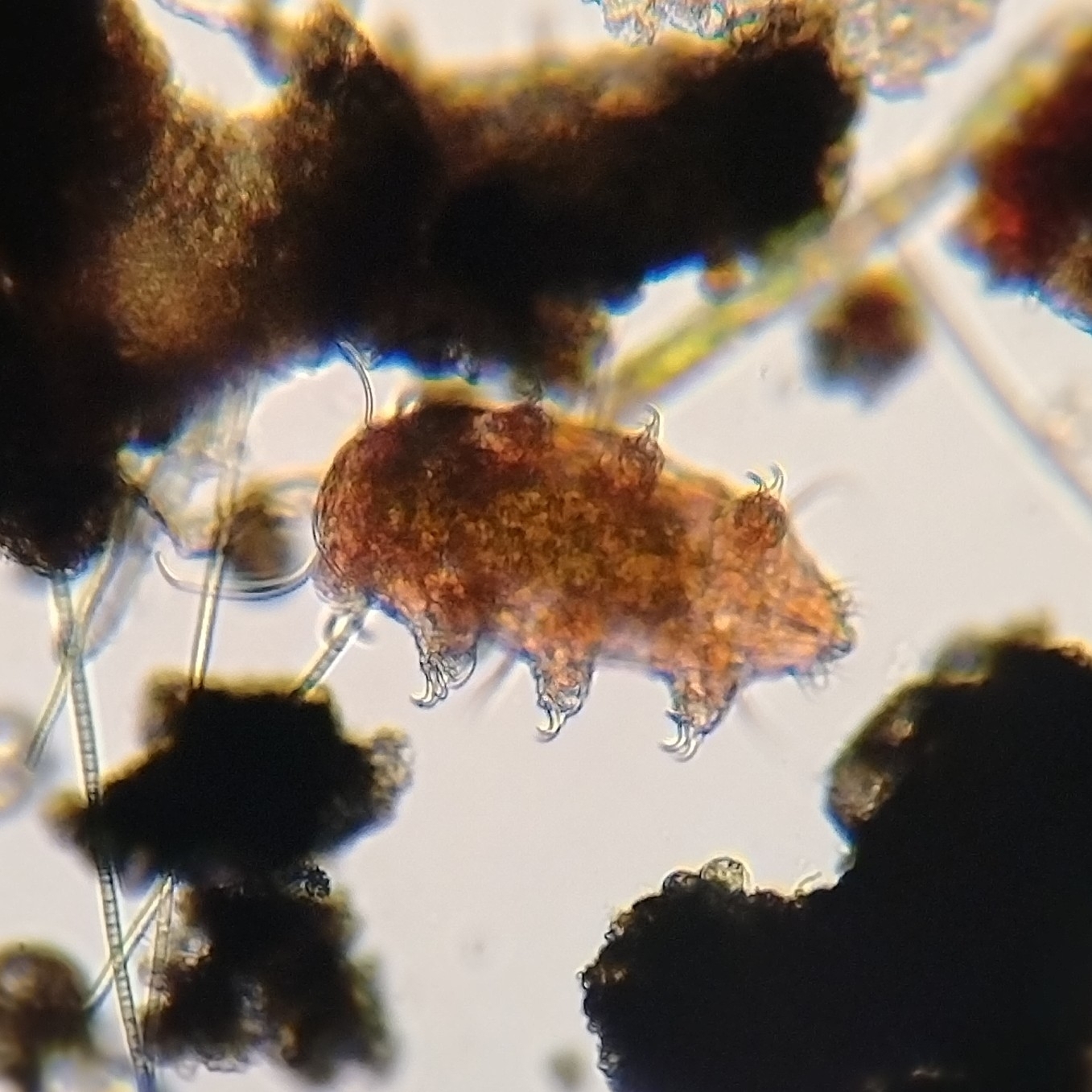
To understand how Echiniscus testudo survives in this volatile micro-habitat, one must examine its distinctive physical structure. Belonging to the class Heterotardigrada within the phylum Tardigrada, this tiny animal earned its species name—testudo, meaning “turtle” in Latin—from the hardened cuticle segmental plates covering its back [1][5]. These sclerotized armor plates give the animal a turtle-like appearance as it crawls through damp terrestrial environments [1][5].
Movement across this rugged terrain relies on four pairs of short lobopod legs tipped with sharp claws [1][5]. These claws allow the armored turtle water bear to anchor itself firmly against shifting moisture films as it creeps across mosses, lichens, and tree bark [1][5]. This structural design adapts the animal specifically for terrestrial micro-habitats rather than open marine ecosystems [1][7].
Where on Earth does this micro-turtle actually reside? Field records show that Echiniscus testudo is widely distributed across the Palaearctic and Holarctic regions, spanning Europe, Asia, North Africa, the Middle East, and Greenland [1][7]. However, researchers highlight an important geographic distinction that corrects a common assumption. While general literature often describes tardigrades as universal, real-world survey datasets show that Echiniscus testudo has never been recorded in Australia or Antarctica [1][7]. It is an exceptionally broad ranger across northern continents, but its wild distribution is not strictly cosmopolitan [1][7].
The Needle-Tooth Cell Feeder
Despite its rigid armor plating, Echiniscus testudo leads a focused herbivorous lifestyle within its microscopic realm [2][6]. It does not consume whole moss leaves. Instead, its oral apparatus features a pair of sharp, needle-like cuticle structures called stylets [2][6].
When feeding, the armored turtle water bear drives these sharp stylets through the rigid cell walls of mosses and other plants [2][6]. Once the outer membrane is breached, the animal absorbs the liquid contents directly from inside the cell [2][6]. This piercing and suction feeding strategy supplies all the fluids and nutrients necessary to sustain the organism in its terrestrial habitat [2][6].
Myth vs. Reality: Is the Water Bear Truly Invincible?
Popular media stories often claim that tardigrades are completely indestructible—that they can casually survive cosmic vacuum, intense radiation, and deep freezing at any moment [3][6]. However, this widely shared belief represents a major misconception in animal biology [3][6]. Are water bears actually immune to environmental hazards during their active daily lives?
The short answer is no [3][6]. In its normal, fully hydrated state—crawling on four pairs of clawed lobopod legs and feeding on plant cells—Echiniscus testudo is surprisingly fragile [1, 3, 6]. Sudden heat spikes, toxic chemicals, or physical crushing will easily kill a fully hydrated water bear [3][6].
Its extraordinary stress tolerance activates only when environmental drying forces the animal into a state of suspended animation called anhydrobiosis, or “life without water” [3][8]. As its surrounding moss pad dries out, Echiniscus testudo expels its internal body water, pulls its four pairs of clawed legs inward, and contracts into a shriveled sphere known as a “tun” [1, 3, 8]. In this tun state, its metabolic activity drops to near zero [3][8]. Only when locked in this dehydrated tun state can the animal withstand extreme radiation, severe freezing, and vacuum conditions [3][8].
A Distinct Molecular Shield: The EtAHS Discovery
For years, scientists assumed that all tardigrade species relied on the exact same molecular mechanism to shield their cells from severe desiccation [8]. Research on popular laboratory model species from the class Eutardigrada identified specific protective proteins known as Cytoplasmic Abundant Heat-Soluble (CAHS) proteins and Damage Suppressor (Dsup) proteins [8]. However, genomic and multi-omic analyses of Echiniscus testudo revealed a major evolutionary surprise [3][8].
Because Echiniscus testudo belongs to the class Heterotardigrada—a distinct evolutionary lineage—it lacks CAHS and Dsup proteins entirely [8]. Instead, this species independently evolved its own unique family of heat-soluble protective molecules named Echiniscus testudo Abundant Heat-Soluble (EtAHS) proteins [3][8].
How do these unique EtAHS proteins protect cellular machinery during dehydration? When the animal loses water and enters the tun state, unstructured EtAHS proteins rapidly transform into organized alpha-helical structures [3][8]. These alpha-helices form a protective molecular matrix that stabilizes cellular membranes and prevents essential internal proteins from misfolding or clumping together [3][8]. Working alongside specialized antioxidant systems, EtAHS keeps delicate cell structures intact until moisture returns [3][8]. This discovery proves that cryptobiotic desiccation tolerance evolved through convergent evolution—different tardigrade lineages inventing separate molecular weapons to solve the exact same survival challenge [3][8].
Clones Shielded Inside Shed Armor
The survival toolkit of Echiniscus testudo extends beyond individual cellular protection to include a highly effective reproductive strategy [4][9]. In wild field populations, male individuals are extremely rare, and across many surveyed locations, males have never been documented at all [4][9].
Instead, Echiniscus testudo reproduces primarily through obligate parthenogenesis, a form of unisexual or asexual reproduction where females produce offspring without requiring male fertilization [4][9]. Every mature female lays unfertilized eggs that carry exact copies of her own genetic material [4][9].
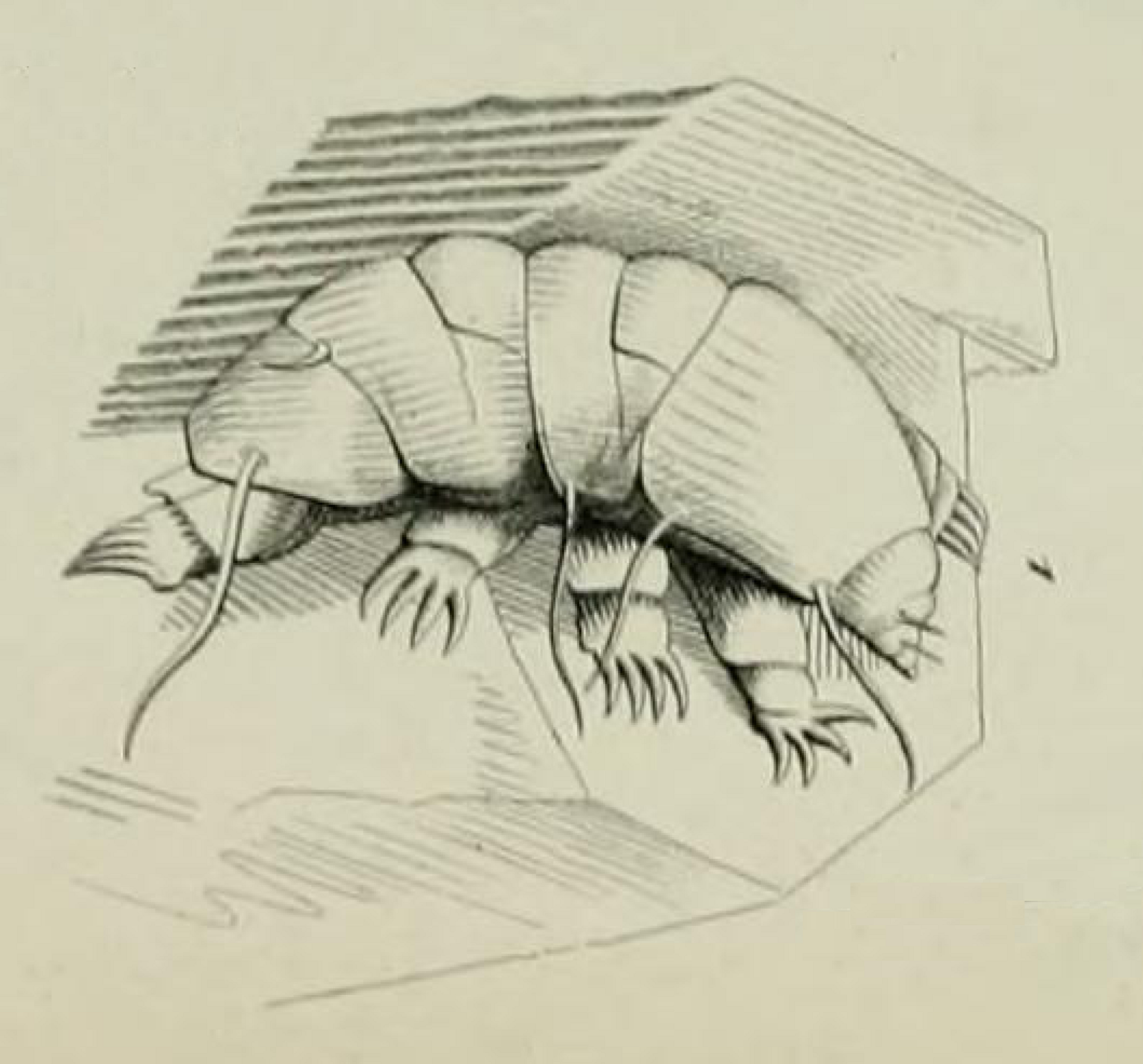
This reproductive process is tied directly to the animal’s shedding cycle [4][9]. When a female sheds her outer armor, she leaves behind her cast-off exoskeleton, known as the exuvia [4][9]. Rather than depositing her eggs unprotected on moss leaves, she lays her cloned eggs directly inside this shed exuvia [4][9]. The rigid outer plating of the exuvia serves as a protective nursery, guarding the developing embryos from environmental hazards until they hatch and step out on four pairs of clawed lobopod legs [1, 4, 9].
Synthesizing the Life Strategy of *Echiniscus testudo*
Connecting facts about physical armor, feeding mechanics, unisexual reproduction, and protein biochemistry provides a complete picture of how Echiniscus testudo conquers its unpredictable habitat [1, 2, 3, 4, 8]. Living on exposed moss pads and tree bark requires an organism to survive violent swings between complete hydration and severe drying [1][3]. Echiniscus testudo thrives in this harsh micro-world through an integrated survival system:
- Precise Cell Feeding: Using sharp cuticular stylets to puncture plant cell walls and absorb nutrient fluids directly [2][6].
- Rapid Population Recovery: Relying on obligate parthenogenesis so a single surviving female can rebuild an entire colony without seeking a mate [4][9].
- Durable Exterior Protection: Wearing sclerotized cuticular plates that safeguard delicate organs while crawling over rough moss and bark [1][5].
- Molecular Preservation: Deploying EtAHS proteins that convert into alpha-helical matrices to shield cellular components during complete dehydration [3][8].
Despite these remarkable abilities, significant scientific limitations remain [8]. Unlike model tardigrade species such as Hypsibius exemplaris, researchers have not established successful long-term artificial culture conditions for Echiniscus testudo in laboratory settings [8]. Because it cannot be easily maintained in laboratory cultures, experimental research on this species remains constrained [8]. The exact molecular pathways governing its DNA repair following heavy radiation or extreme freezing exposure still require further empirical study [8]. Furthermore, its global conservation status is currently categorized as Not Assessed (NE), leaving its wild population trends unmonitored.
When rain eventually falls across the sunlit forest canopy, water trickles down to the shriveled, dormant tun of Echiniscus testudo resting in the dry moss [1, 3, 8]. Within minutes, its specialized EtAHS molecular matrix relaxes, its body rehydrates, and the tiny animal extends its four pairs of clawed lobopod legs from beneath its turtle-like armor [1, 3, 8]. Waking its metabolism, the armored turtle water bear creeps forward once more, driving its sharp stylet into a fresh plant cell—a microscopic survivor seamlessly resuming its life in the canopy [1, 2, 3, 6].
Featured image credit
Image: Robert Martin · Wikimedia Commons · CC BY 4.0 · original file
Sources and editorial policy
This feature is based on publicly available scientific and institutional sources listed below. Read our editorial and fact-checking policy and AI use policy. Report a correction: kjhtime@gmail.com
References
- wikipedia.org — en.wikipedia.org, accessed 2026-09-21
- encyclopedia.com — www.encyclopedia.com, accessed 2026-09-21
- researchgate.net — www.researchgate.net, accessed 2026-09-21
- ku.dk — researchprofiles.ku.dk, accessed 2026-09-21
- researchgate.net — www.researchgate.net, accessed 2026-09-21
- wikipedia.org — en.wikipedia.org, accessed 2026-09-21
- marinespecies.org — www.marinespecies.org, accessed 2026-09-21
- nih.gov — pmc.ncbi.nlm.nih.gov, accessed 2026-09-21
- steme.org — www.steme.org, accessed 2026-09-21