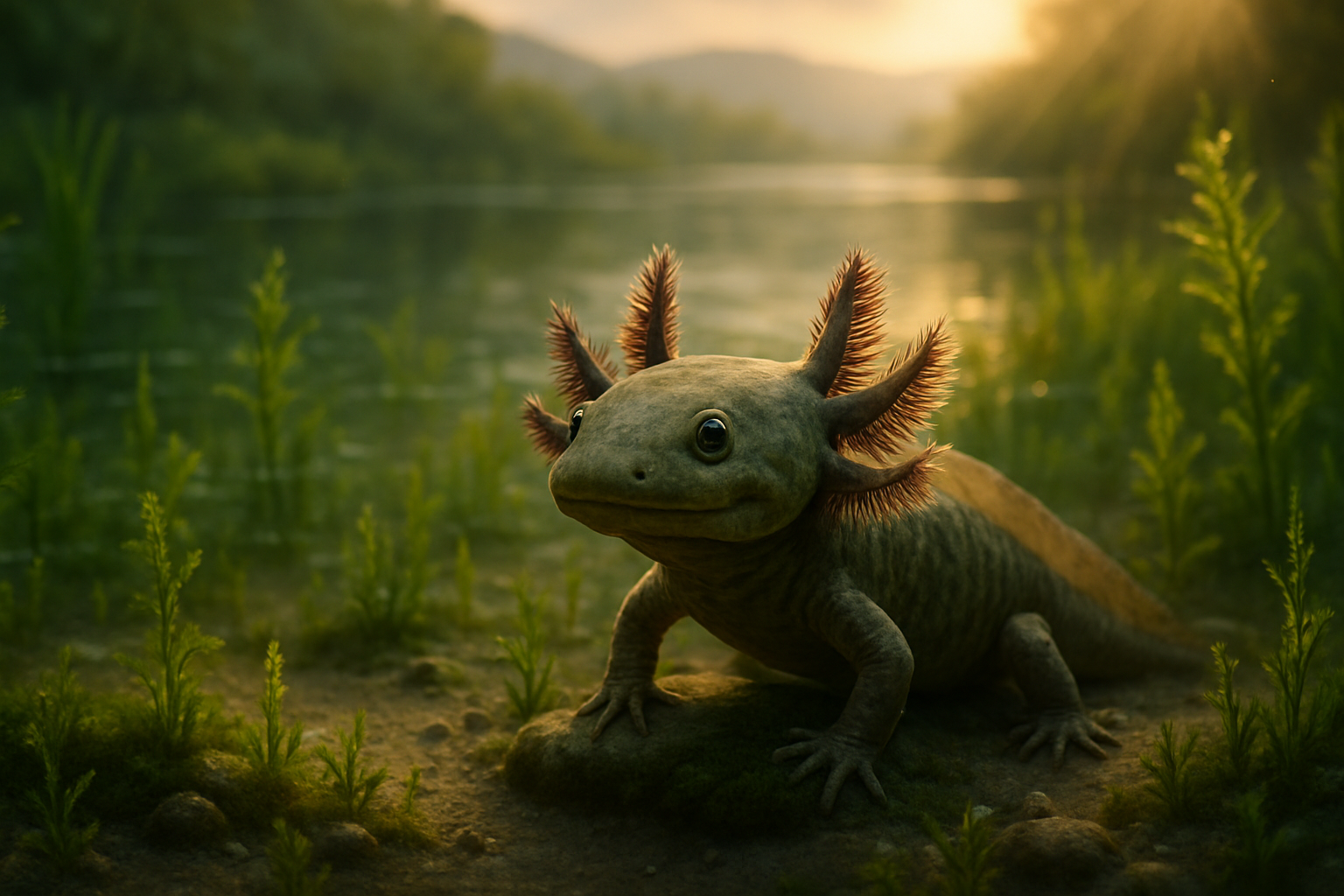
Imagine peering into the dimly lit, slow-moving freshwaters of Lake Xochimilco, situated roughly 2,274 meters above sea level in the Valley of Mexico [1]. Suspended among dense water plants, a quiet silhouette hovers effortlessly while feathery external gills fan out around its head [1][2]. Online stories frequently refer to this creature as a “walking fish” and celebrate it as a strange pet that never grows up [1]. But when tested against verified scientific research, what does the factual evidence reveal about this unique aquatic salamander [1][2]?
Myth vs. Reality: Is the ‘Mexican Walking Fish’ Actually a Fish?
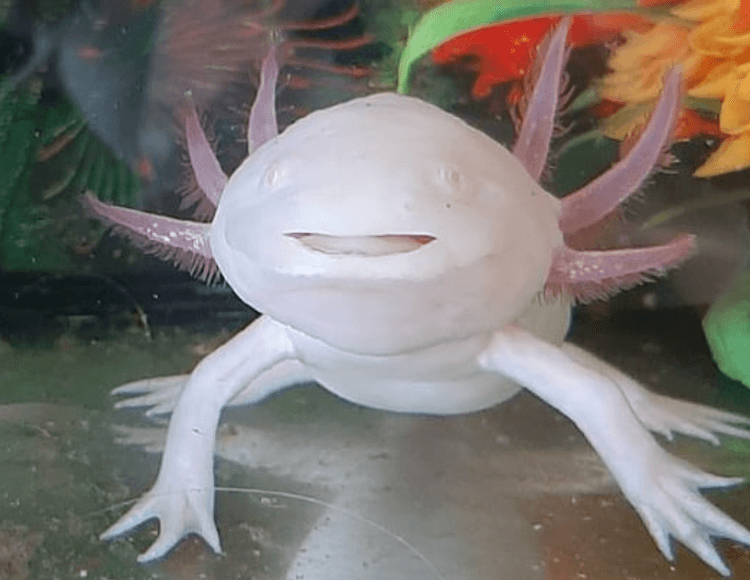
Despite its widely recognized nickname, the axolotl (*Ambystoma mexicanum*) is not a fish [1][2]. Formal scientific taxonomy places this organism in Kingdom Animalia, Phylum Chordata, Class Amphibia, Order Caudata, Family Ambystomatidae, Genus *Ambystoma*, and Species *Ambystoma mexicanum* [1][2]. It is a true amphibian—specifically a salamander—that spends its whole life in an aquatic environment while equipped with both functional lungs and external gills [1][2].
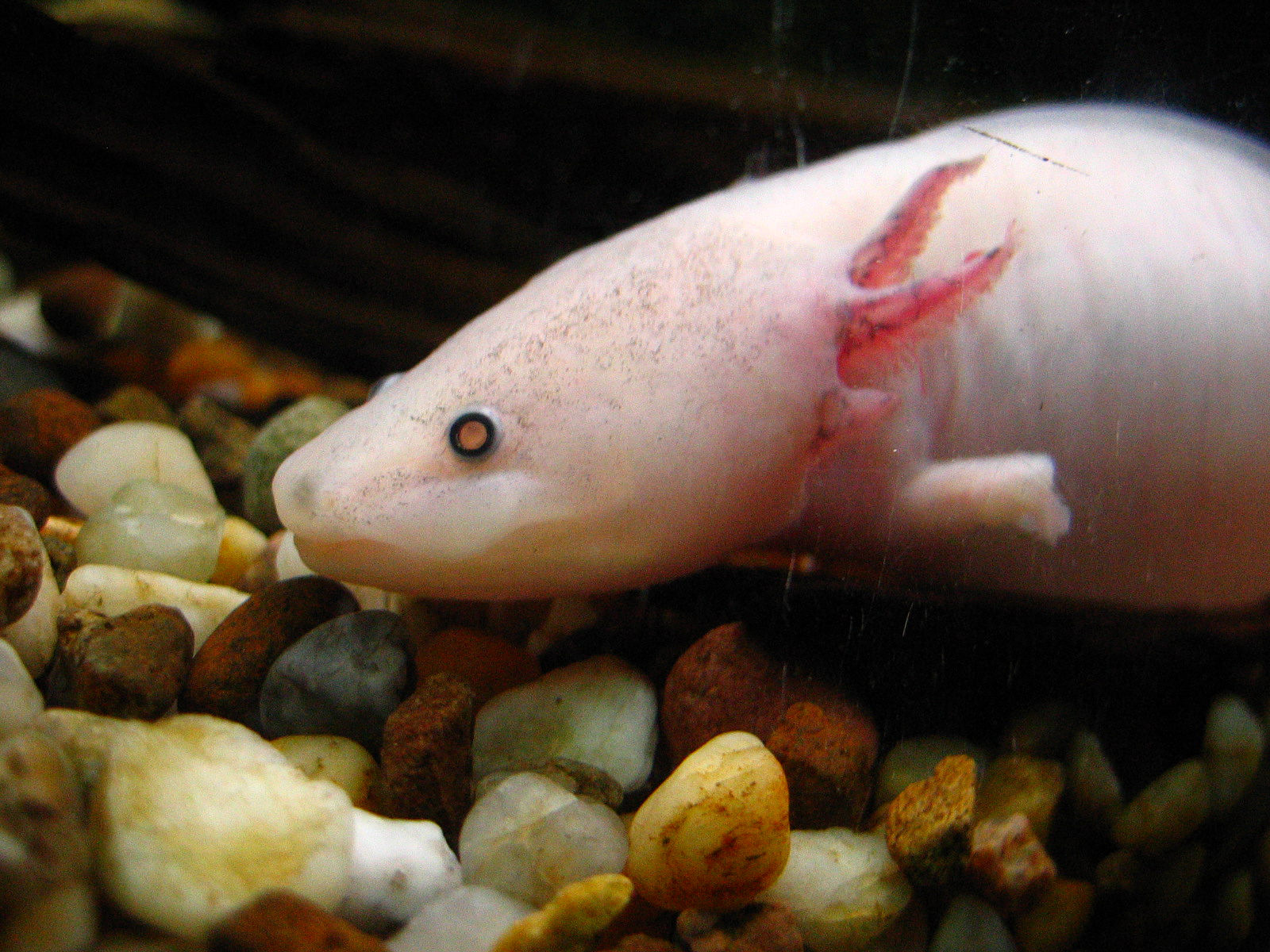
A second widespread misconception concerns the animal’s color. Many people assume that a pink or white body represents the natural appearance of the species in the wild [1][6]. In reality, these pale pink and white individuals are leucistic variants that were selectively bred in captivity [1][6]. Native wild axolotls inhabiting the murky canals of Mexico display dark brown, gray, or black skin speckled with dark spots [1][6].
The Hormone Secret: How Neoteny Freezes the Salamander in Youth
Most salamanders undergo a dramatic physical transformation during their lifecycle. They hatch from eggs as aquatic larvae equipped with gills, slowly absorb those gills as air-breathing lungs develop, and eventually emerge onto land as terrestrial adults. The axolotl breaks this typical developmental path through neoteny—a biological process where an organism retains its larval features even after reaching full sexual maturity [1, 2, 5].
This permanent retention of juvenile traits is driven by a distinct chemical bottleneck inside the animal’s body. Axolotls naturally produce unusually low levels of thyroid-stimulating hormone as well as thyroid hormones such as thyroxine (T4) [1][5]. Lacking sufficient thyroid hormone signals, the body fails to trigger the metamorphic transition required to lose its swimming fin or shed its feathery external gills [1, 2, 5].
What happens if human intervention alters this hormonal state? In laboratory studies, administering external thyroid hormones such as T4 forces the axolotl to undergo artificial metamorphosis into a land-adapted form [1][5]. However, this induced transformation inflicts severe physiological stress on the animal [1][5]. Metamorphosed individuals suffer a significantly shortened lifespan and lose their remarkable biological capacity for regeneration [1][5].
Vacuum Feeders and Secretive Mating in the Shallows
In its native freshwater habitat, where water temperatures range from 6°C to 20°C, the axolotl lives as a nocturnal carnivorous predator [1, 2, 4]. It prefers slow-flowing waters filled with rich aquatic vegetation [1][2]. To capture prey, the axolotl uses a specialized feeding method known as suction feeding [1][4].
When prospective prey swims nearby, the axolotl expands its oral cavity almost instantly [1][4]. This rapid physical expansion creates a sudden zone of negative pressure inside the mouth, generating a powerful vacuum [1][4]. The resulting suction pulls surrounding water along with small aquatic invertebrates or small fish directly into the predator’s mouth [1][4].
Its aquatic reproductive routine is equally specialized. During courtship, the male drops a jelly-like packet filled with sperm, called a spermatophore, onto the bottom of the water body [1][2]. The female then hovers over the site and retrieves the spermatophore into her cloaca—a single multi-purpose body opening used for excretion and reproduction [1][2]. Following internal fertilization, she anchors her eggs onto aquatic plants or nearby rocks [1][2].
Rebuilding Organs: How Blastema Cells Repair Limbs, Hearts, and Brains
When an axolotl suffers physical trauma, such as a severe limb wound, it does not close the injury with scar tissue like mammals do [1][8]. Instead, it initiates an extraordinarily advanced tissue repair sequence capable of fully rebuilding missing limbs, complex heart tissue, and portions of its forebrain [1][8].
This complex repair mechanism relies on specialized cellular actions at the injury site. Following tissue damage, unspecialized repair cells gather together to form a cellular structure known as a blastema [1][8]. Within this blastema, neural progenitor cells—early-stage cells capable of forming nerve tissue—become activated [1][8]. These activated cells construct new brain tissue, nerves, and structural tissues without generating scar tissue [1][8].
The Survival Paradox: Aquarium Abundance vs. Ecosystem Collapse
A third major myth suggests that because millions of axolotls live in home aquariums and research facilities around the world, the species is safe from extinction [1][7]. This widespread commercial and laboratory presence creates a deceptive illusion of security [1][7]. While captive populations are large, the wild population in Mexico is Critically Endangered (CR) and facing near-total collapse [1][7].
Connecting these facts reveals a fundamental divide between captive and wild populations. All captive-bred axolotls originate from a narrow genetic base, leaving them vulnerable to genetic bottlenecks [3][7]. Meanwhile, in the remaining canal remnants and wetlands of Lake Xochimilco near Mexico City, wild individuals are threatened by severe water pollution and habitat destruction driven by urbanization [1][7]. To make matters worse, invasive fish species introduced to the area, such as tilapia and carp, actively devour axolotl eggs [1][7].
To prevent total extinction in the wild, researchers have experimented with releasing captive-bred axolotls into protected canal zones called chinampas—traditional floating agricultural channels [3][7]. In short-term monitoring programs, radio-tagged axolotls released into these protected chinampa waterways achieved a 100% survival rate and exhibited active foraging behaviors [3][7]. However, scientists emphasize that long-term recovery remains uncertain because broader issues—such as systemic water pollution, persistent invasive fish, and narrow genetic diversity—have not been fully resolved across the lake system [3][7].
Synthesis and Returning to the Dark Canals of Xochimilco
Synthesizing these scientific findings produces a crucial realization about animal survival: exceptional biological adaptations cannot overcome the destruction of a species’ home ecosystem [1, 7, 8]. The axolotl possesses the cellular machinery to rebuild broken limbs, reconstruct damaged heart tissue, and regenerate its forebrain [1][8]. Yet all these cellular superpowers offer no defense against polluted water, invasive egg predators, and urban encroachment [1][7].
Returning to our opening view of Lake Xochimilco, the dark silhouette hovering in the murky channel stands revealed not as a mythical “walking fish,” but as a highly specialized salamander [1][2]. Through neoteny, suction feeding, and scar-free organ regeneration, *Ambystoma mexicanum* mastered a unique aquatic lifestyle [1, 2, 4, 8]. Whether this dark-spotted amphibian continues to drift through its native Mexican waters depends on active human efforts to restore its polluted canals and safeguard the fragile ecosystem it relies upon [1, 3, 7].
Featured image credit
Created by TaxonGuru · AI-generated featured explanatory reconstruction · not a documentary photograph · generated 2026-09-08
Sources and editorial policy
This feature is based on publicly available scientific and institutional sources listed below. Read our editorial and fact-checking policy and AI use policy. Report a correction: kjhtime@gmail.com
References
- wikipedia.org — en.wikipedia.org, accessed 2026-09-07
- animaldiversity.org — animaldiversity.org, accessed 2026-09-07
- libertylandaxolotlrescue.org — www.libertylandaxolotlrescue.org, accessed 2026-09-07
- encyclopedia.pub — encyclopedia.pub, accessed 2026-09-07
- researchgate.net — www.researchgate.net, accessed 2026-09-07
- plantnimals.com — plantnimals.com, accessed 2026-09-07
- earth.org — earth.org, accessed 2026-09-07
- indiatimes.com — timesofindia.indiatimes.com, accessed 2026-09-07