Imagine walking along a shallow, muddy shoreline at Delaware Bay and spotting a hard, dome-like creature pushing through the intertidal tide. It looks like an ancient relic swept straight out of ocean history, carrying a liquid secret inside its body that holds immense medical value today. But how much of what we popularize about this coastal wanderer stands up to scientific scrutiny? Is it truly a crab, does its tail deliver a venomous sting, and has its biology remained frozen for 450 million years?
Detective File 1: The Misleading Name of a Mudflat Wanderer
Let us begin the investigation with the animal’s common name. Despite being called the Atlantic horseshoe crab (Limulus polyphemus), this marine creature is not a crab at all [1]. In fact, it is not even a crustacean [1][2].
Taxonomically, Limulus polyphemus belongs to the subphylum Chelicerata within the class Merostomata [1][2]. This means its genuine evolutionary relatives are arachnids such as spiders and scorpions rather than true crabs or lobsters [1][2]. While crustaceans possess antennae and specialized clawed appendages, chelicerates feature specialized mouthparts called chelicerae [2]. Labeling this shallow-water inhabitant as an edible crab is a classic case of superficial appearance confusing biological reality [1][2].
Detective File 2: Examining the Stinging Tail Myth
A frequent myth told along beach towns claims that the sharp tail trailing behind the Atlantic horseshoe crab is a dangerous, venomous weapon intended to impale careless swimmers. A simple look at anatomical evidence quickly dispels this reputation.
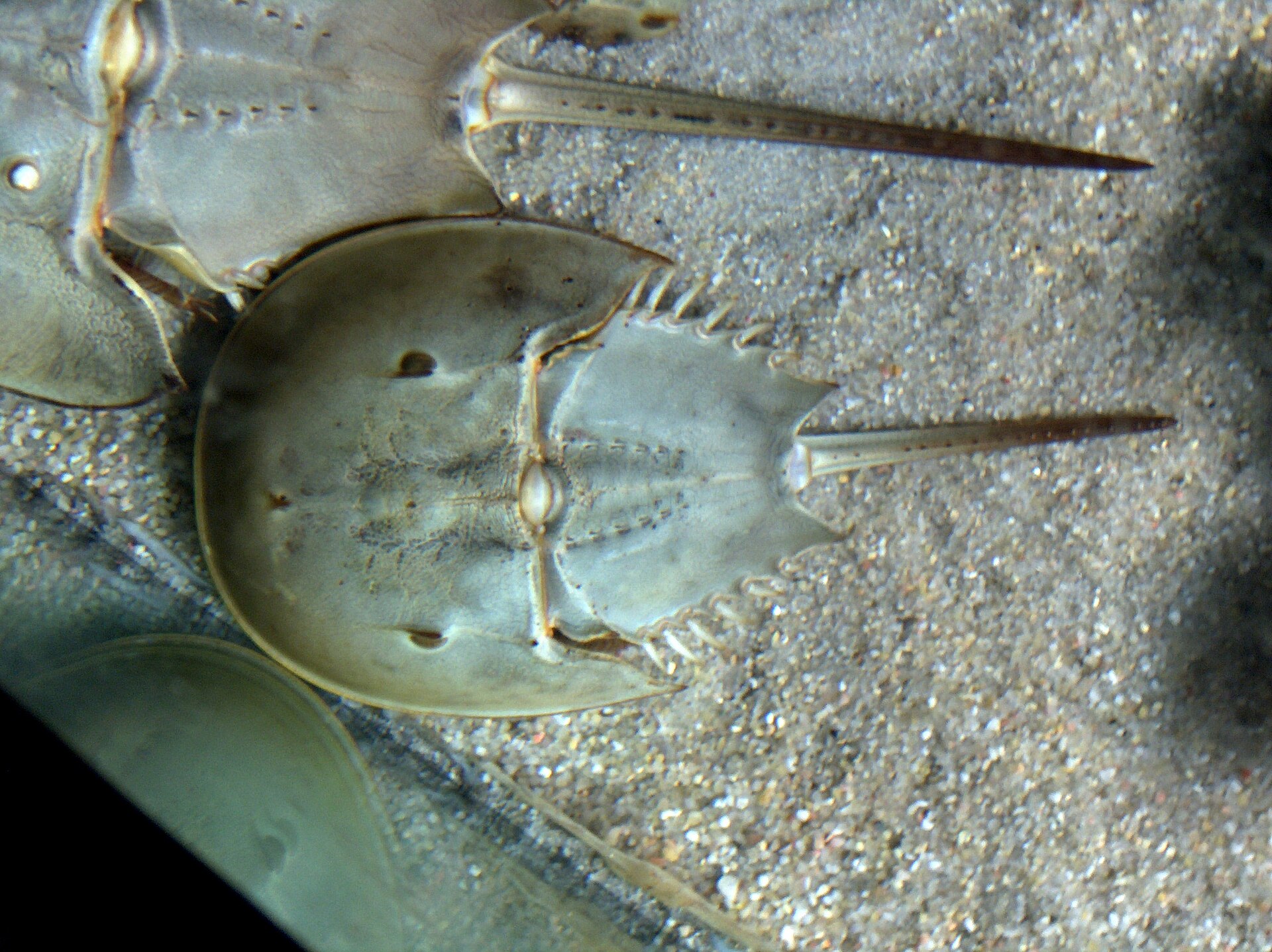
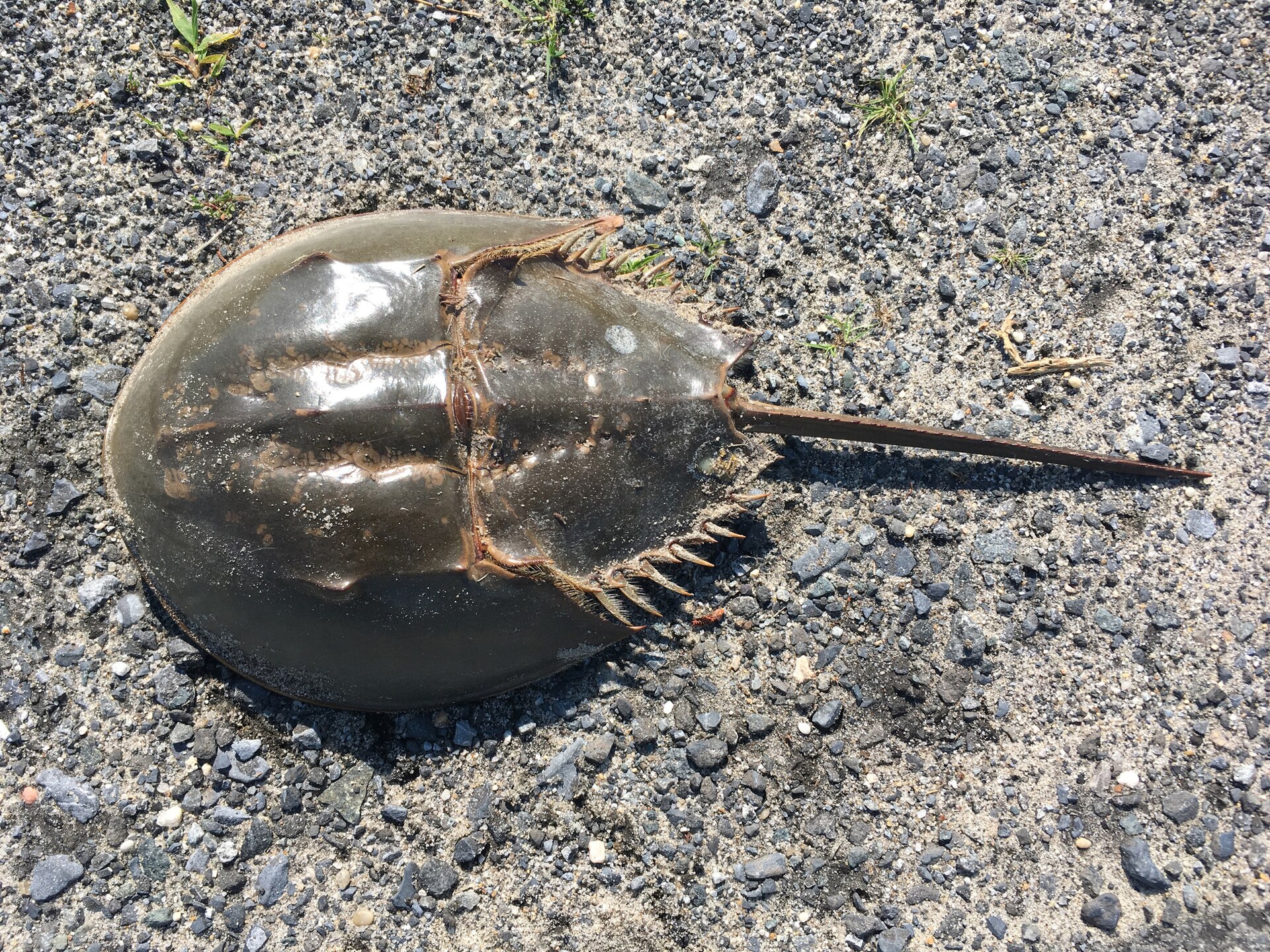
The technical term for this long, pointed tail structure is the telson [1][3]. The telson possesses no venom glands, no stinging apparatus, and is never used as an offensive weapon against humans [1][3]. Instead, it functions as an essential mechanical tool for survival [3]. When churning waves flip the heavy animal upside down onto its back on sandy shores or intertidal mudflats, it jams its telson into the ground as a rigid lever to tilt and right its body [1][3]. It also acts as a rudder to assist with balance and steering while navigating coastal waters [3].
Detective File 3: The Myth of Frozen Evolution
Can a living organism remain completely unchanged for hundreds of millions of years? Popular claims frequently describe Limulus polyphemus as a “living fossil” that completely ceased evolving during the Paleozoic era [4]. Fossil records confirm that ancestral forms of this lineage trace back roughly 440 to 450 million years to the Ordovician period [3][4]. When comparing ancient fossils to modern specimens, the outer shell layout demonstrates incredible stability across multiple mass extinction events [4].
However, evolutionary biologists note that morphological stability does not equal frozen evolution [4][7]. While the general external blueprint has remained stable, fossil studies of fossil species like Dibasterium durgae reveal that limb branching structures altered over time [7]. Modern genomic studies further confirm that internal evolution continued, revealing gene duplications tied to visual systems and immune functions [7]. The species maintains an ancient structural framework while continuously fine-tuning its internal genetics [4][7].
Detective File 4: Blue Blood and Molecular Detectives
The most famous mystery surrounding the Atlantic horseshoe crab involves its blood. Unlike human blood, which relies on iron-containing hemoglobin to carry oxygen and appears red, this animal relies on a copper-based oxygen-transport protein called hemocyanin [1][6]. When exposed to oxygen in the air, this copper compound causes the fluid to turn a vivid sky-blue color [1][6].
Inside this blue fluid, specialized mobile blood cells known as amebocytes serve as a hyper-sensitive biological detection grid [5][8]. When amebocytes detect trace amounts of endotoxins—toxic cell wall fragments from Gram-negative bacteria—they immediately clot to isolate the invader [5][8].
Medical researchers extract these cells to create a precise diagnostic agent called Limulus amebocyte lysate, or LAL [5][8]. The global pharmaceutical industry relies on LAL to test vaccines, intravenous drugs, and medical equipment for dangerous bacterial contamination [5][8]. Because even tiny concentrations of bacterial endotoxins cause severe biological reactions in humans, this sky-blue blood forms a crucial defense line in medical safety [5][8].
Synthesizing the Evidence: Protecting an Ancient Bio-Shield
Connecting these verified facts reveals why this creature matters so deeply to science and conservation. An anatomical design perfected in shallow ocean waters during the Ordovician period produced a specialized immune system that now safeguards human health around the globe [1, 4, 8]. Their distribution spans the eastern coast of North America from Maine down to Florida, as well as the Gulf of Mexico and the Yucatán Peninsula, with Delaware Bay serving as the primary breeding concentration point [1].
This heavy reliance on wild animals brings significant conservation concerns. The species is currently listed as Vulnerable on the IUCN Red List [1]. Although exact regional bleeding mortality rates and commercial reagent prices vary across published reports, bleeding wild populations for commercial LAL production imposes ongoing ecological demands [1][5].
To mitigate this impact, researchers developed a synthetic substitute called recombinant Factor C, or rFC [5][6]. By cloning the specific horseshoe crab gene that triggers clotting in the presence of endotoxins, scientists created a laboratory-produced testing reagent [5][6]. Regulatory acceptance of rFC now allows pharmaceutical manufacturers to conduct endotoxin testing without harvesting wild animals, offering a sustainable path forward for marine ecosystems [5][6].
Case Closed: Return to the Intertidal Shore
Returning to that quiet shoreline at Delaware Bay, the truth behind the Atlantic horseshoe crab comes into clear focus. It is neither a true crab nor a venomous menace wielding a spiked weapon [1][3]. Instead, it is a resilient chelicerate whose external shape weathered millions of years while its internal systems adapted at the molecular level [2, 4, 7].
The sky-blue blood flowing beneath its shell linked ancient mudflats directly to modern medical safety [1][8]. Through synthetic innovations like rFC, science can now safeguard human health while ensuring this ocean wanderer continues its journey across the tides [5][6].
Featured image credit
Image: João Carvalho · Wikimedia Commons · CC BY-SA 2.5 · original file
Sources and editorial policy
This feature is based on publicly available scientific and institutional sources listed below. Read our editorial and fact-checking policy and AI use policy. Report a correction: kjhtime@gmail.com
References
- wikipedia.org — en.wikipedia.org, accessed 2026-09-20
- wikipedia.org — en.wikipedia.org, accessed 2026-09-20
- wikipedia.org — en.wikipedia.org, accessed 2026-09-20
- digitalatlasofancientlife.org — www.digitalatlasofancientlife.org, accessed 2026-09-20
- labconscious.com — www.labconscious.com, accessed 2026-09-20
- nih.gov — pubmed.ncbi.nlm.nih.gov, accessed 2026-09-20
- yale.edu — news.yale.edu, accessed 2026-09-20
- nih.gov — pubmed.ncbi.nlm.nih.gov, accessed 2026-09-20